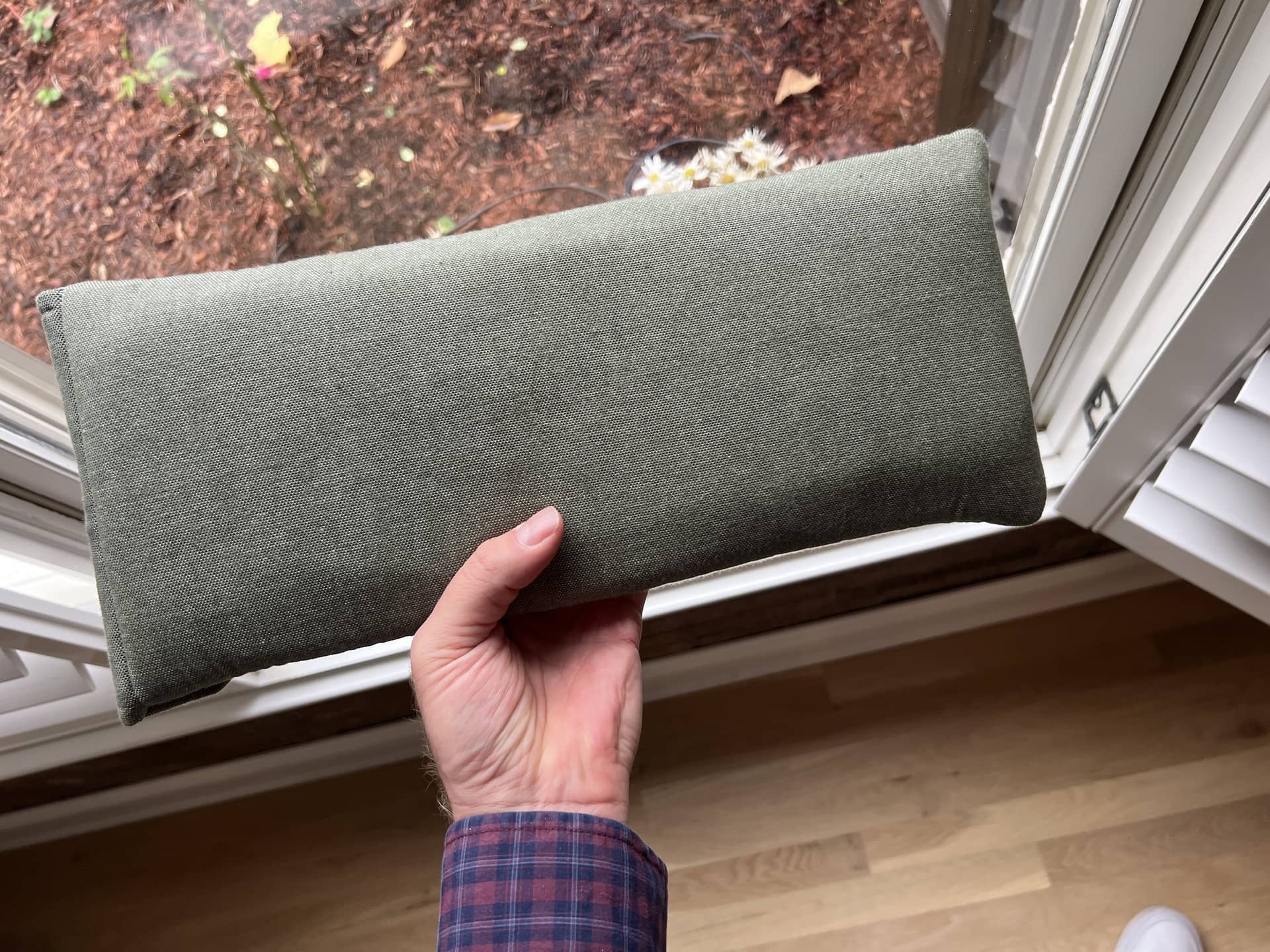
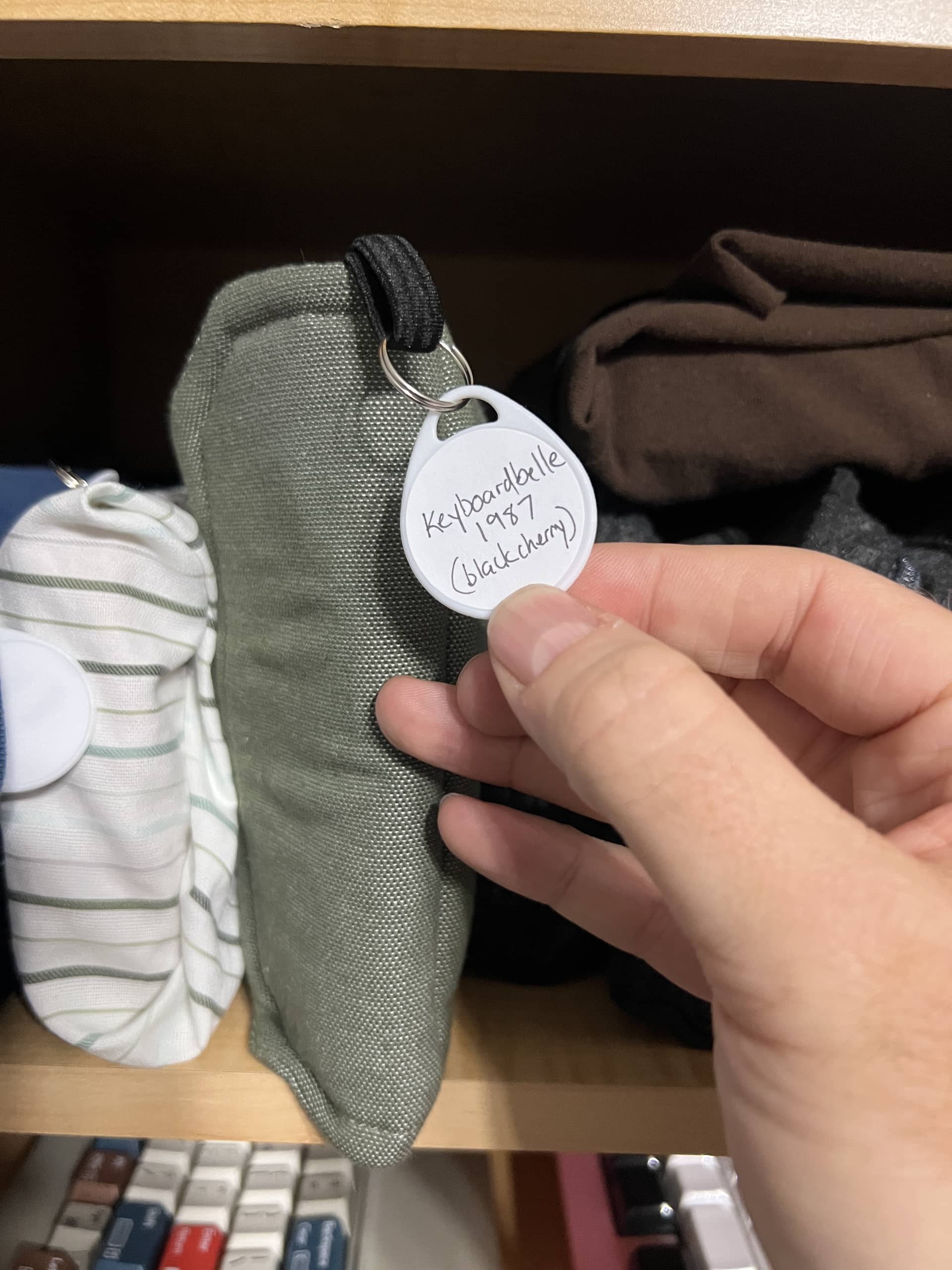
Well, I’ve begun a new journey. I tried to wrap my brain around making a custom keyboard, but it’s just not jiving with me. It’s too much out of my own hands for me to approach it with anything other than doubts.
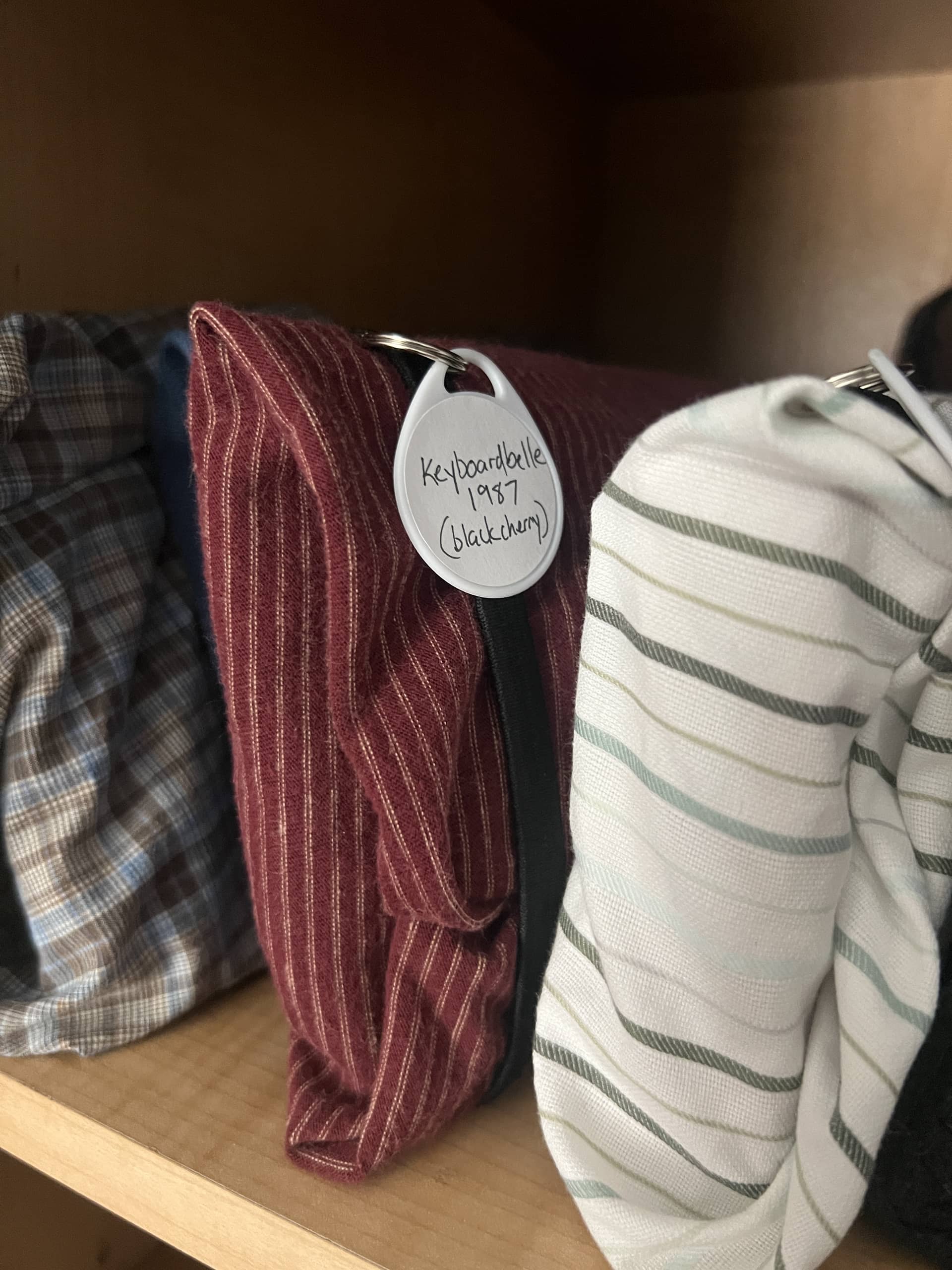
But something I actually need and I believe I can tackle is creating fabric storage cases for my keyboards. I own many boards that don’t need the dedicated hard shells that cost $40 each. I’ve previously cut up old shirts from my closet as a solution that looks something like this:
The main disadvantage is the time it takes to wrap it back up neat and tidy after I’m done with it. I’m a pretty unorganized human, and any amount of effort or time that stands in the way of me and organization is a roadblock. Secondary problems are the lack of protection. Granted, I’m usually only putting wooden or plastic boards in these wraps, but one thin layer of fabric is only enough to keep out dust, not enough to protect against accidental dings when reshelving.
I haven’t used used a sewing machine since I was in middle school, but I’m giving it a go! I bought the cheapest machine I could find and I’m setting out on a journey to see what I can do.
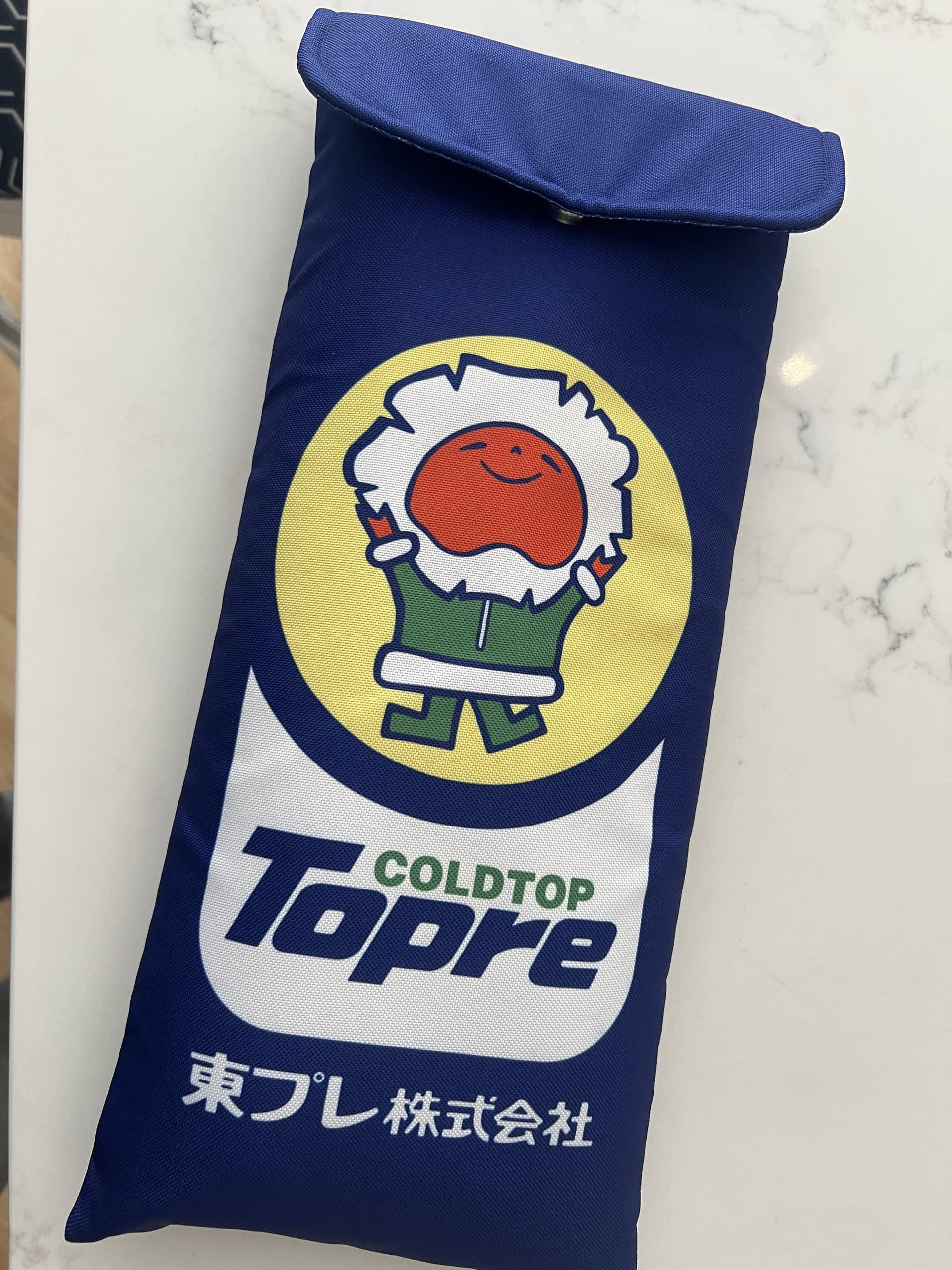
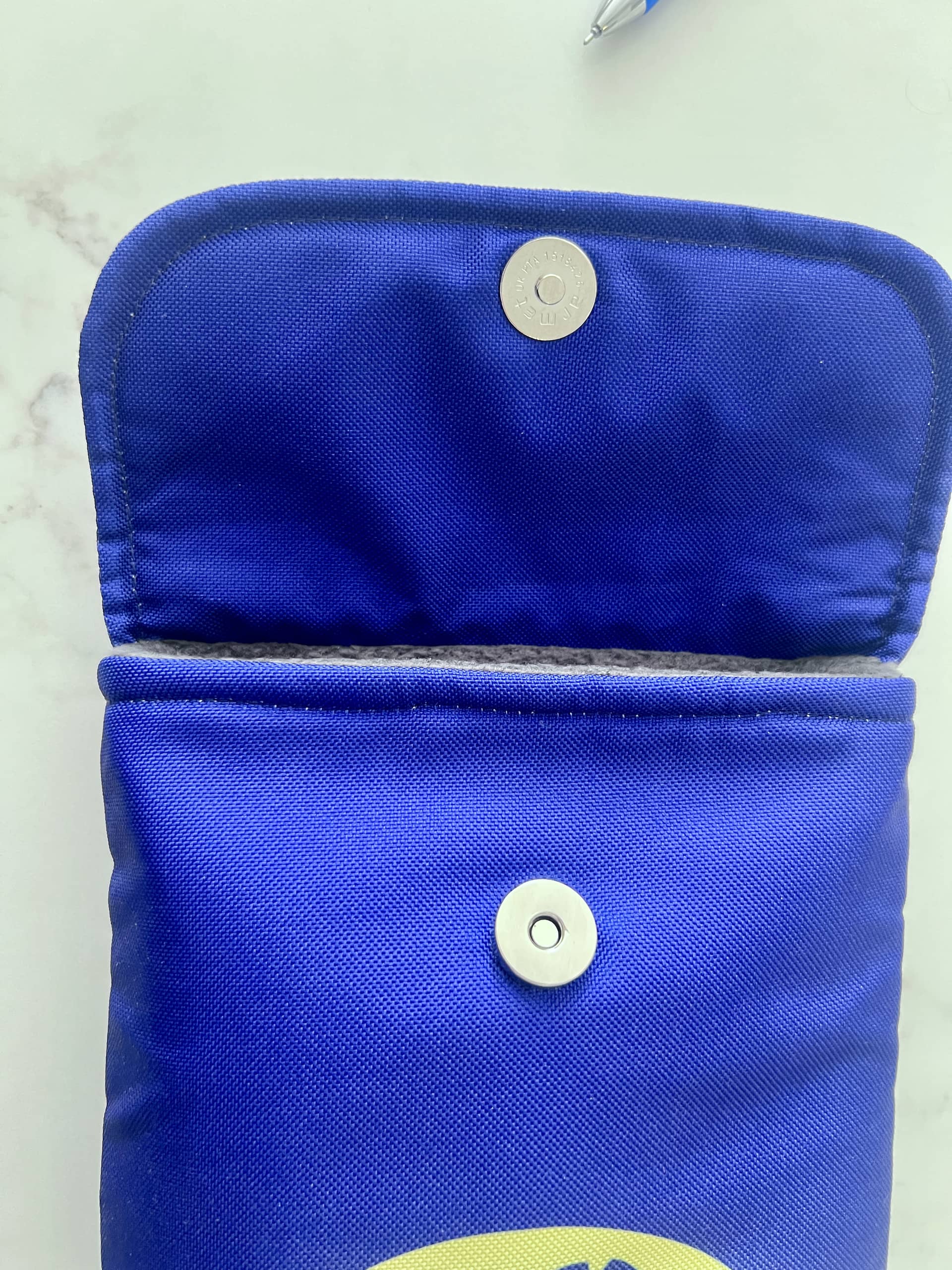
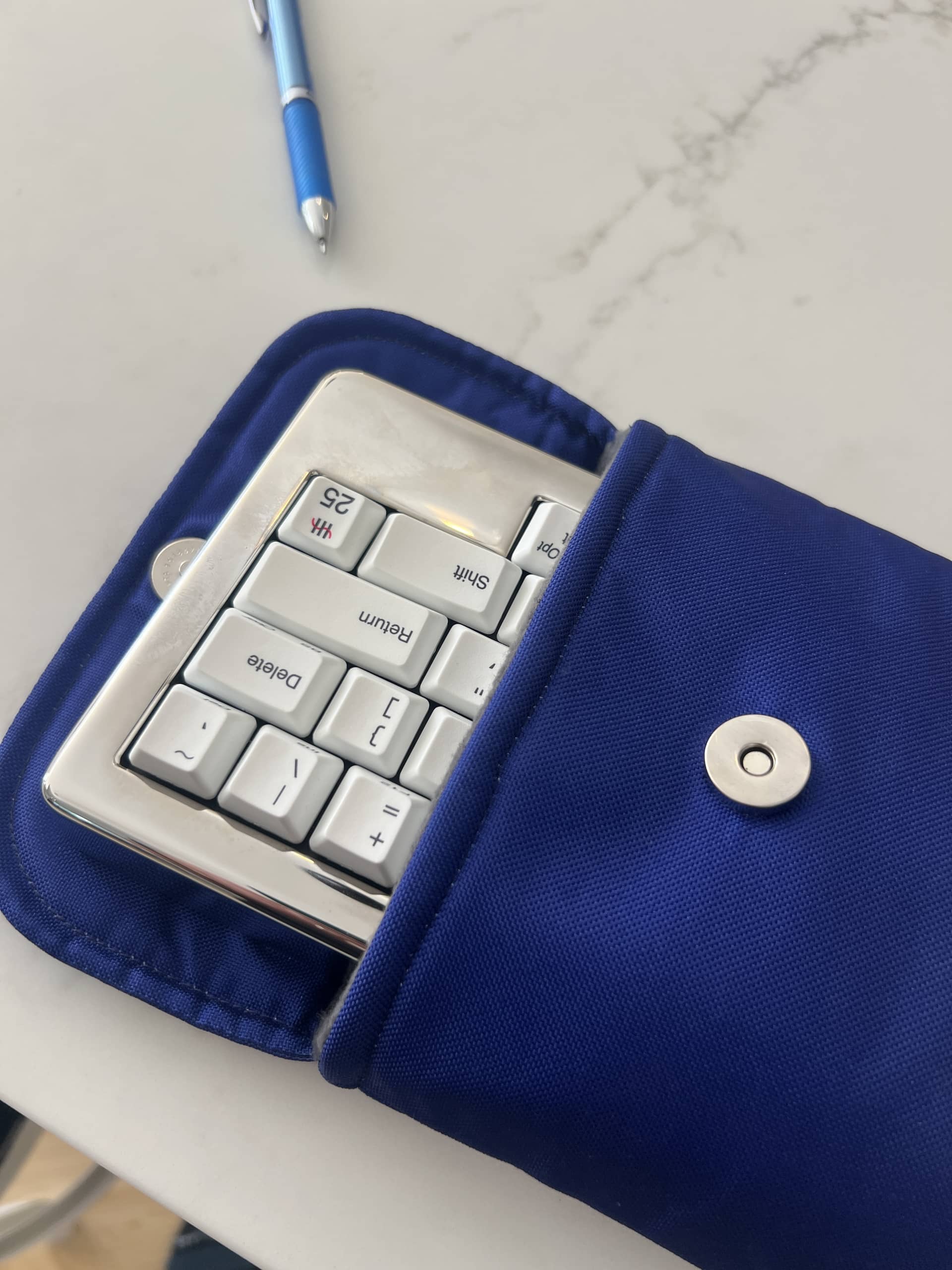
I’m mainly looking at book sleeves as inspiration for simple solutions. most of them are similar to what I want to achieve, but I have some specific needs. For one, I need a loop to which I can attach my labeling system (a ring with a tag on it). Also as inspiration, my favorite case I’ve run across is my Coldtop Topre case, and I really like the way it has a fold over top with a beefy, magnetic snap closure. This one is sturdy enough that I trust it to protect my stainless steel heavy grail. (flex)
Another bonus of this pursuit is the enjoyment I can find in matching fabrics to cases. It’s like another layer on top of the board, the switch, the keycaps, and now the case!
I’ve got a million obstacles in my way at the moment, but this is my plan. Just sharing for fun and accountability.
A simple book-sleeve pattern could work: cut two canvas rectangles wide enough for the board plus its height and seam allowance. Sew the sides and bottom, leaving the back longer for a fold-over flap. Add a soft lining and a layer of thin foam or quilt batting to protect against shelf dings, allowing extra room for the padding. Sew a small webbing loop into a side seam for your tag ring. A magnetic snap on a reinforced flap would be quick to close; hook-and-loop tape is another easy option. Test the fit with scrap fabric first, especially around tall keycaps.
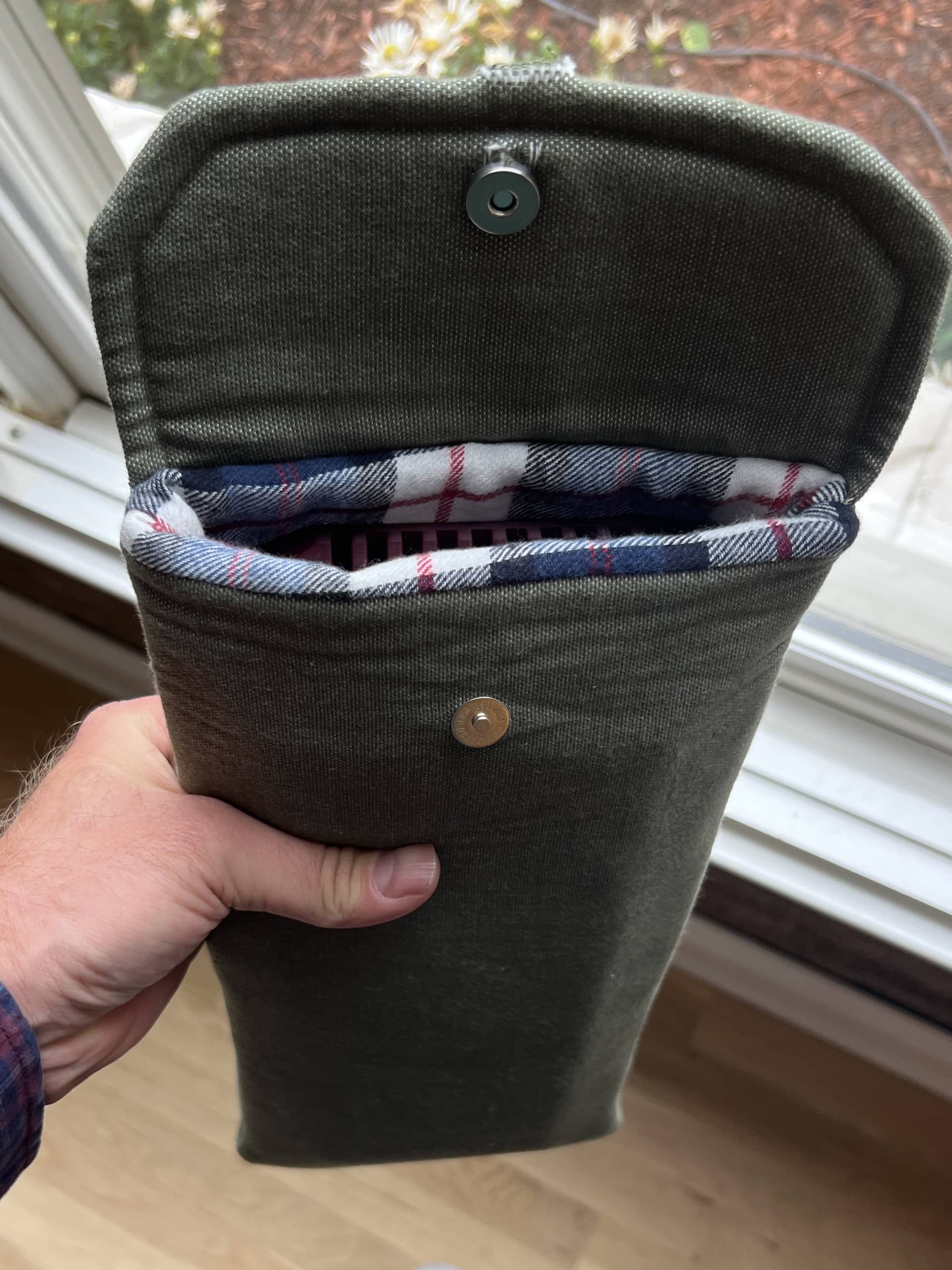
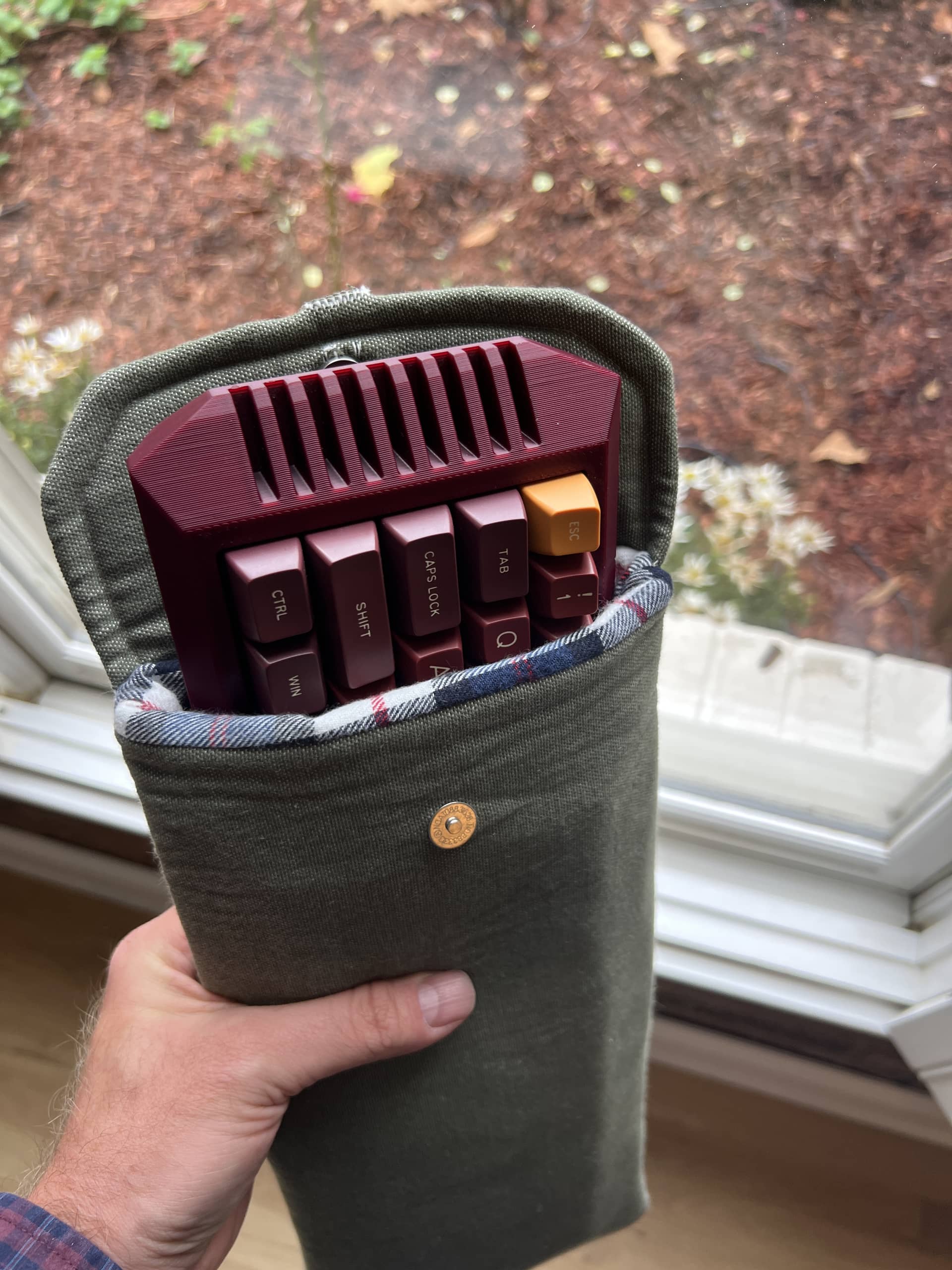
The fit is perfect so my measurements are good. The only glaring issue is the seam blowout on the top flap. I think I trimmed too close to my seam.
Not sure about my interfacing material. It’s a thin foam and feels good, but it’s hard to work with. I may experiment with not taking it to the seams to see if it helps.
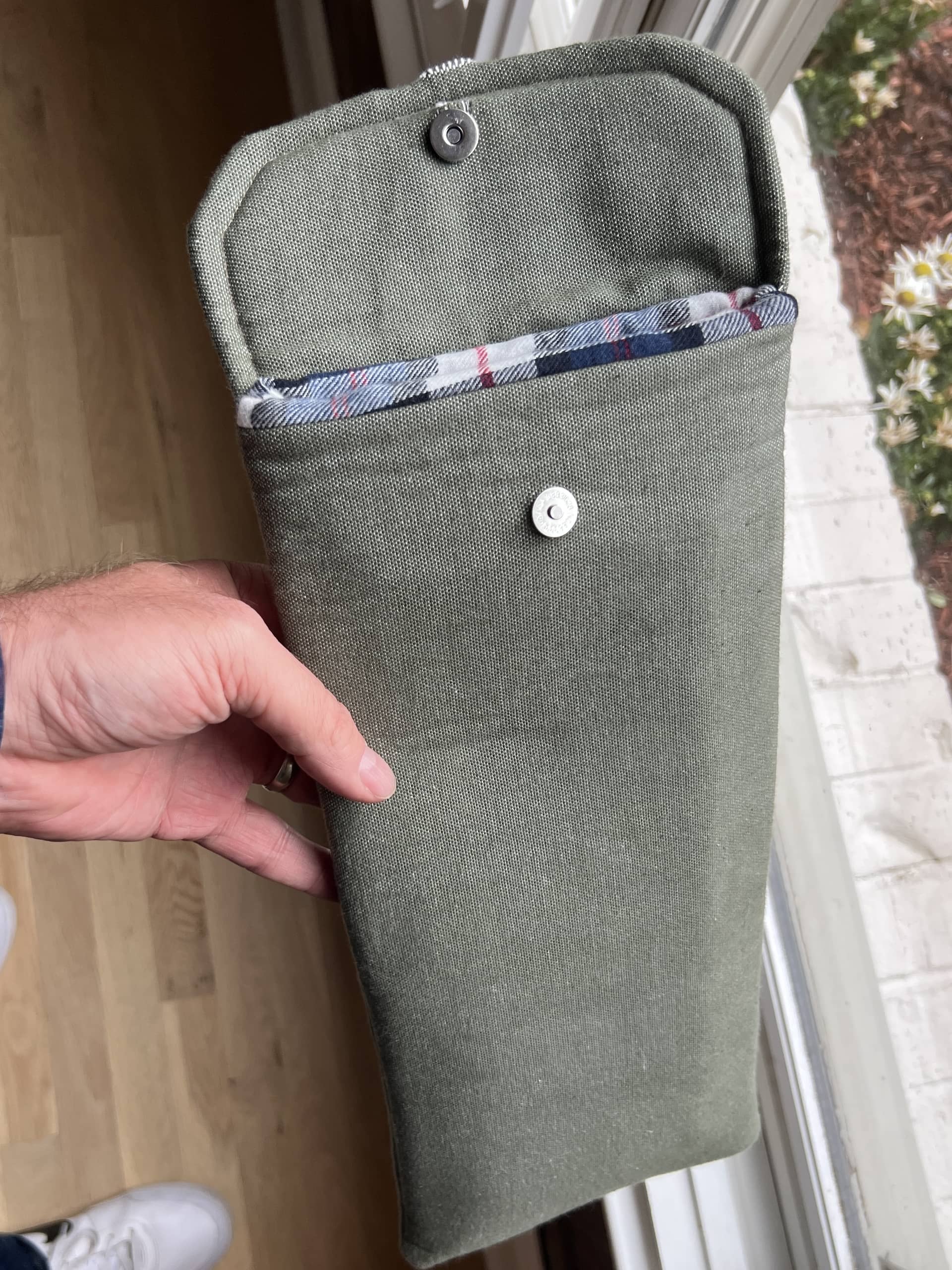
The outer is duck cloth and the inner is flannel.
I may want to try canvas and a thinner interface for a more desirable look eventually.
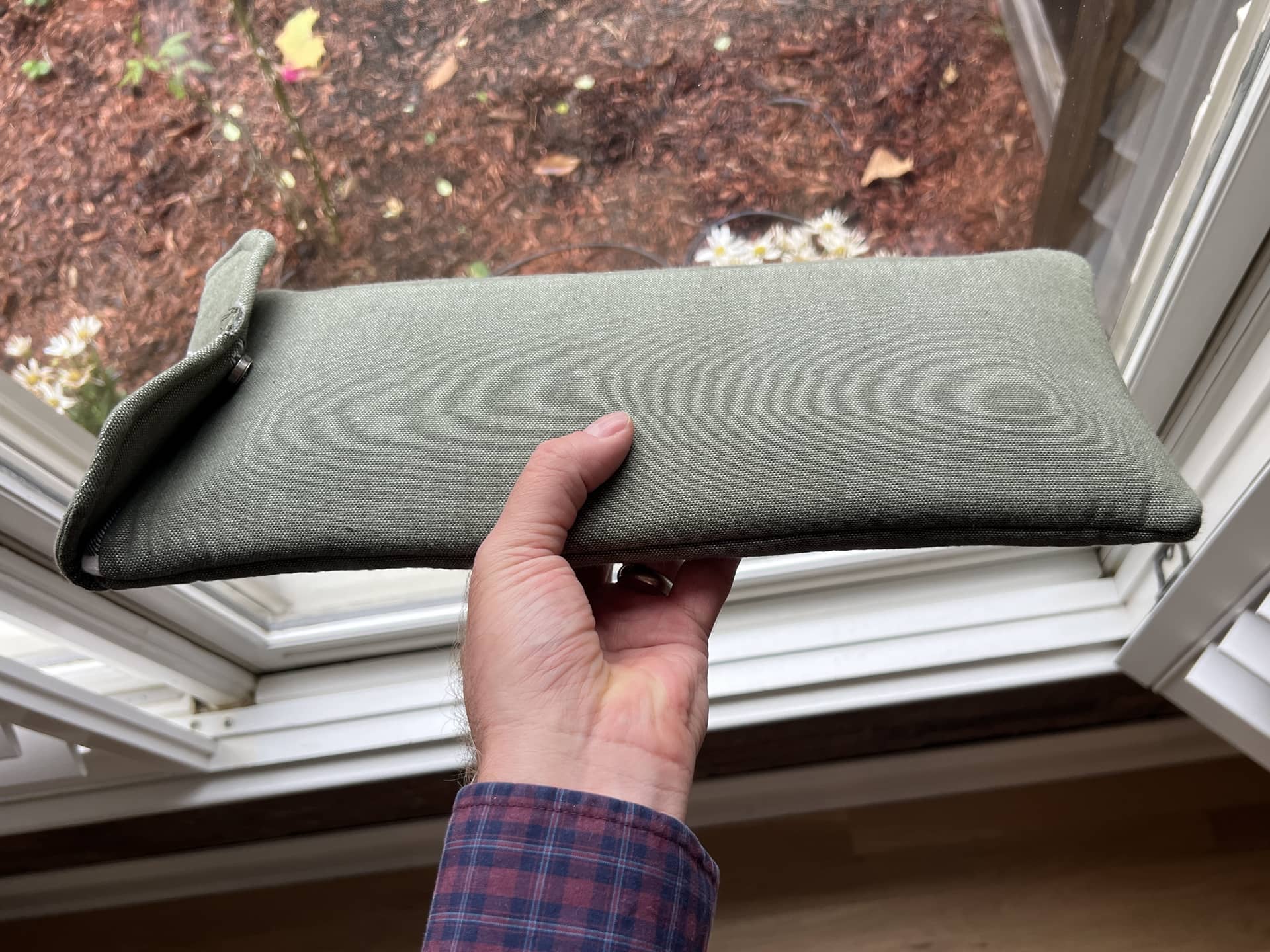
I don’t like the way the flap sticks up on its corners when snapped (magnetic snap is handy though)
I don’t know if I should make the flap longer or remove interfacing foam near the case opening to encourage it to fold more… or just do a longer Velcro strip.
Added a small loop attached to the inner lining as a hack at the end bc I honestly forgot.
This first one looks really good. And we got a little bit of weather here in Southern California on Halloween for the first time in a long time so this is a nice cozy thread to look through while sipping coffee.
When you need to add bulk or paddding to fabric you use an “interfacing layer”. Could be very thin cloth, cotton batting (like a quilt), foam, or even rigid materials like plastic. I added the material for padding between the outer fabric and liner. In this case it’s a soft, 1/8 inch foam with a heat activated fusing on one side so that you can affix it with an iron.
Another idea I might play around with is keeping the duck cloth but quilting a softer interface in a diamond pattern.
This looks fantastic for a first run! Really like the nice touch of the flannel being visible over the seam/edge when you open the flap; reminds me of a bold lining inside a sport coat.
What if you did two magnetic snaps closer to the corners of the flap instead of one in the middle?