Hey Greyling, I am interested in the U80-A (may get it next time). How does it feel and sound typing on it? Does it warrant the price? 
I think it’s good to at least have 1 hot swap board, in your inventory, that way you can try new switches at scale, before committing to soldering them into a board.
This is the one that I have. Cheep little 60%, that came with Kailh sockets, when I bought it:
1 Like
Also, if a socket went bad here or there you can replace the socket. Granted, you would need to not only have soldering skills by that point, but experience with soldering and desoldering smd components. And you would probably think twice if it’s all the sockets that need replacing, lol.
1 Like
U should get a second plate so you can switch to the hotswap and try other switches.
I was expecting it to be a lot noisier after hearing people’s comments on the M60-A but it’s pretty quiet. I have to admit I’m really surprised it’s hotswap. I wouldn’t presume to know how the keyboard would factor into your sitch but it’s worth it for me. My current desk baby for sure!
At first I was wishing I had gotten port instead of milk but it’s grown on me.
1 Like
it seems like a small number until you set out to test it. I use to sell a hotswap pcb and I did some abuse testing and I made it through 15 switches swaps before giving up. 100 different switches is actually kind of a large number especially when it doesn’t take 100 to narrow down what you like.
1 Like
That’s nice to hear that you are enjoying your U80! I definitely know how it feels on the choice of colours! I got the black zenith but after awhile felt it was kinda generic and regretted so I quickly sent an email to Rama support to have it changed to the gold version. Hope it will turn out well 1 year later 
I agree it’s tempting to just go the traditional black. I’ll hopefully be able in the next production for the m65 or u80. I would go for red or blue if they have the option.
I know it’s also going to be a long shot, but I’m going to try my shot to get in the next keycult offering as well. Regardless, great discussion.
Also keeping an eye on multiple IC’s.
1 Like
Oooh the red/plum version is really good looking. What are the other ICs are you eyeing now? 
Are there any notable acoustic differences between hot swap and soldering?
yes:
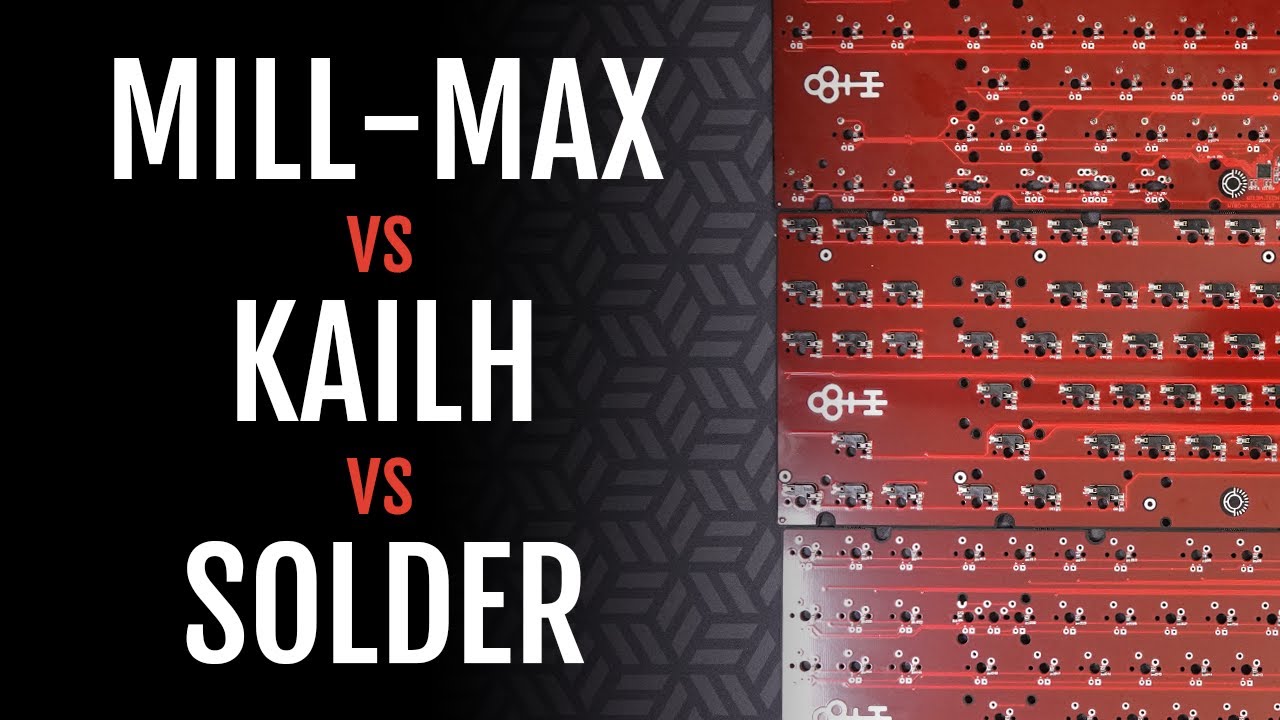
2 Likes
This is a super thorough video. Thanks for sharing Scriba!
Makes me more impatient and ready for the next GB of the keebs I want. In reality getting in on the GB is only the first step and the real waiting starts after lol
I can clearly hear a difference between the soldered and the HS. The board sounded way more hollow w/ HS and much better with the soldered.
Can anyone else hear a noticeable difference?
I as well can hear the difference.
The Soldered switches seem quieter and deeper in tone.
The Mill-Max sound like a middle ground, though I’ve never been sold on them.
The Kailh sounded the loudest / most high pitch.
This is probably due to the energy having to transfer fully in to the plate and PCB on soldered boards for both the press and rebound, where as with HS boards, the switch press and the rebound are not dampened by a solid connection to the PCB.
FWIW, I would go and have gone Kailh for my hot swap board, because I will always pick a purpose built connector, over one that was designed to be an adapter. I also, don’t consider hot swap, to be a full time setup. I treat it as a test bead for new switches, to see if I like them, before I commit to soldering them into a proper board.
1 Like
Fo those of you working with soldered builds, how difficult have you found it to ensure the switches are straight? is that as much of an issue as I’m imagining or does it usually work itself out between the alignment pins and the plate?
the plate holds all the switches straight
2 Likes
To elaborate on @dwarflemur’s post, The switches clip into the plate and if the PCB and switches allow for it, the guide pins on the switch insert into the guide holes on the PCB. Ideally, you want both plate and guide pins, to ensure that the switches are as straight as possible, but some PCB’s don’t have holes for guide pins, some switches don’t have guide pins, and some keyboards don’t have plates.
2 Likes
To be honest, I think in real life the sound will be kinda hard to tell unless we are putting our ears right beside it and really trying to pick out the difference.
I have a black soldered M60A-SEQ2 and a White hot swap one. Both have the internal dampener. I never though to check before, but side-by-side, the HS sounds deeper and hollow. No complaints, they both sound good. Same same but different 
Maybe the solder creates a more unified PCB where no air can escape between the pins?
Back on topic, CosmicKira summed it up well.
2 Likes