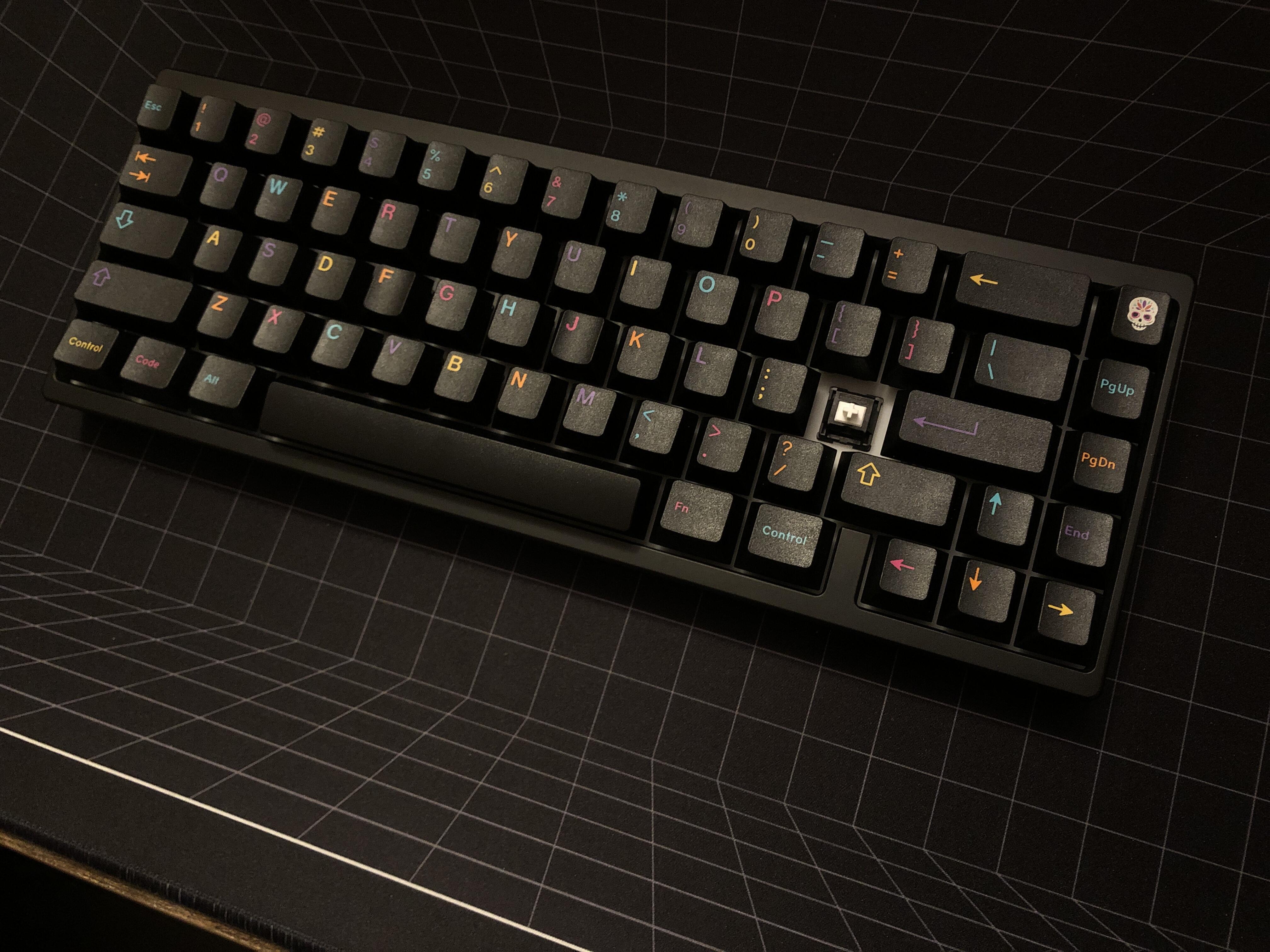
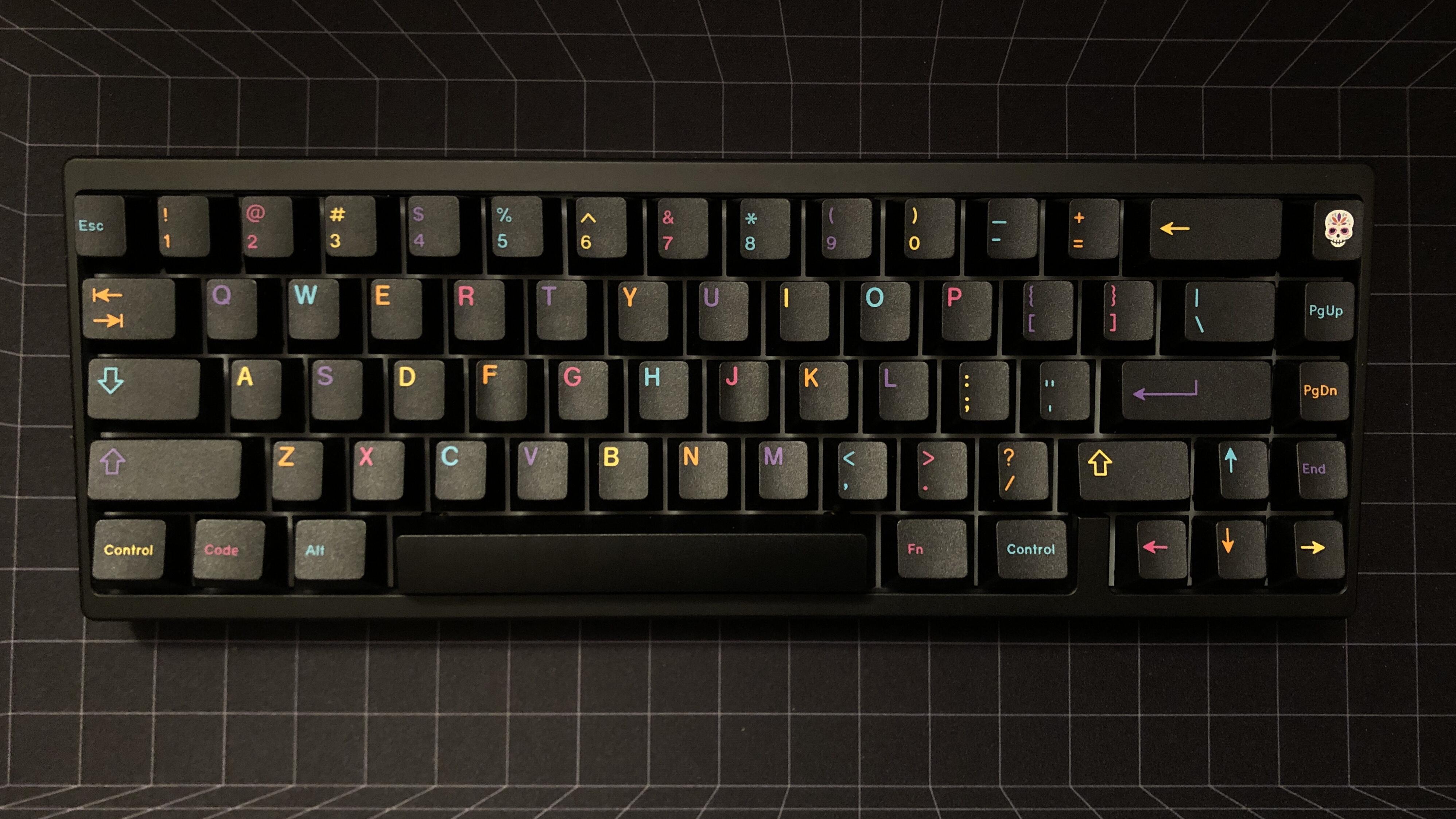
LOL, yeah, I tend to be overly protective of punctuation keys. 
Yours looks very usable!
LOL, yeah, I tend to be overly protective of punctuation keys.
Yours looks very usable!
Your mouse is so interesting!
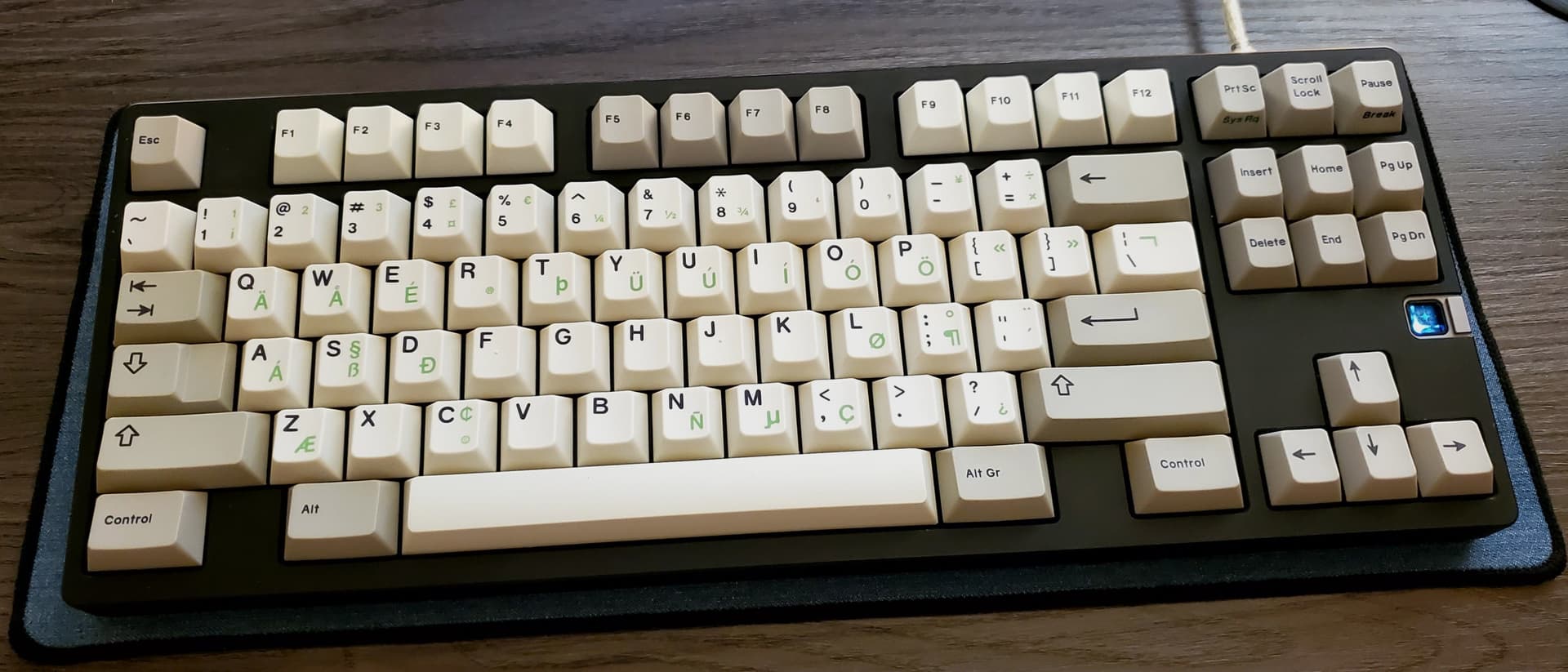
SAME! I’ve done QAZ layouts on my Planck and Preonic specifically because of this. 
Im assuming its like typing normally, just that some punctuation keys are missing (i.e. “,” “.” “/” “;” etc). The closest thing I have to some missing some keys is an ortholinear board (the MK47 from Inland, a planck for 40$).
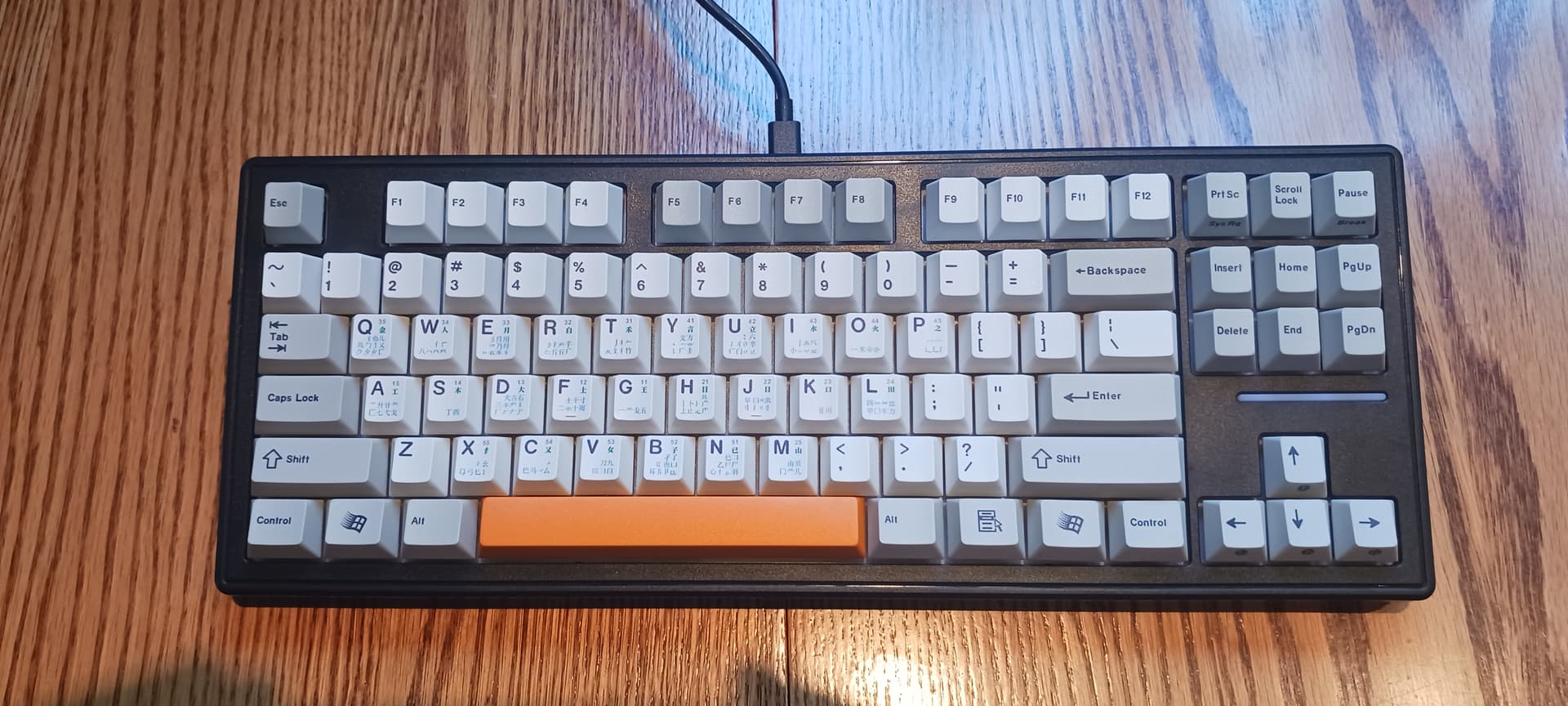
Experimenting with a Xinmeng M87 Pro for office work.
This one is stock. Switches are modified TTC Silent Brown V2. 21KB Wubi keycaps with ePBT Spectrum spacebar.
I would say that the only “necessary” mod here would be to lube the spacebar stabilizer. And it’s not strictly necessary.
The orange spacebar is a nice touch. But I think amber mods like in the 21KB Mint 9009 addon might be nicer:

Typing angle with feet extended is shallower than an NCR-80.
Interesting: I tested this same combination on a sorbothaned M87 Pro, and it almost sounded like an ABKO Niz board.
It almost gave that “boiling water” sound of the Niz, but in a less subtle way. Overall, it was a nice EC-like sound, but it ended up being louder than the stock board.
Did you lube the lilacs by chance? They do sound and feel a little scratchy out of the box for sure. I filmed and lubed them with 3204 and the unpleasant sounds mostly went away.
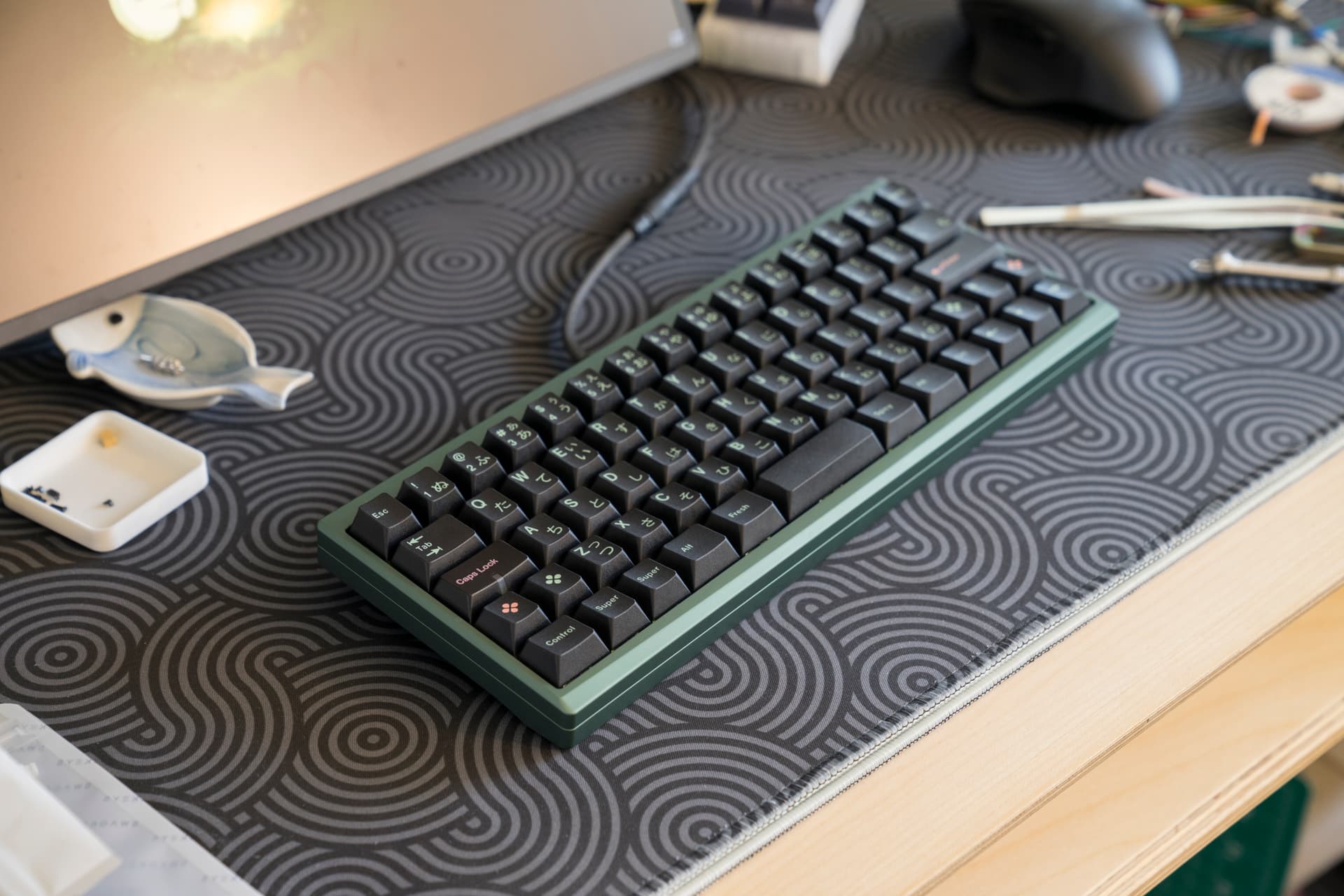
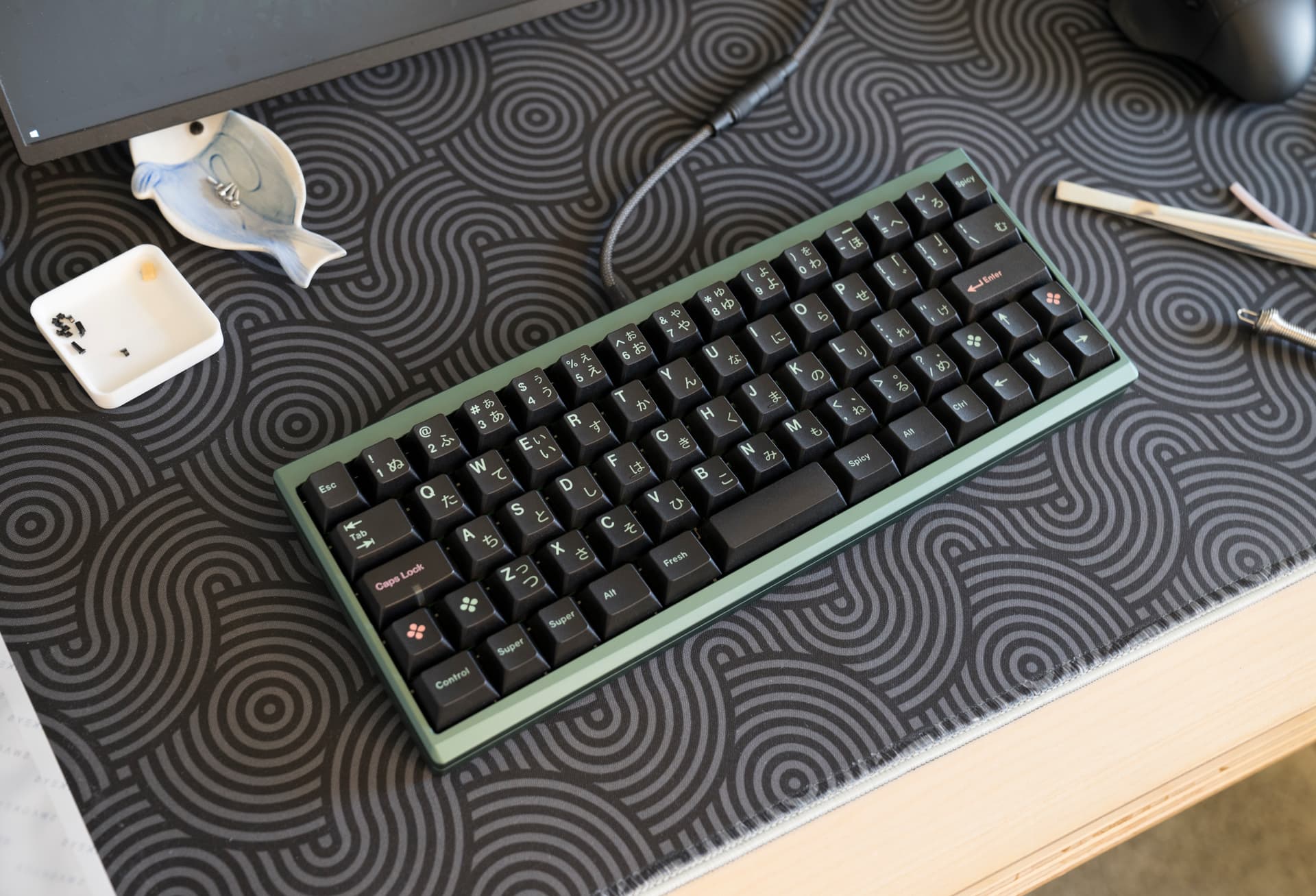
MMD Princess with 58g 22mm 3-stage Geon springs in dark green aluminum Tofu and ePBT 9009 keycaps.
Stock MMD Princess sounds clacky but somewhat rattly during use. I figured this was due to long but light stock spring and thin ePBT keycap (1.5mm where I use mainly is 1.6~1.7mm PBT keycaps like XMI). Spring swap with heavier and long spring removed a lot of secondary noise and improved the feel (more snug, tighter) while preserving the clacky sound.
More on why I use ePBT on MMD Princess. The switch’s clacky sound is silverlined with sharp fiberglass-like sound that tickled my fancy and made me wonder if that’s what HMX sound was about (my answer is yes, after having tested more than a dozen HMX switches). That sound gets nerfed by thicker PBT keycaps but not ePBT. Thicker is usually means better sound in keycaps but not when distinct clacky sound is what you’re after.
You’re probably right. I didn’t lube them, only filmed. I kind of like it, reminiscent of Cherry.
Not necessarily. I got a few boards that sound great with thick PBT or thick ABS, but really sing with DCS! Ultimately though it is a big dance between the keyboard internals, the mounting style, the plate material, the switches, how the switches are modded, & the keycaps used to get to different sounds. Then there is your personal preference on top of that too, so what I think sings with DCS may sound just meh to you.
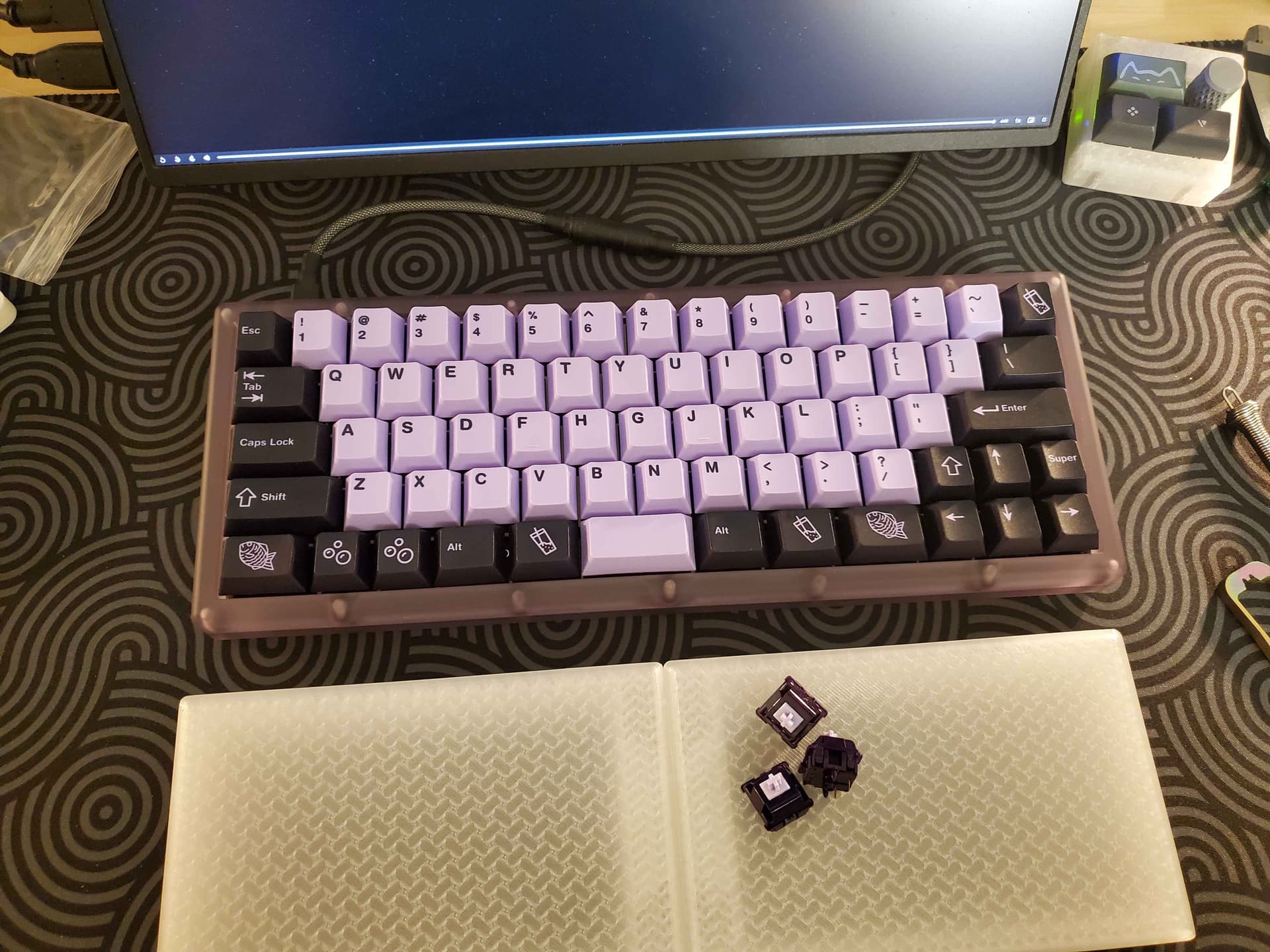
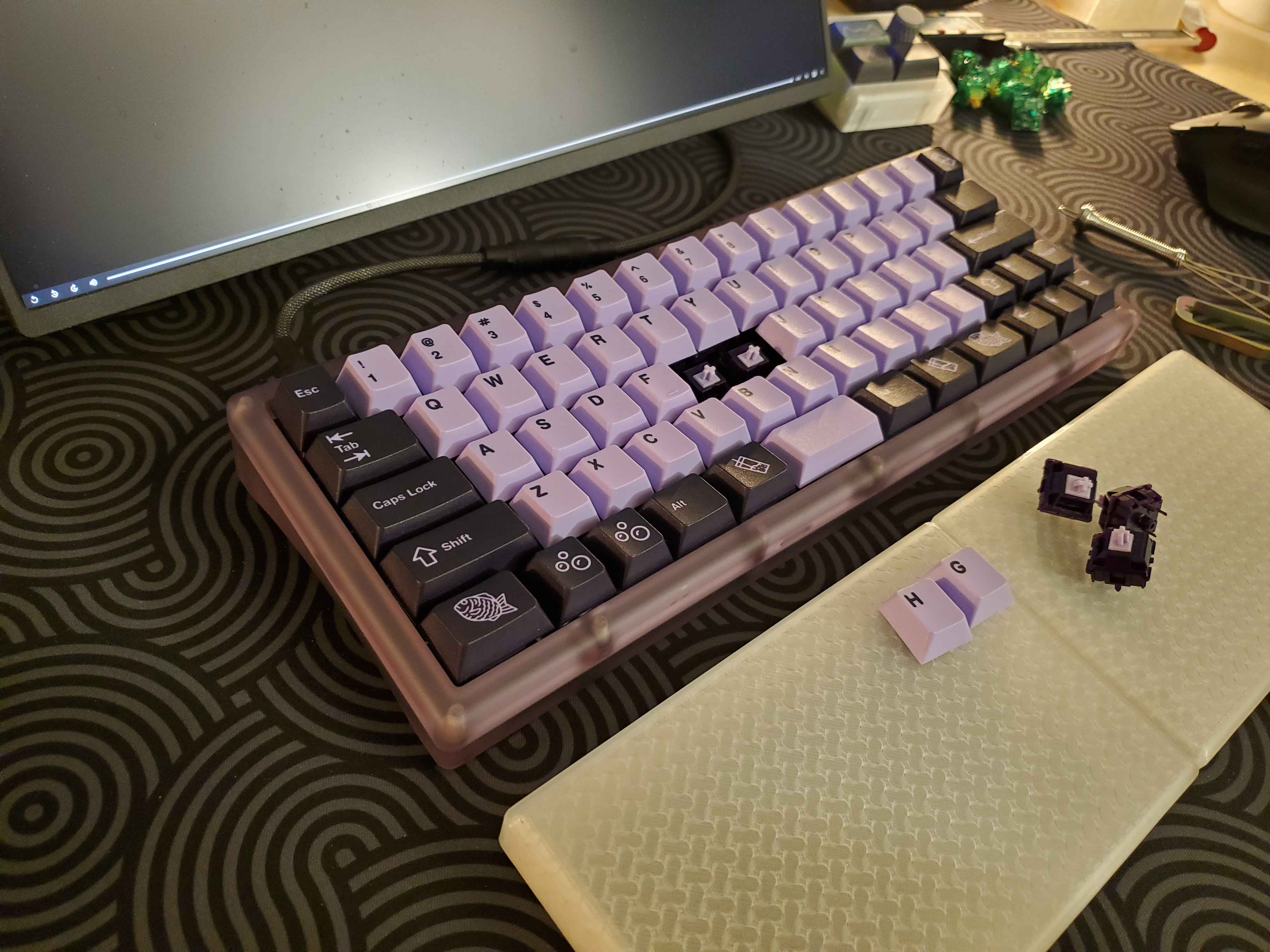
Been using this new build all of half a day and I’m loving it. GMK Wasabi was my first set and still might still be my favorite. I’m really happy with how well it matches the case and the Cendol switches are nice and clean. Have some Latin alphas on the way, wonder how that will look.
The fish  is there to attract cats?

Nah those keycaps are so nice
Hello from the spirit world
TKC Portico68 Black Label
Still some potato-package flakes on the keys 
These switches fit the theme, aesthetically and otherwise - typing on this build sounds like a chorus of miniature tap-dancing skeletons
Been waiting to pull this set out. Here’s a recording of the build as shown, complete with some background noise:
And as a point of comparison, the same build but with Gateron Smoothies and ePBT keycaps, as I’ve had it for the past few weeks (with the same background noise):
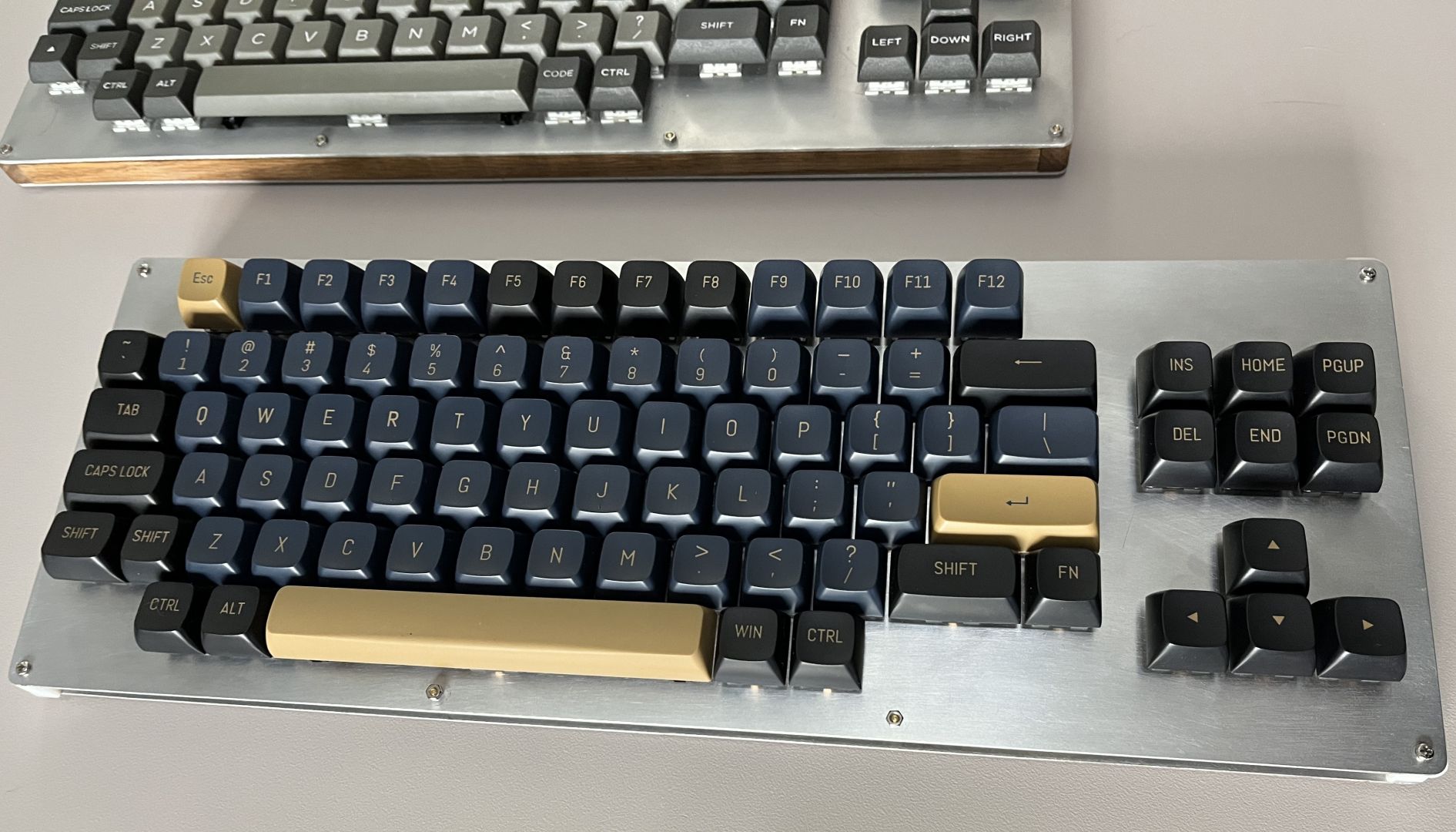
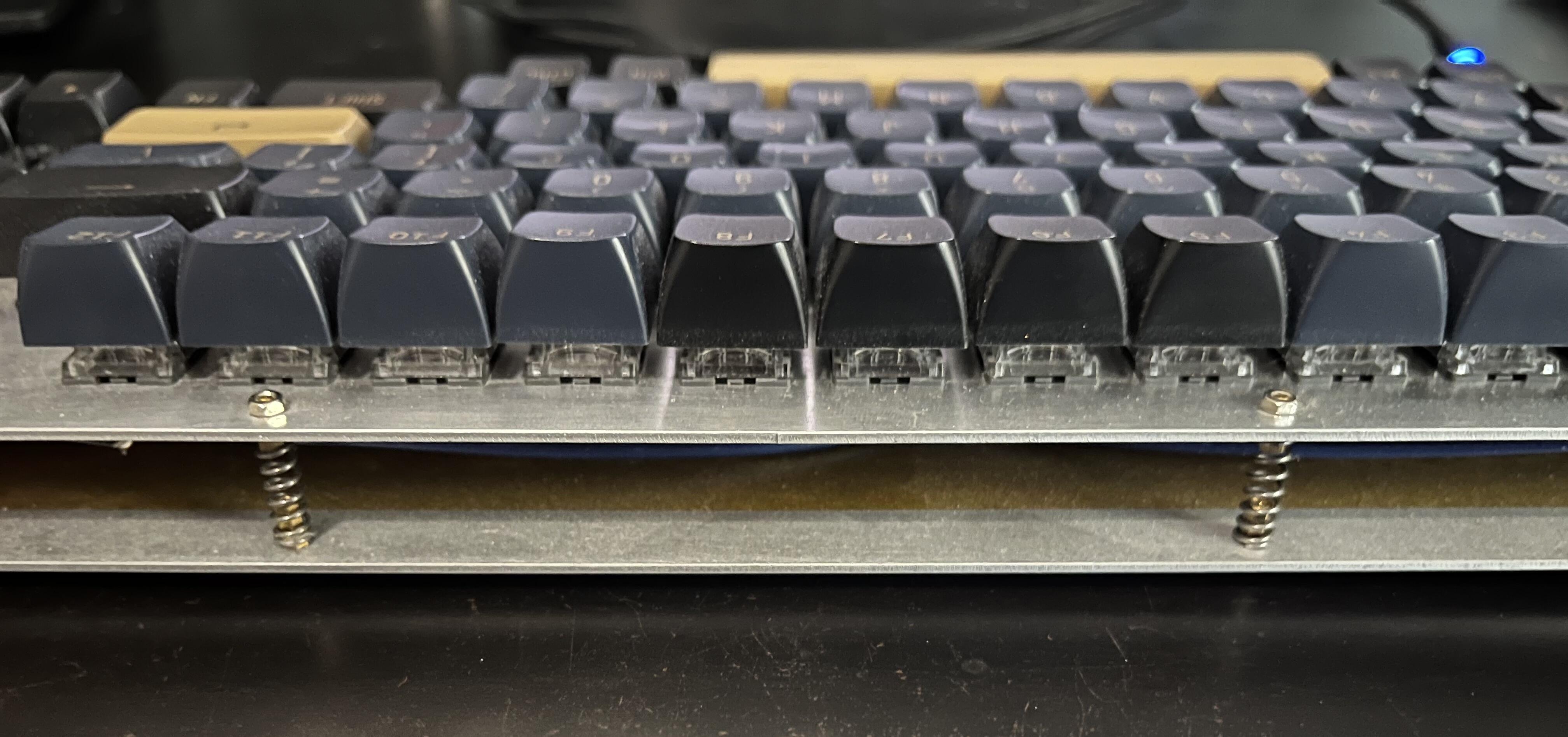
So, here’s one I haven’t really posted about much. It was the second of three handwired “retro” TKLs I did on aluminum plates from Xometry. Compared to the first one, which I use quite a lot, this one mostly lives on the shelf, but I thought I’d take it out and run it for a bit. This is my one and only “bouncy” board, which is very much intentional. It only has proper sandwich pieces on the left and right. The middle four screws are instead supported by fairly firm springs held in place by standoffs that don’t connect the top and bottom plates. Most of my DIY boards are fairly “soft” but none are flexy like this guy. This may also be the only board where “spring ping” is inherent to the chassis, not the switches, LOL. Bottoming out on the F-row sounds a bit like a newlywed couple’s second-hand mattress.
It’s nice in its way, but I use this board less than the similar ones with either Box Navy or 67g “Fauxly Pandas” from AE. Along with my early Orthos and the southpaw, it’s a case of “I kinda want this, and though I’m not sure how badly, I do enjoy making stuff.” It would be a fairly minor thing to rework the chassis here to be more traditional, but not much point, so for now it remains an experiment.
Very interesting to hear about the Gold Brown Pro.
They are underrated. Once you get a consistent coat of 3204 or 205g0, they are velvety.
They aren’t exactly Browns, though. I haven’t built them yet, as they are heavier. They require greater force to actuate. I’d say they are light Ergo Clears, or “heavy Browns” like several other TTC ‘Browns.’ Kind of remind me of MODE Tomorrow - a gentle keypress, but requiring more weight than Browns.
I have a Cycle7 with Zealio V1R. And while it’s pretty good, sometimes I think Gold Brown Pro might have been a better choice. Gentler spring curve [I used short springs on the V1R], and the clack would be insane.
Actually tested a lubed GBP on a sorbothaned M87 Pro. It was the switch that improved the most from the sorbothane dampening.
I wish there was a Brown-weight version, maybe with standard pole. But these are cool for what they are. Part of a trend of long-pole ‘Brown plus’ switches. Like Durock White Lotus.