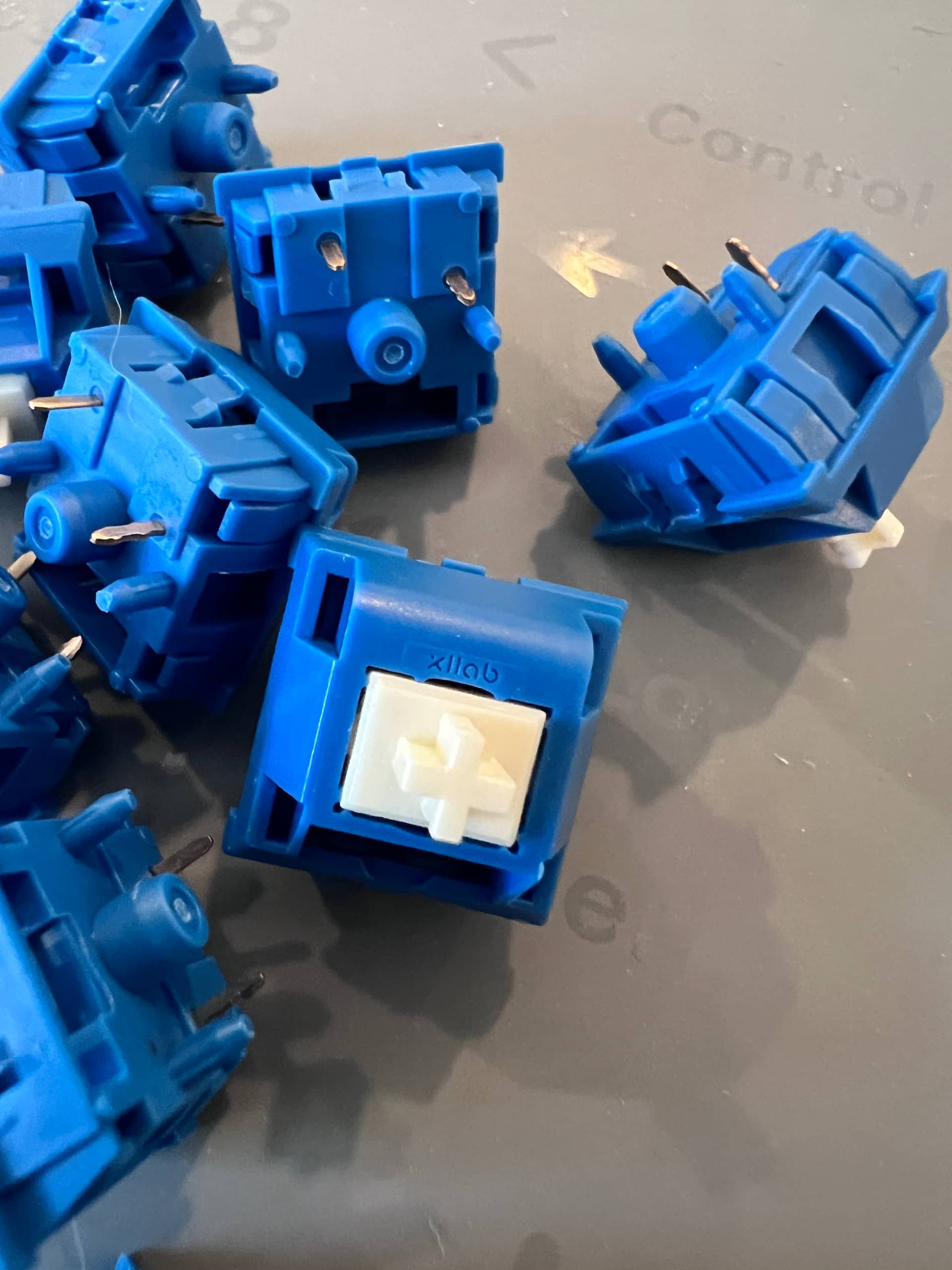
TRANSITION LITE TKL - Gateron Lanes
Part 2 of 2
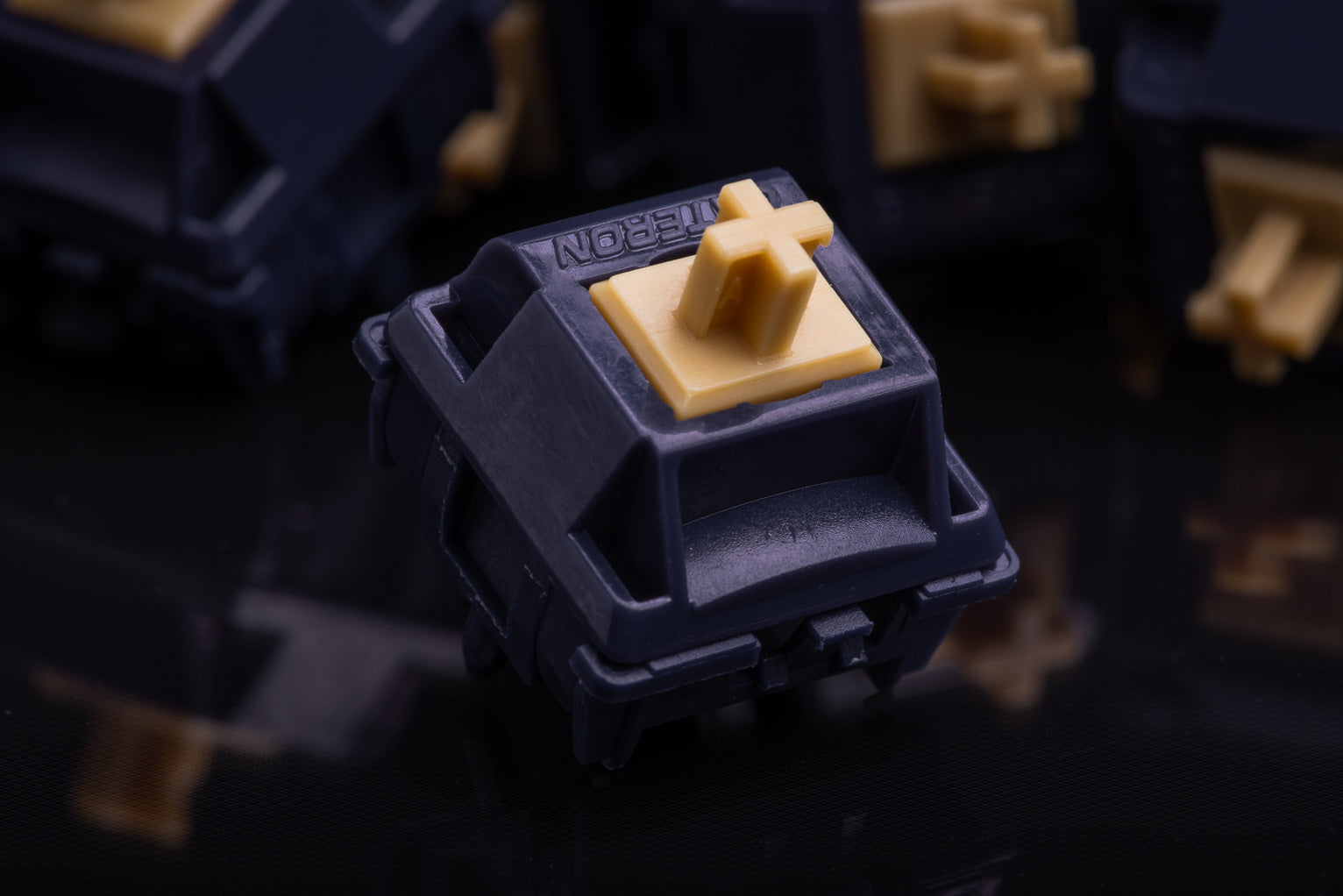
Gateron Lanes
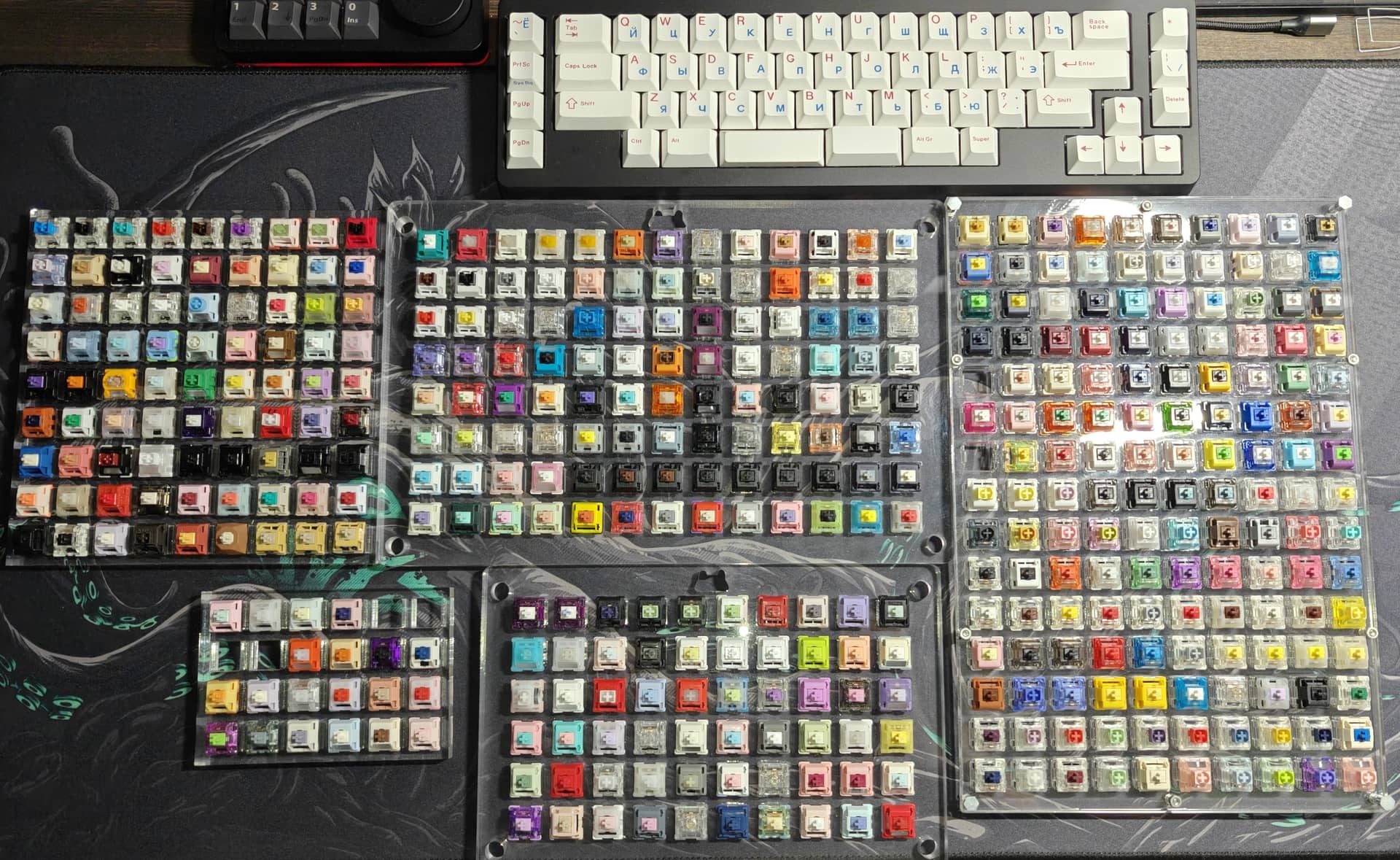
The initial 10 switches were from a Swagkeys sampler. After testing, I ordered 80 more from a Canadian vendor.
They are like ‘quiet clickies’ in-hand, a bit different on a board. I’ll give impressions of that, below.
Build Details
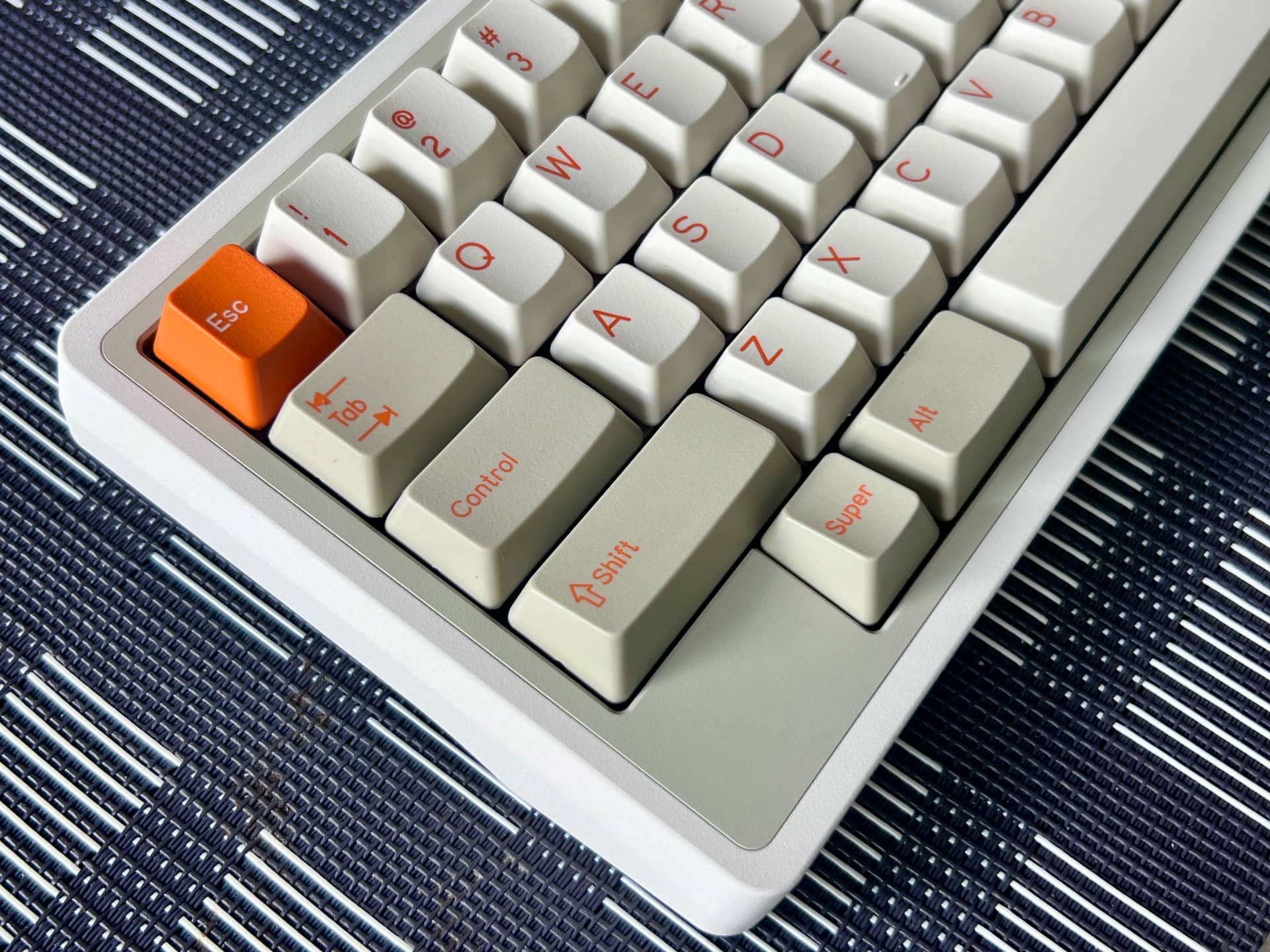
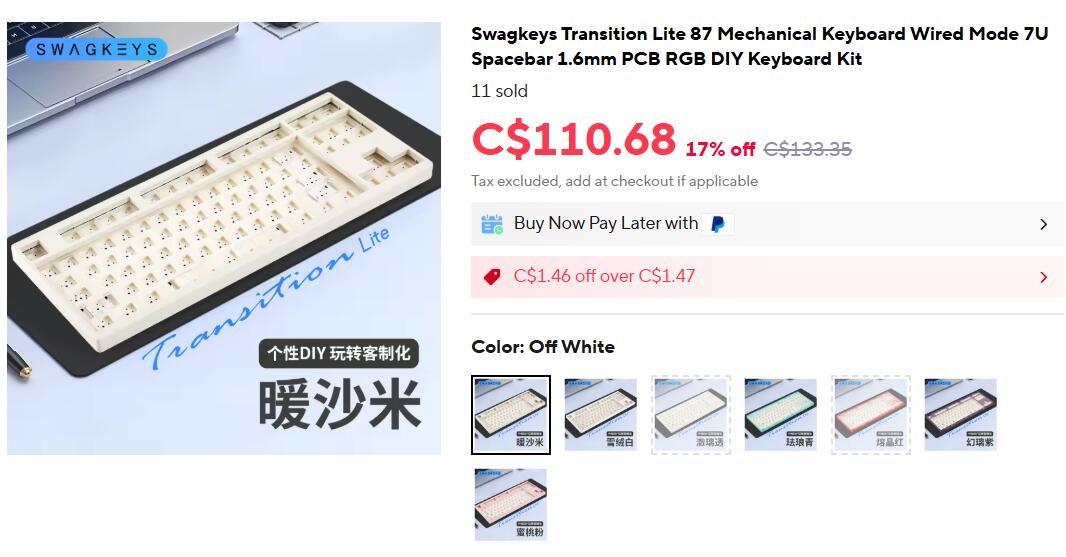
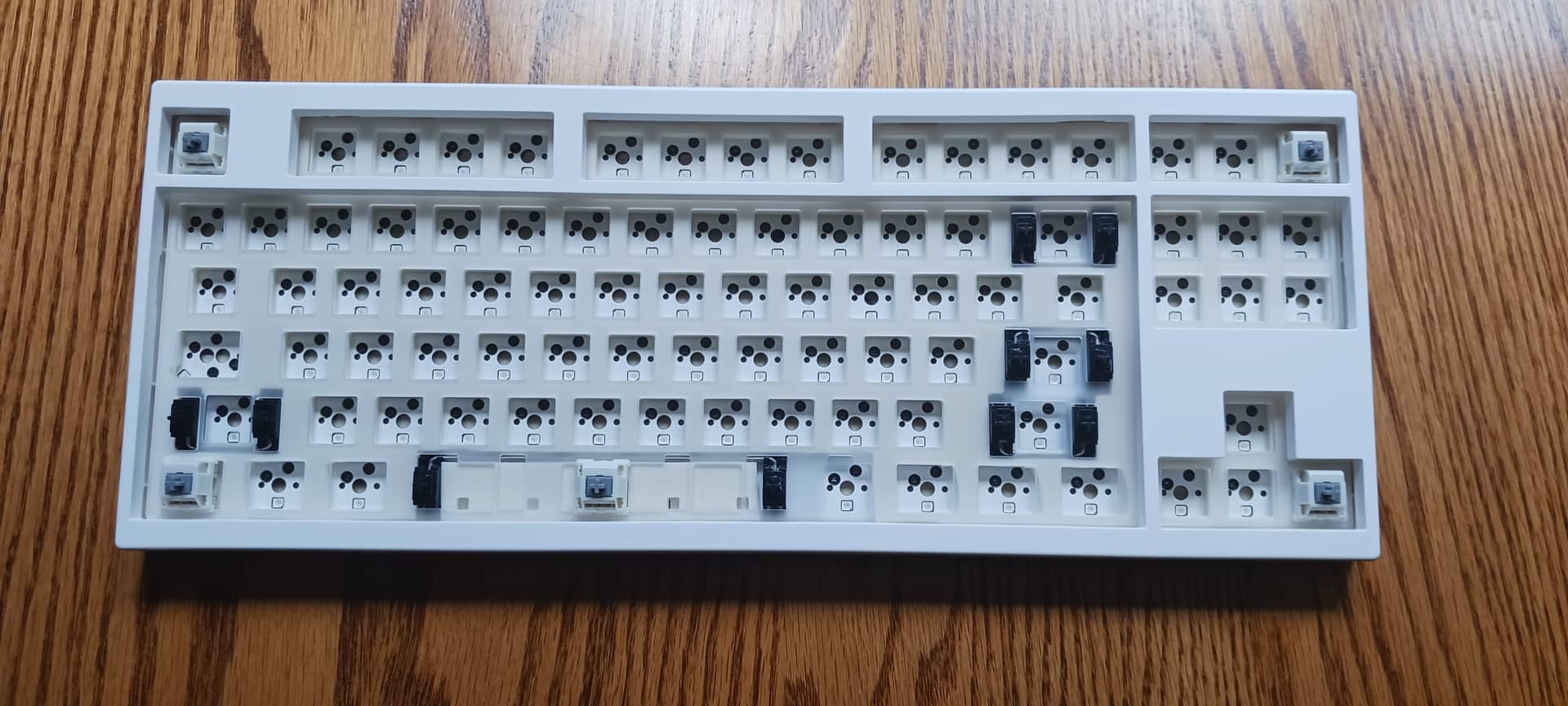
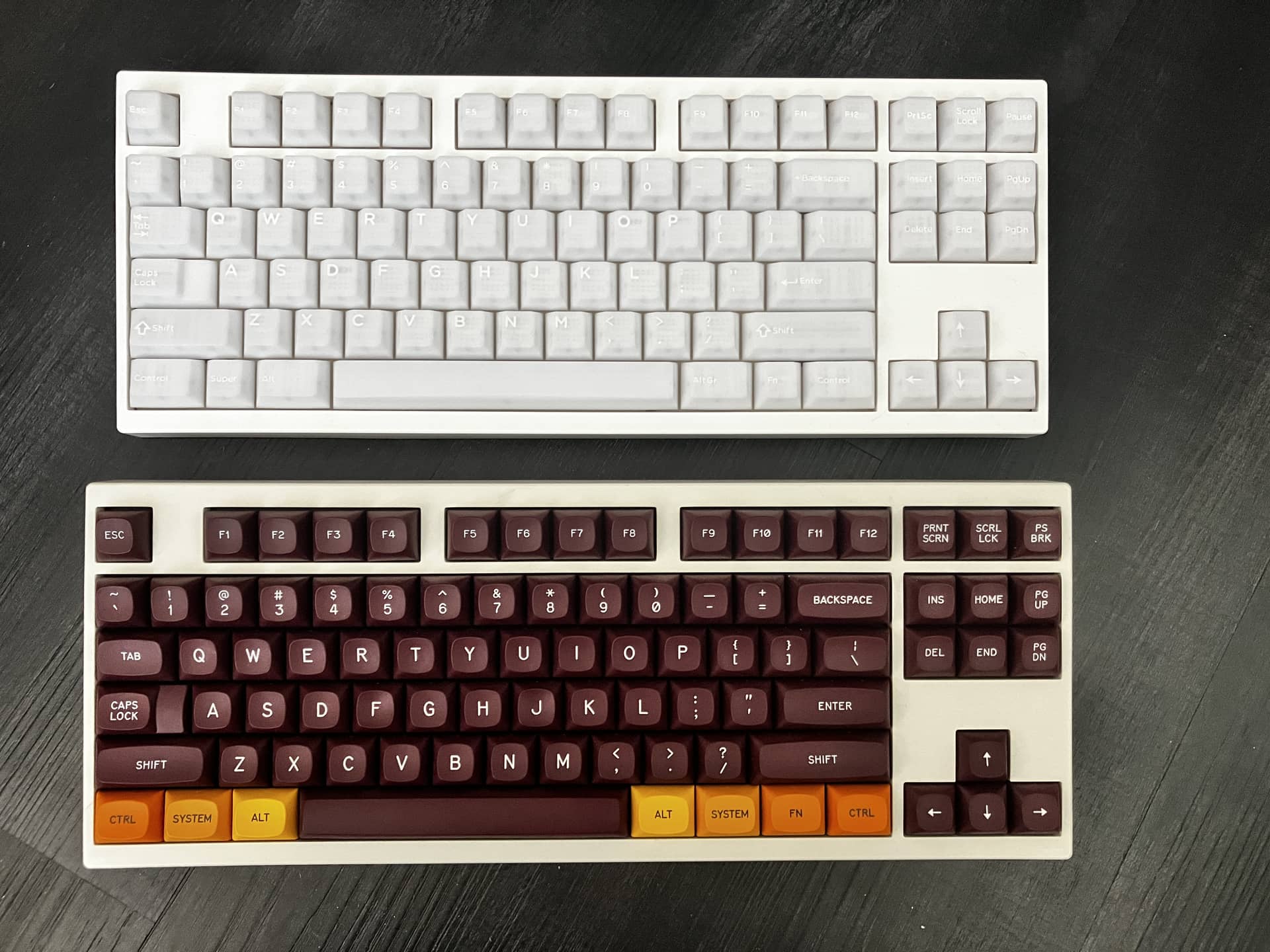
The purpose of the build was to replicate an existing Transition Lite TKL.
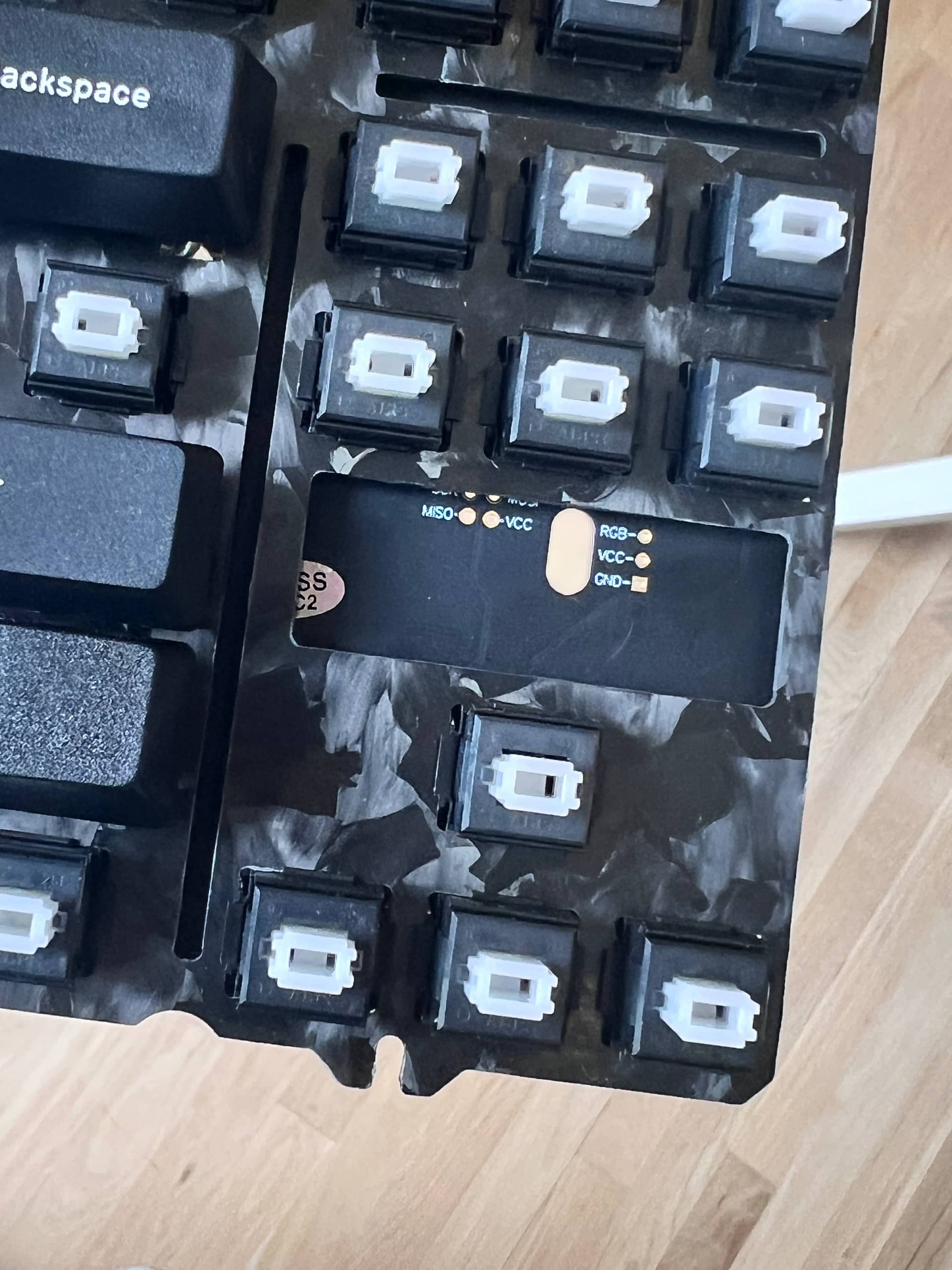
I tested the Lanes on a 1.2mm PCB, so the 1.6mm that shipped with the “beige” TKL was swapped with a 1.2mm.
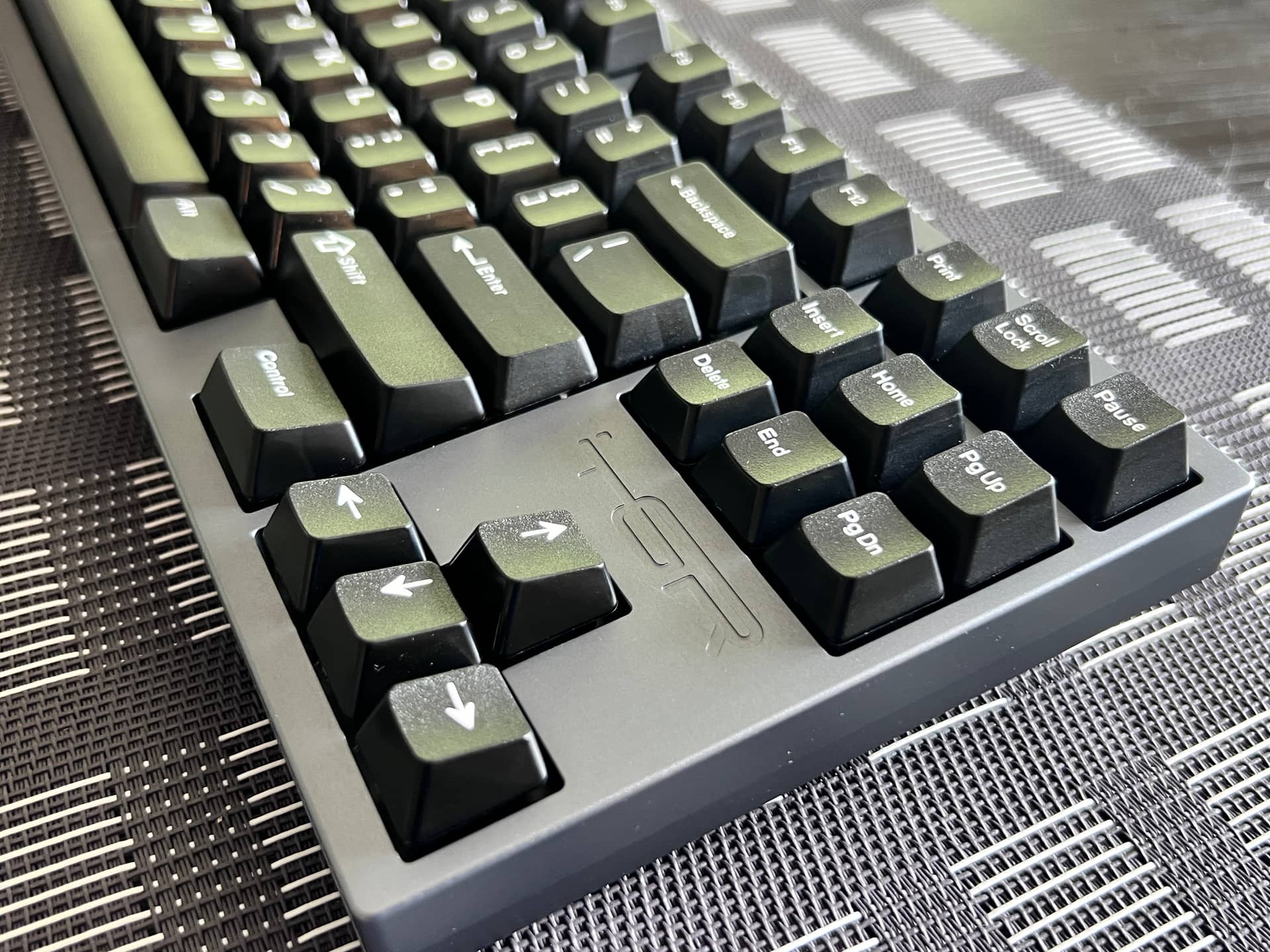
Yes, a 7u spacebar would have been more ‘retro.’ But it would have been less compatible with the PBT sets I ordered for it. And I didn’t want to have to use a heavier spring for the spacebar. I wanted to try these, stock.
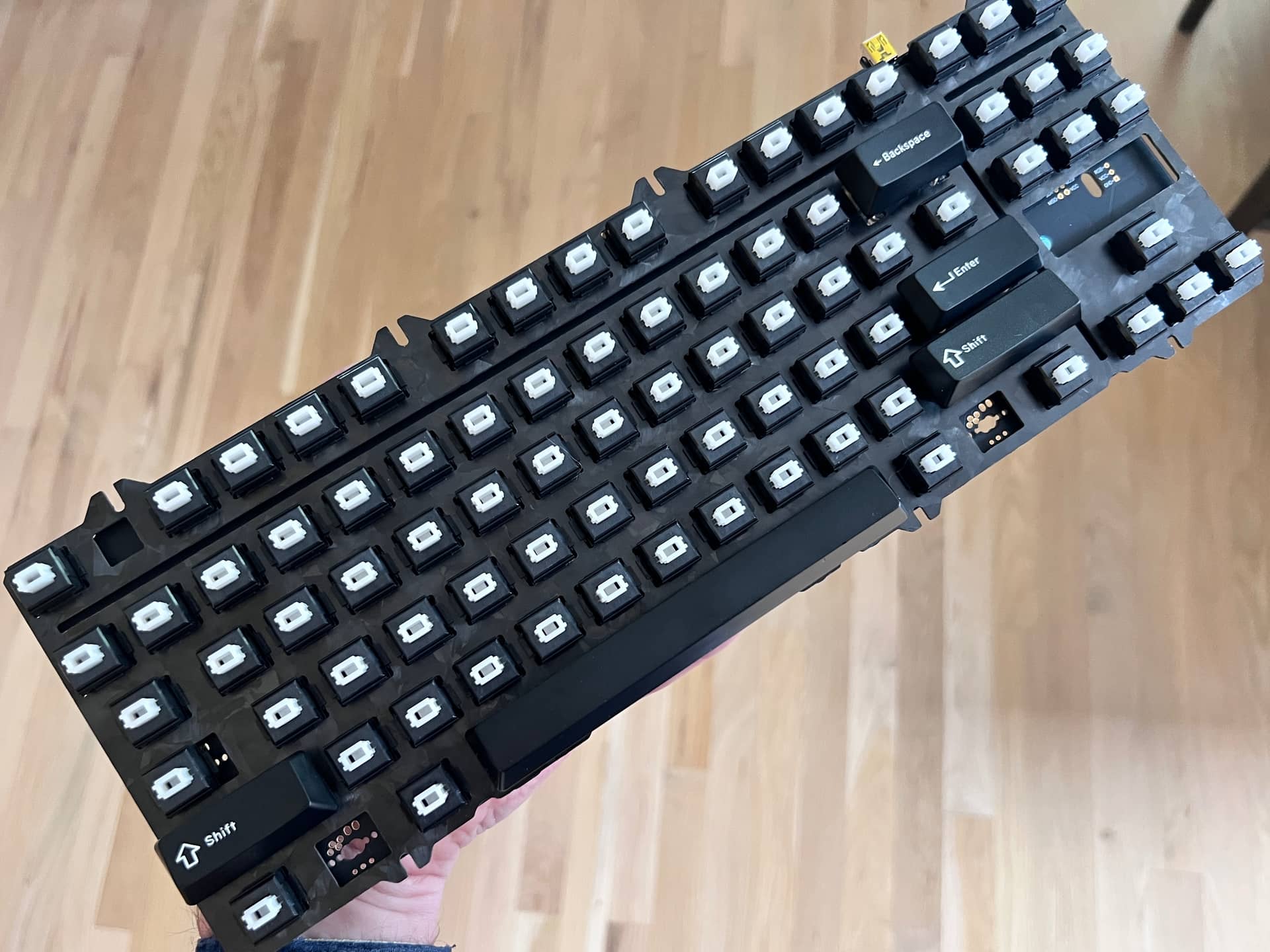
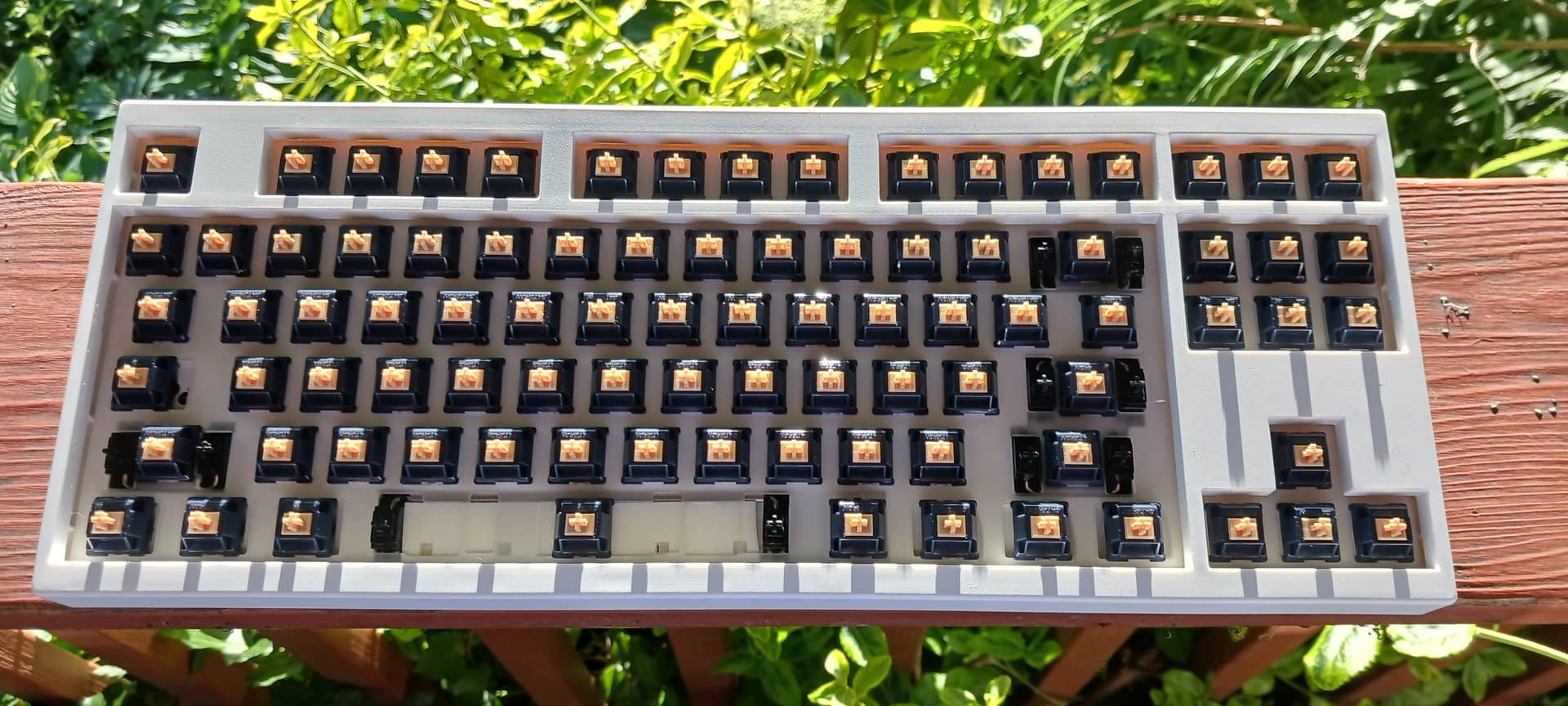
So this dedicated build ended up with:
-1.2mm 6.25u PCB
-TX 1.2mm hand-lubed AP stabilizers
-gaskets, PCB foam, and rear PCB foam
-stock polycarbonate plate
-stock Gateron Lanes
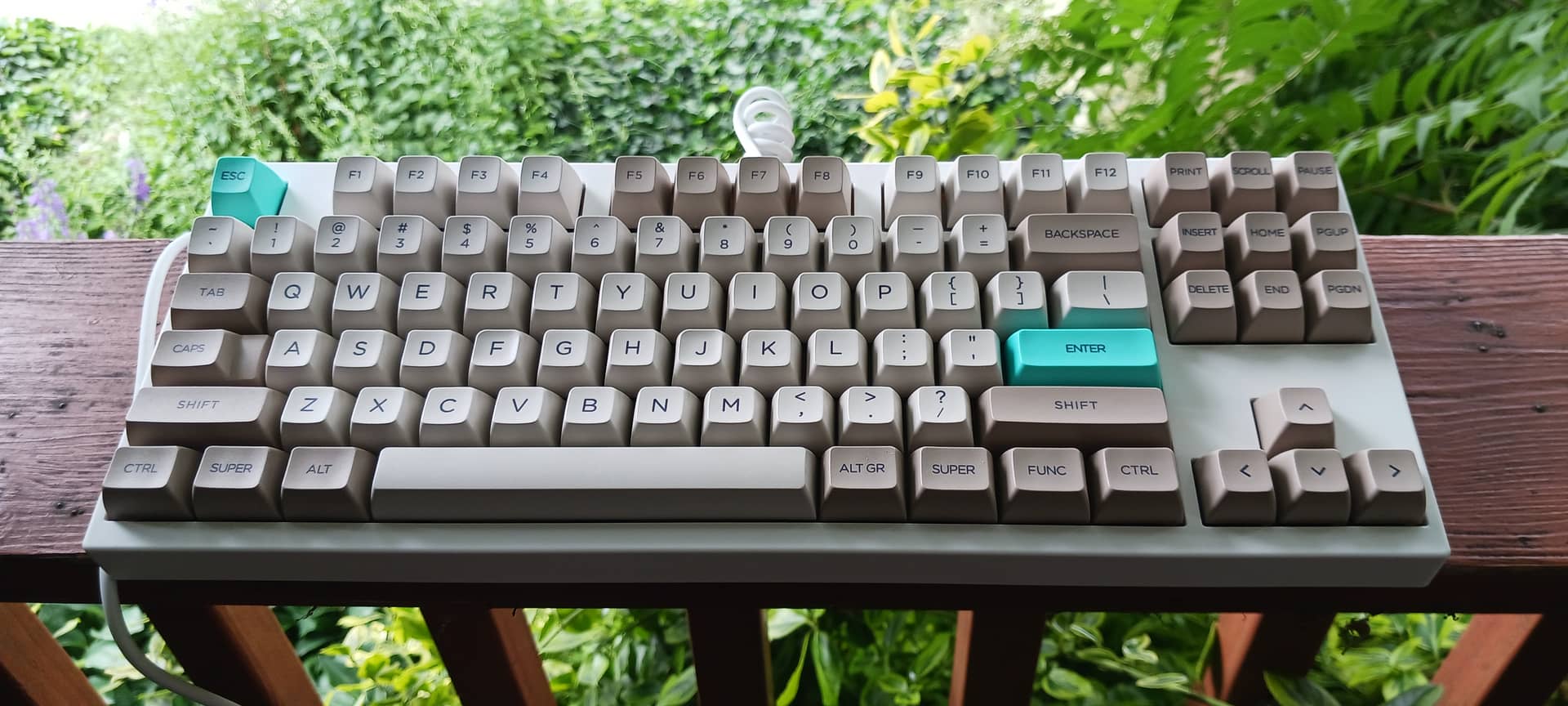
I also found a white cable on AliExpress that matched this board.
Typing Test
Above is the audio of a typing test, posted as a video. You can hear that, with the SA keycaps and polycarbonate plate, it’s fairly bassy.
Impressions
This is more of a “typewriter” switch. A light typewriter, best for fast entry of words.
Detailed impressions, below. [Click “Summary” to expand.]
Summary
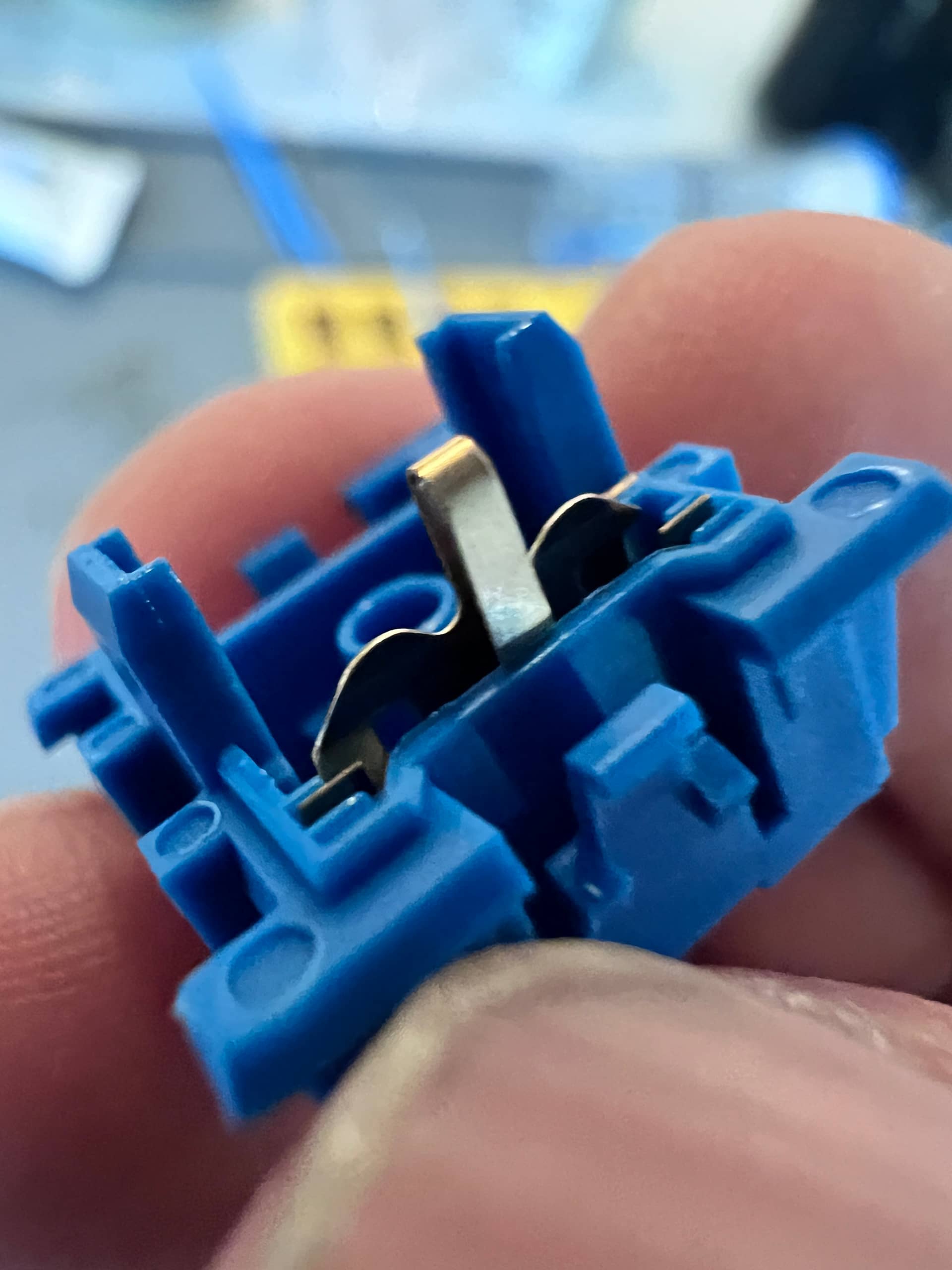
These are tactiles [“silent click”], and not heavy.
And these definitely aren’t MX Browns. With Browns, there’s a tactile ‘notch’ somewhere that you overcome, somewhat like a ramp. You scrape up and down that moving ramp. The Lanes, in contrast, have a more generalized ‘barrier,’ starting near the top of the switch, and the switch activates as you overcome the barrier. Not entirely dissimilar to Browns, but it’s more of a crisp barrier than a tactile-notch. These are not simply “interrupted linears.”
Sound-wise, I am using SA caps, which muffle and dull the sound somewhat, making it also more low-pitched. They are somewhat ‘noisy’ in their own way, but not like Browns. With Browns, you can hear that scratch on the downstroke and the upstroke. Cherry’s materials are very jagged, at the microscopic level, and you can hear that. The Lanes are ‘cleaner’ in that respect, with Gateron materials smoothness. But the leaf, springs, and actuation mechanism make their own sounds, which you can sometimes hear over the stem movement. A bit of a ring, and sometimes ‘squishy’ noises, I’m not sure why. But these are common in Gateron switches. It would probably be more pronounced, with lighter keycaps.
Overall, typing on 1U keys sounds like marbly pebbles. When using SA-profile PBT keycaps. I’m sure that’s a sound desired by many. Obviously, switching to something like DCS-profile ABS double-shots would be more resolving both of sound and tactility. The sounds of the large modifiers are exquisite. Almost a hollow, plastic ‘clang’ with the ENTER key, more of a dull, flat thud with the BACKSPACE. The spacebar is where it’s at, though. A hearty, clangy thud. The large keys make their sounds consistently.
It’s notable that stem bottom-out isn’t too harsh. This is a flexy build, so that’s to be expected. But there’s no long-pole ‘slam.’ The only slam is the collapse that happens after the tactile barrier is overcome. It’s not as gentle as an MX Brown, or similar designs, but should be fine for prolonged typing. I’d say it’s harsher than a BOX White, but much less than a BOX Navy.
Upstroke is somewhat constrained by how the switch operates. Both upstroke and downstroke are not exactly the smooth gradient or curve that you might be expecting from certain light-tactiles. The click-heritage is definitely evident. This means that there might be a bit of perceived hysteresis. You might even feel a “snap” on the upstroke. So, this isn’t a switch where you want to ‘hang’ the actuation point, for rapid subsequent presses. Instead, it gives you a definite actuation point for rhythmic typing.
It’s a more ‘classic’ feeling switch - something you’d expect to find on a keyboard from 1983-1985. Feels like some obscure non-Cherry tactile from that period. The tactility isn’t meant to overwhelm, but provide a consistent typing experience. There is something of a tactile ‘noise’ to how the switch operates mechanically, similar to older [and more tactile] ALPS switch. In combination with heavier or lighter keycaps, you can tune the typing experience from minimal tactility and low-pitch, to a somewhat more vividly ‘mechanical’ one.
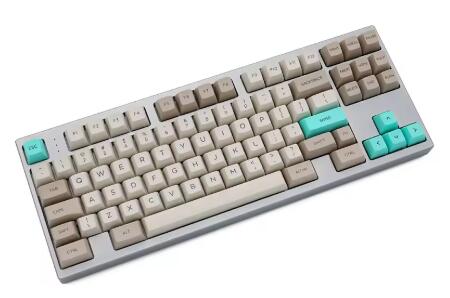
I think that this keyboard build would be an excellent candidate for DCS SMRT. The board already has the look of an old WY-85 keyboard, at least in terms of colour and intent. It interacts with beige + cream sets very well, and really only needs that gray + cream + blue of the WYSE DCS keycaps.
If anything, the Lanes and Melodics are somewhat analogous to BOX Browns and BOX Whites. The BOX Browns use a similar architecture to the BOX clickies, but do not engage a clickbar.
Likewise, the Lanes are not meant to engage the click leaf in the same way as the Melodic clickies. The Lanes immobilize the click leaf.
So, the Lanes give a relatively clean, tactile feel. Great for rhythmic typing. Maybe not so much for rapid upstroke
Bonus Materials
Since this keyboard is kind of like some 1985 terminal/workstation keyboard, or would be if it used a 7u layout and a 100% board, I wanted to try it with something appropriate.
Maybe it would have been used with DOS applications, eventually. I tried it with Rogue (1983), and it worked fine. But here’s something a little more animated:
Video 1:
https://imgur.com/k5dVuUs
Video 2:
https://imgur.com/COqQMnc
(Sorry about the 16x9).
Conclusion:
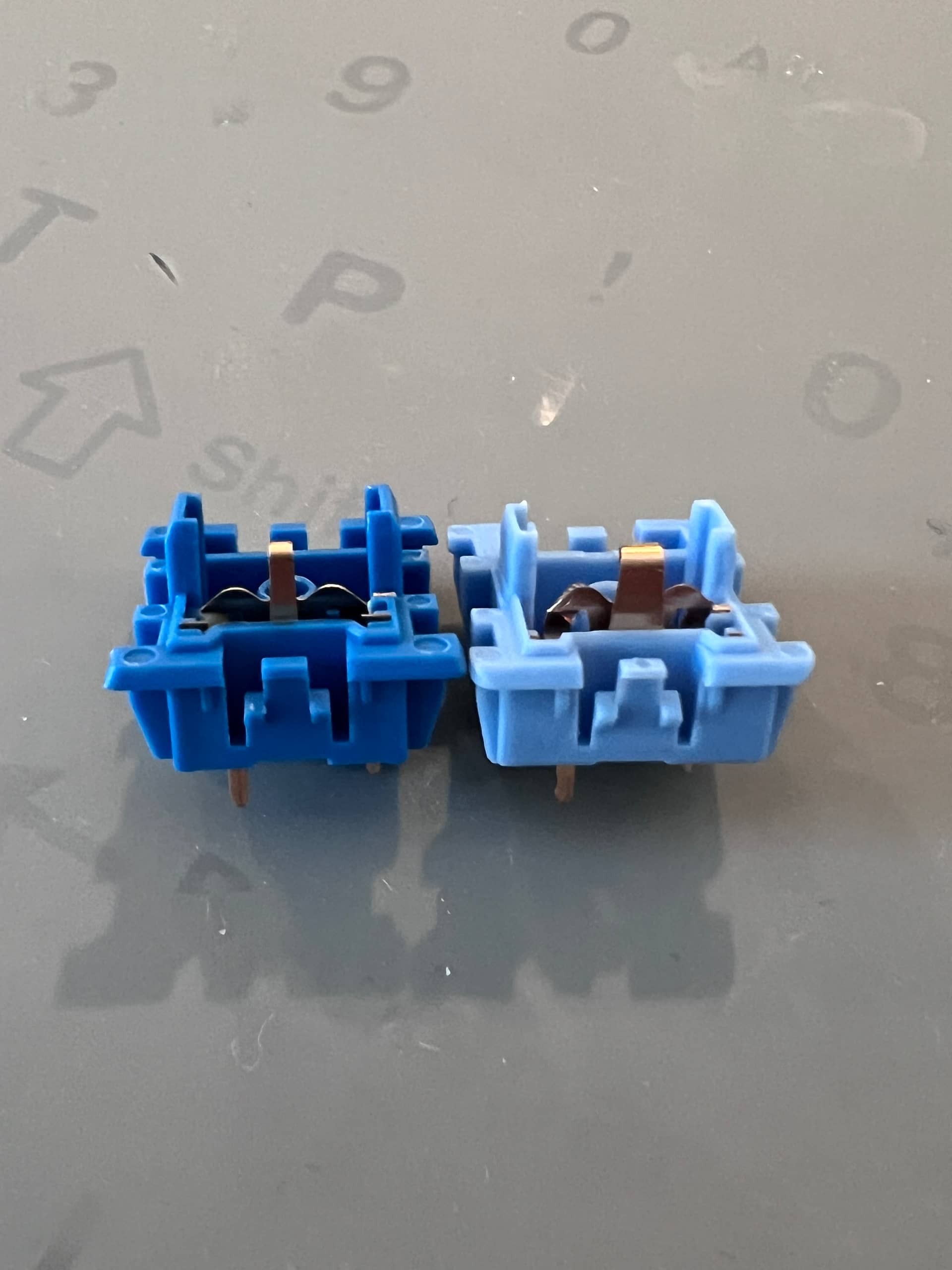
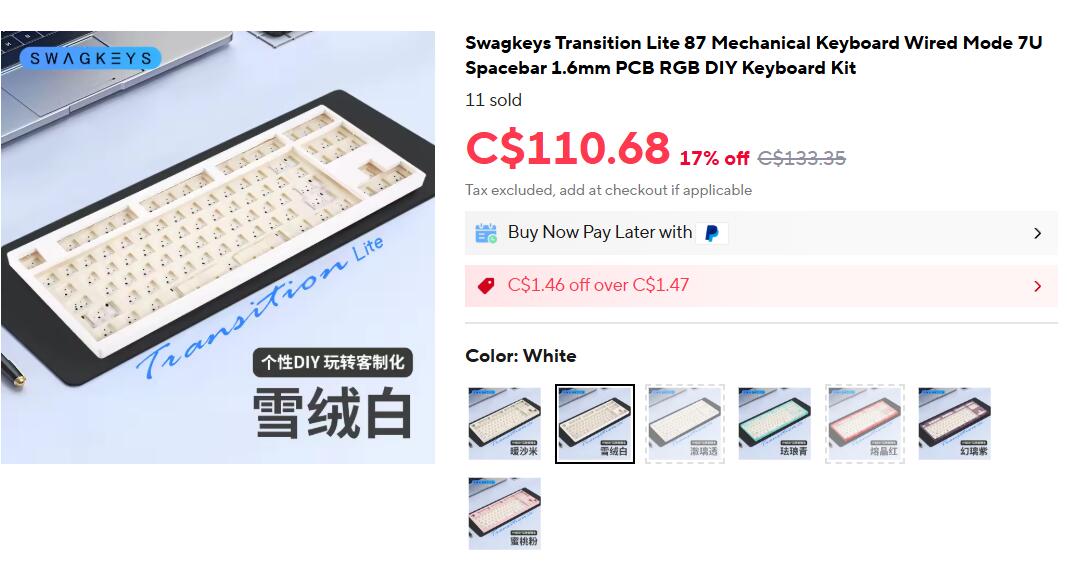
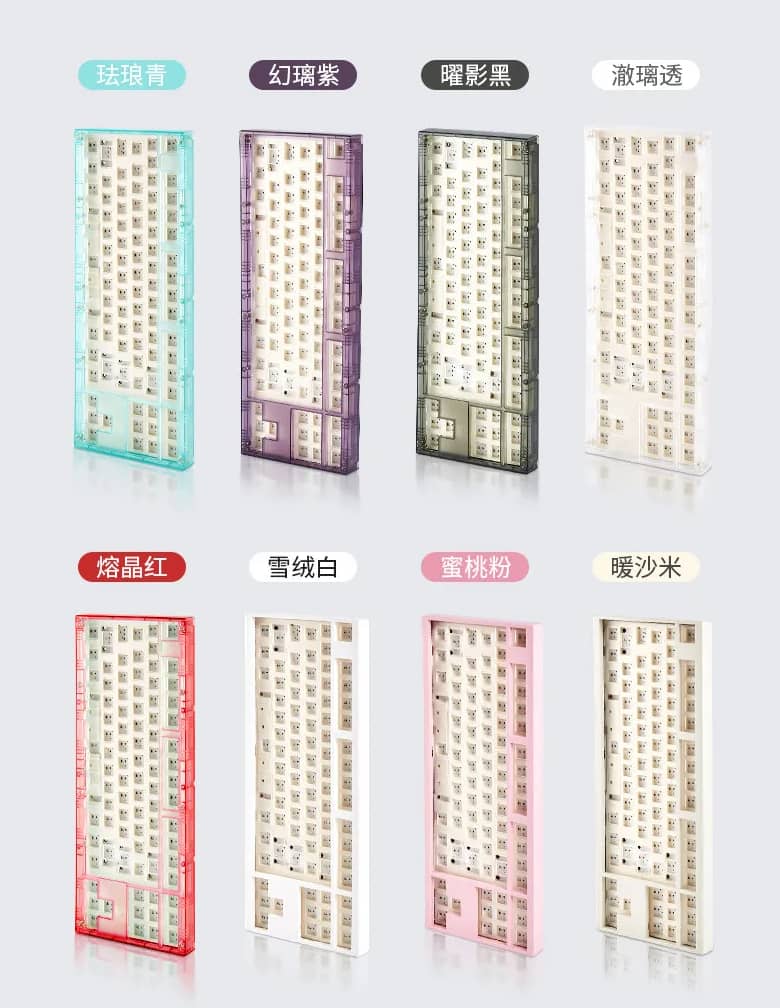
So, I hope you found this educational. If AliExpress sellers seem confused about the colour they are selling, maybe they are.
Gateron Lanes are what they promise to be - a tactile switch based on a quieted clicky-mechanism. Feels less like a Cherry notch-style tactility. Not a heavy-tactile, though, and can be mediated via different keycap types.
I am glad that Gateron adopted enthusiast work, creating something different than standard MX tactility. I really think that this is a road all manufacturers should travel down.