Wait, what, no way that’s a trackpoint, is it? Tell me it is and take my money!
That would make this thing legendary. Sadly, they are just normal buttons.
2 Likes
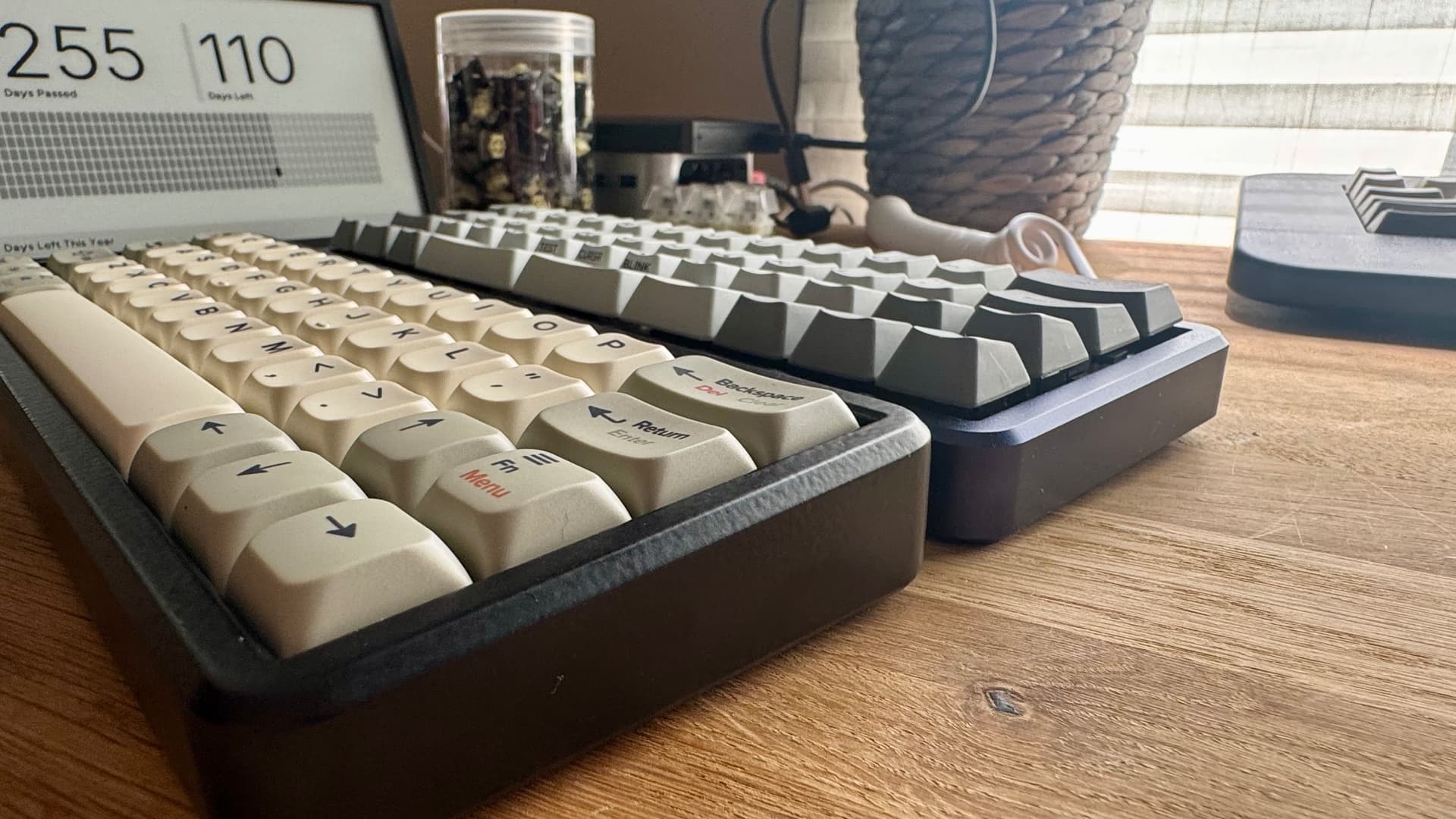
Potato pics but I love the way these two sets look on my OGR
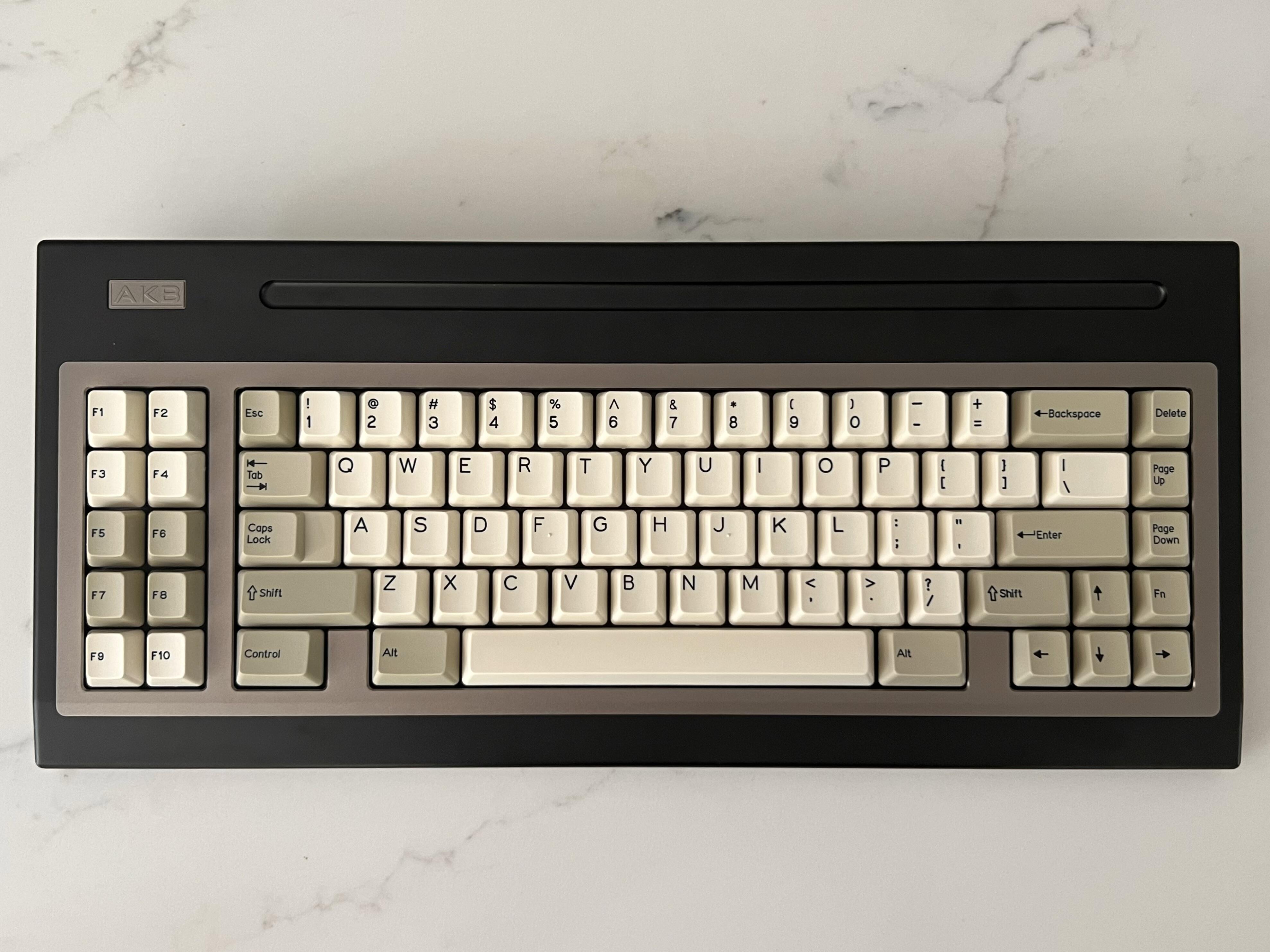
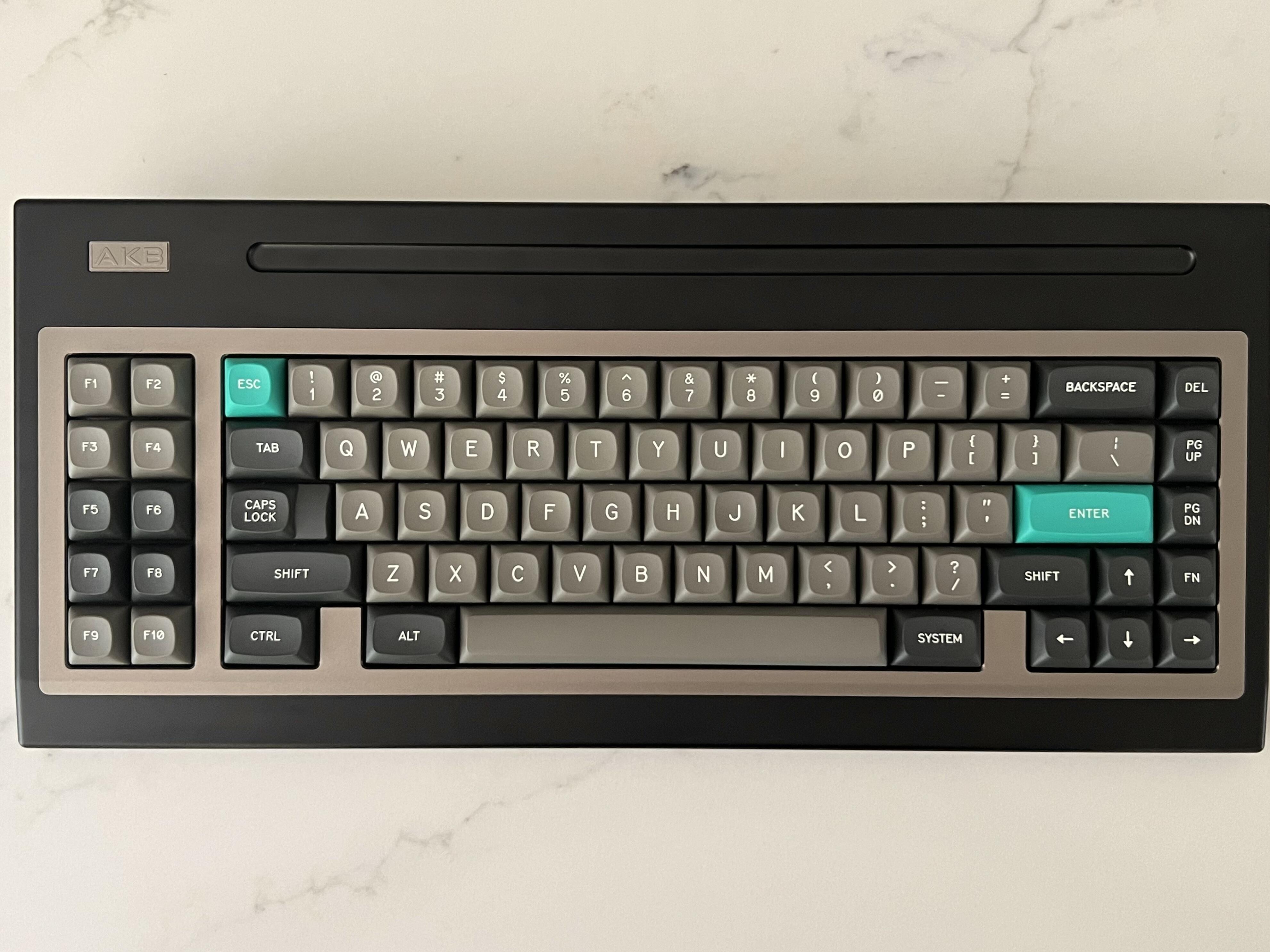
I recently rebuilt this with cherry orange switches for maximum vintage feels 
18 Likes
Oh, this looks so good! I’m trying to resist OGR2, but if anyone ever runs DCS Dolch I’m done for
3 Likes
There IS as DCS dolch group buy in the works. It’s planning to run in September
4 Likes
There is also an IC floating around for a DCS set called Ozzy Dolch (the runner is from down under). Although it’s just a TKL base with very few extra keys & a pretty high price. I’m personally waiting for Cartersrush’s run though.
1 Like
Well worth the wait with a kit including BAE and 10u spacebar.
3 Likes
oh damn yeah, I love that extension kit! FINE I will buy DCS Dolch when it runs haha 
1 Like
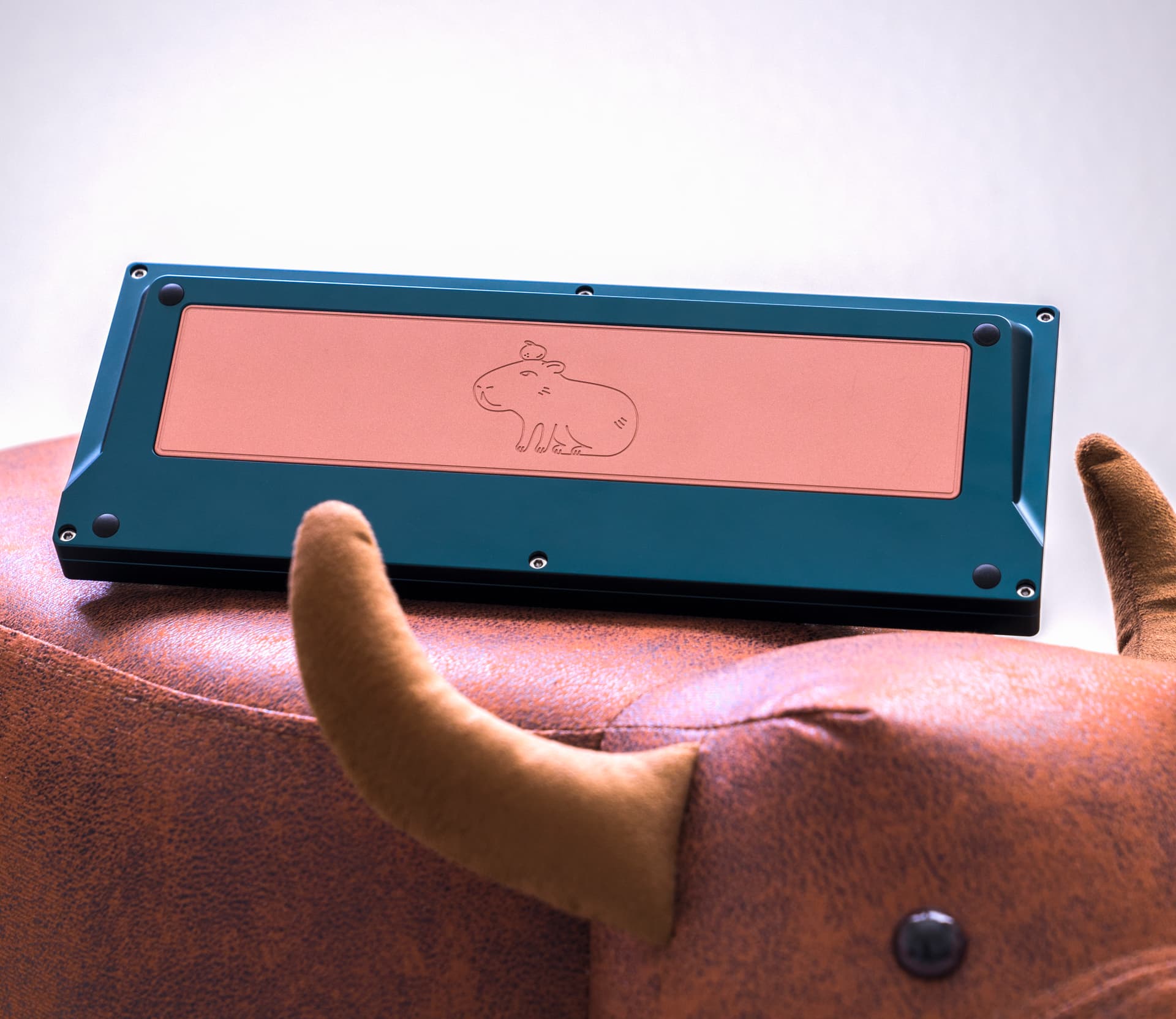
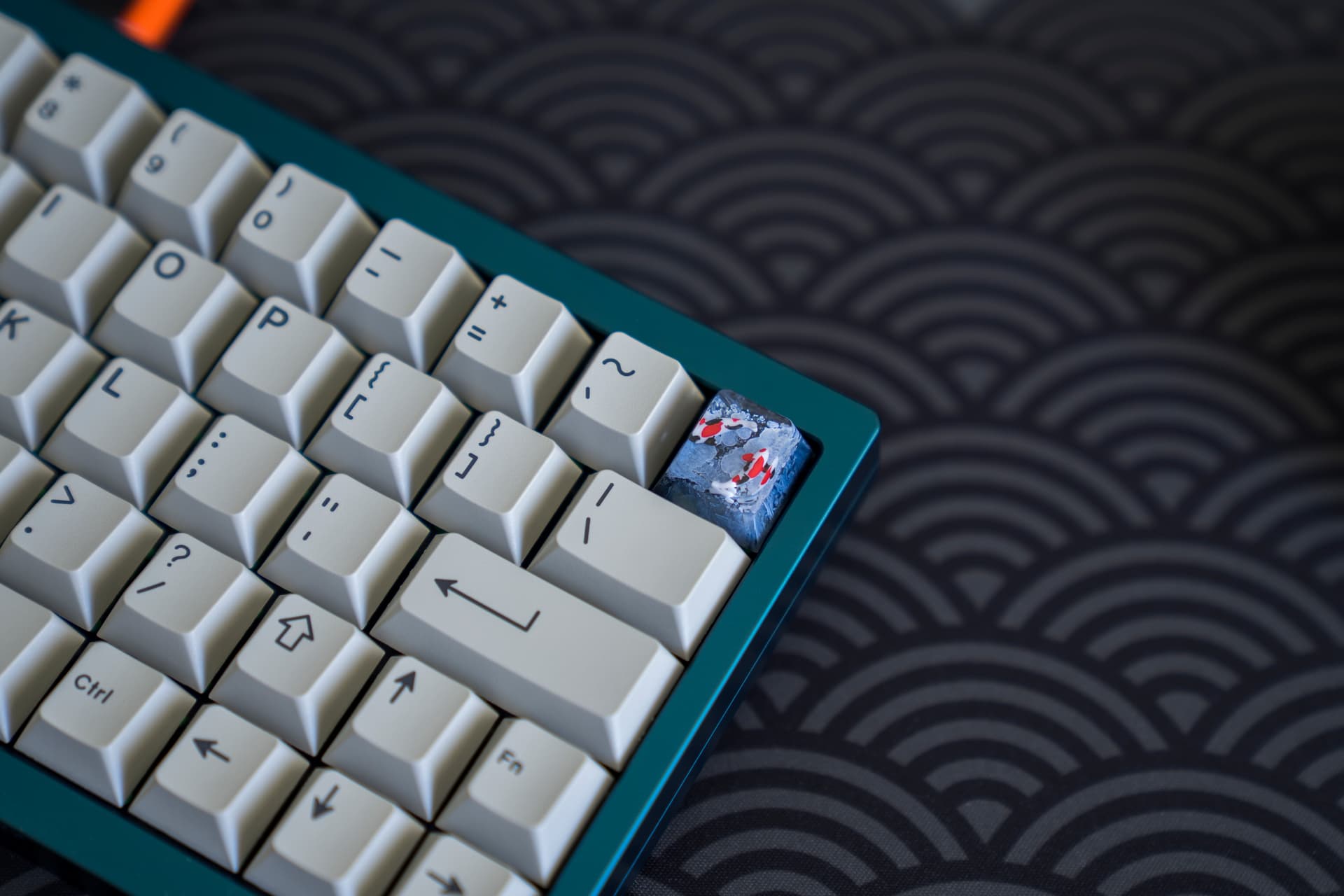
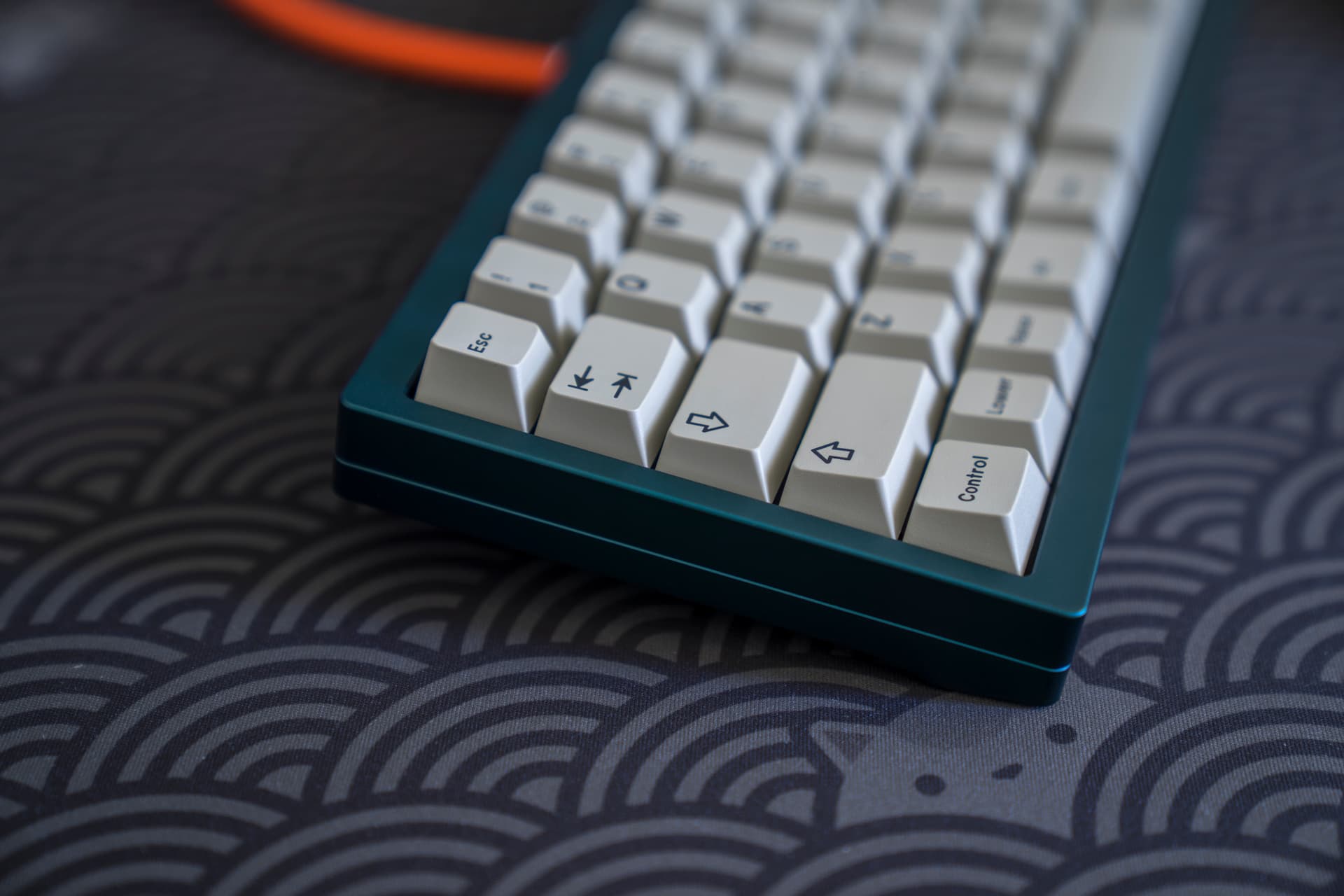
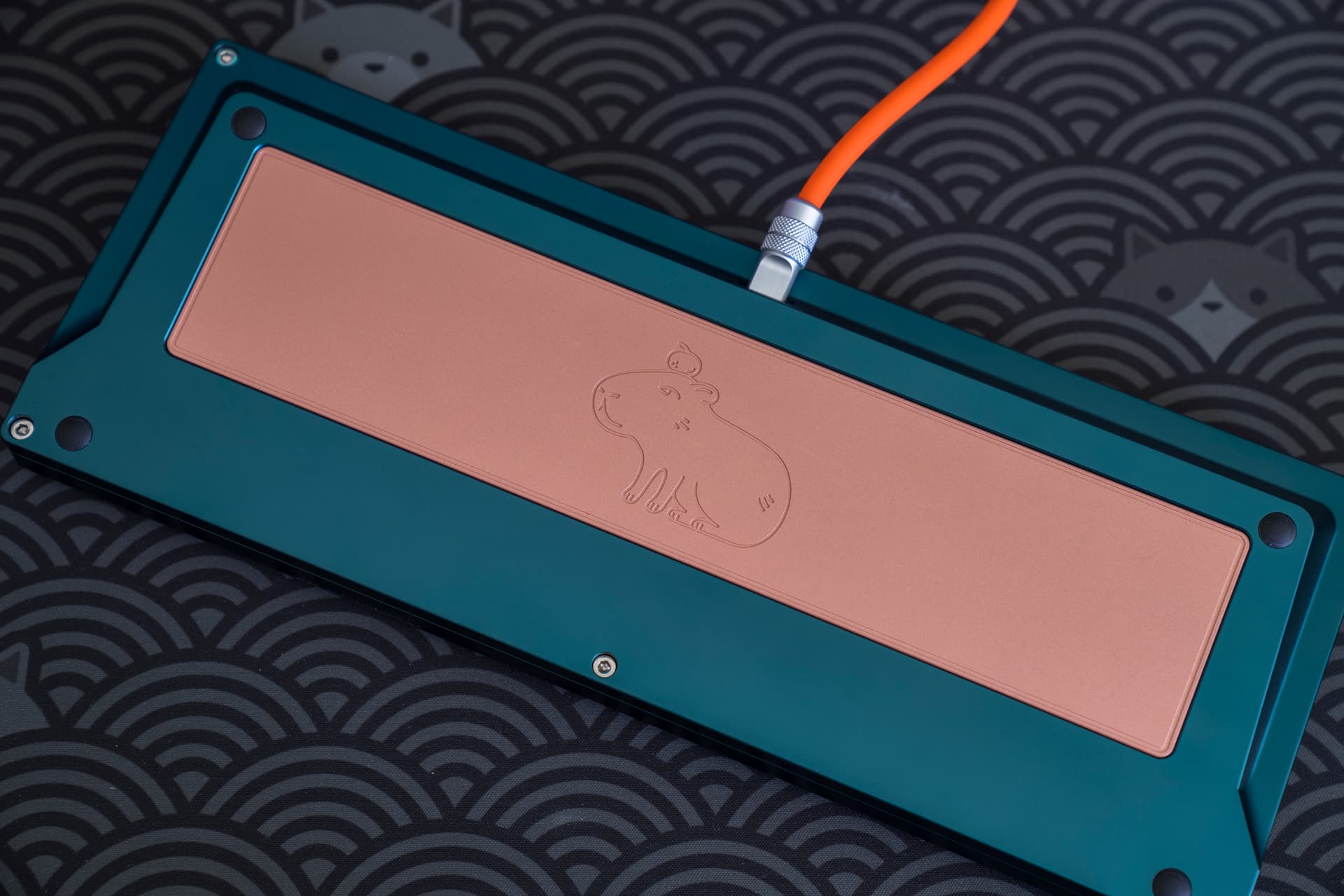
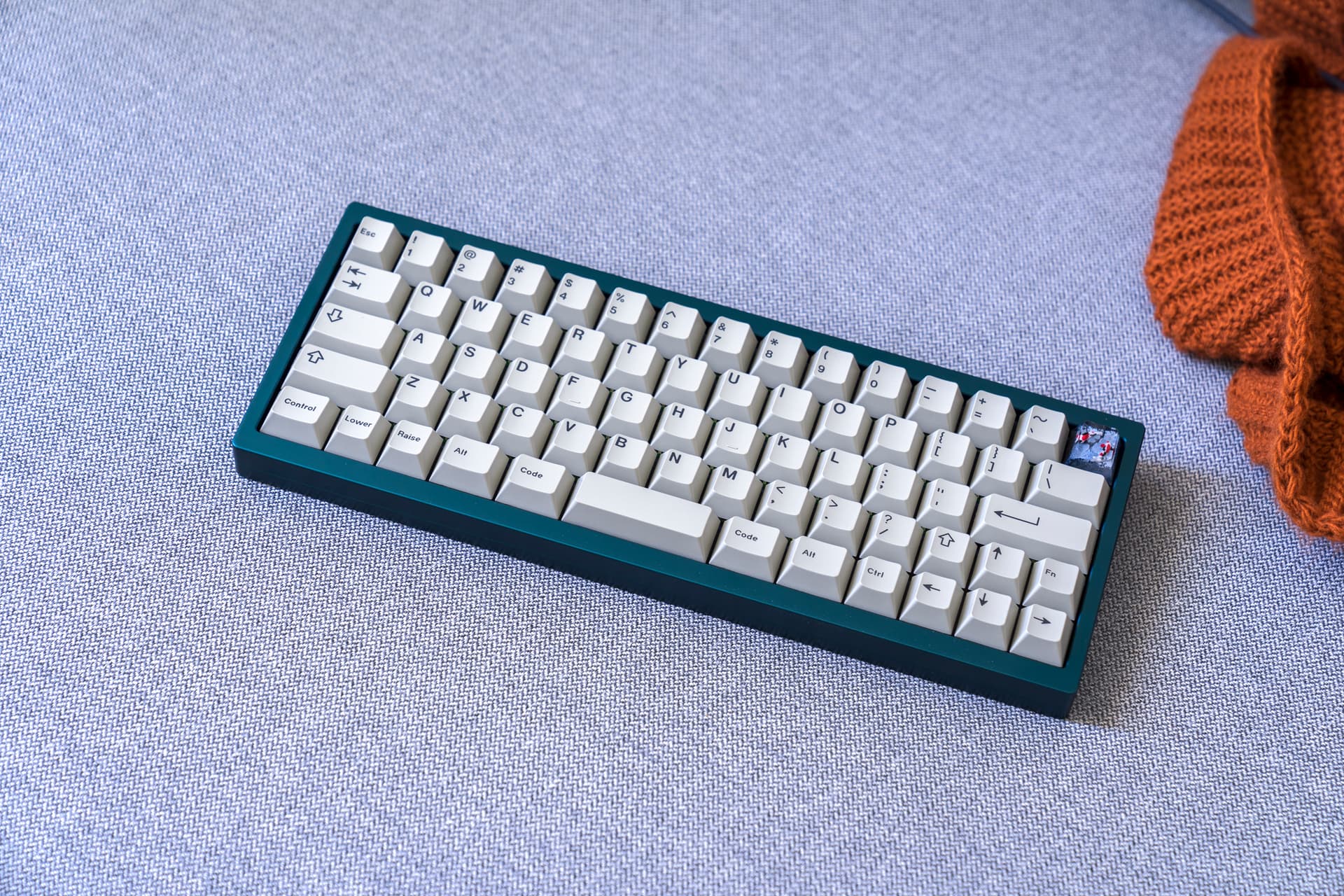
Capy60 with Sixes today.
GMK Sixes has this weird hint of mossy green to it, and the prussian blue ano has a rich green tinge to it too. I love how the two look in low light IRL.
I call this combo the 69 
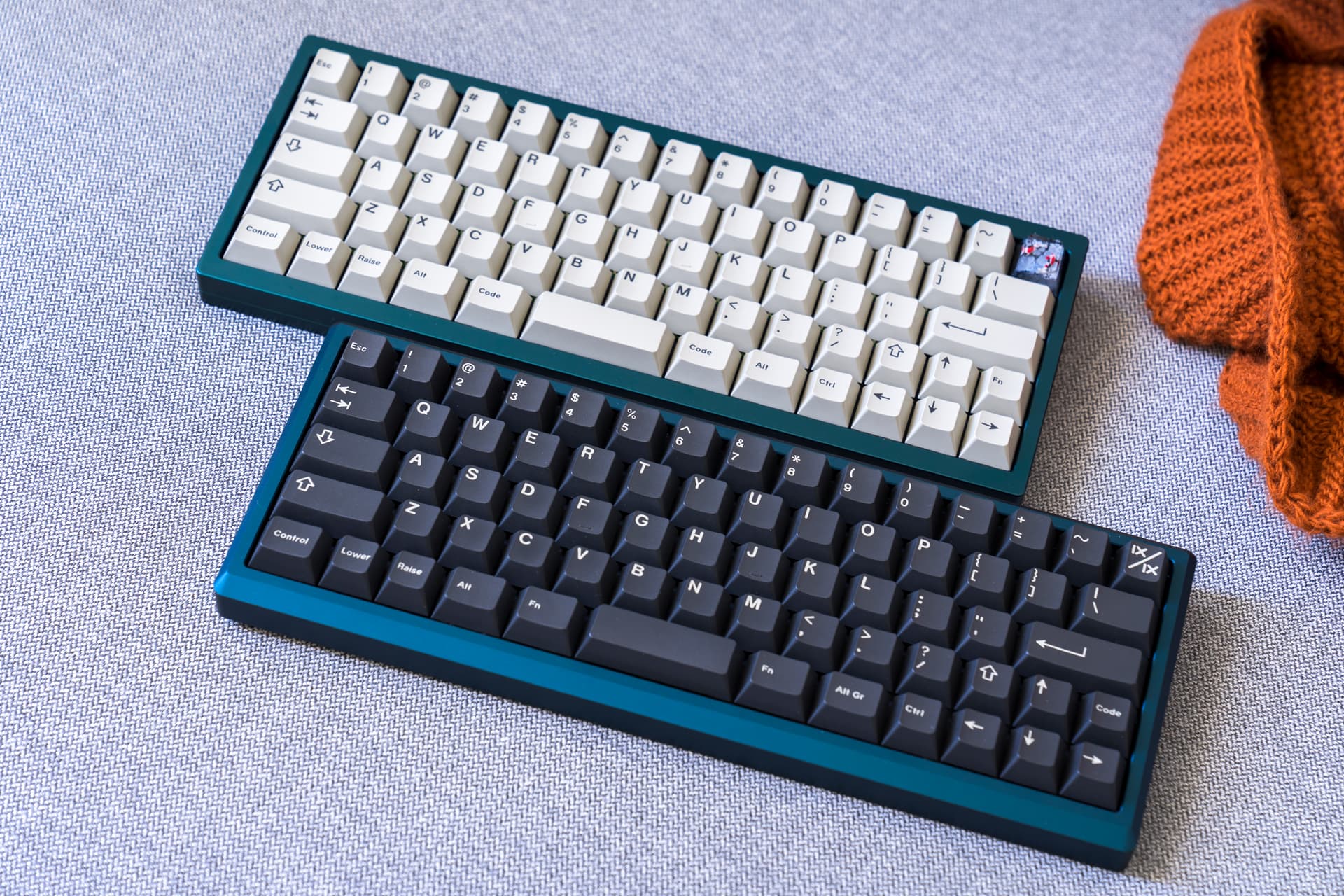
Peacock Arc is blue blue blue.
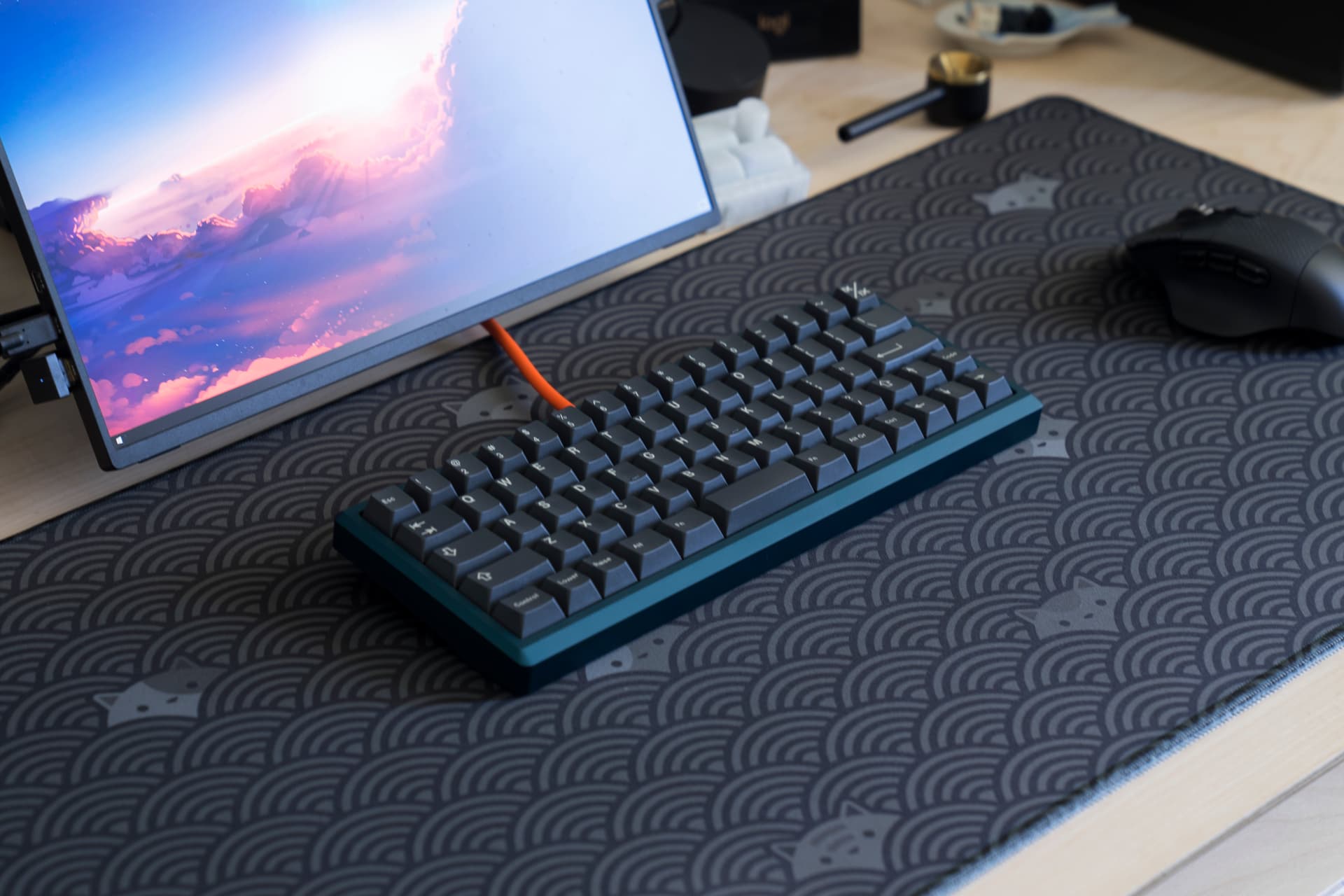
Happy Sunday ya’ll 
14 Likes
I love that color!
1 Like
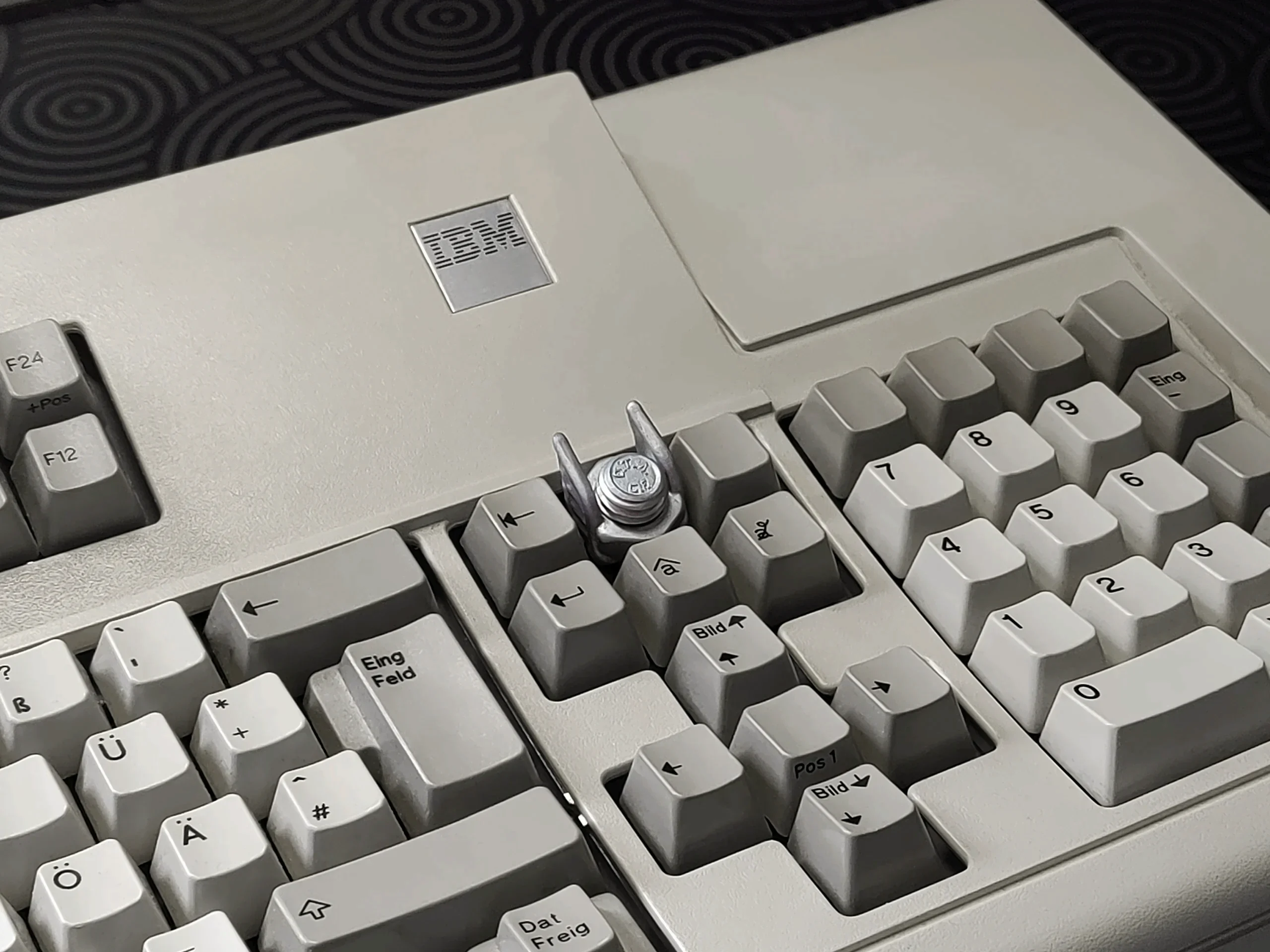
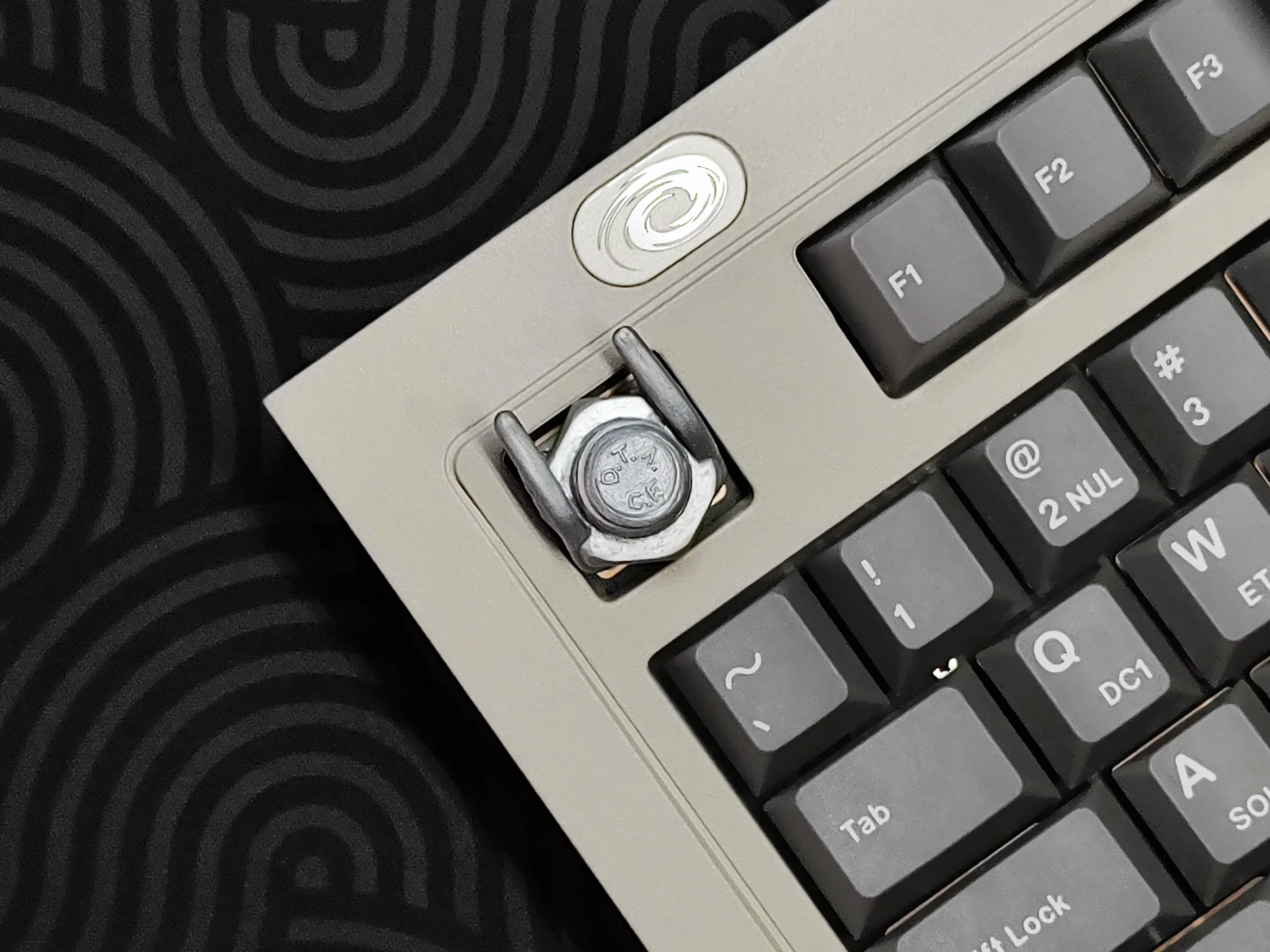
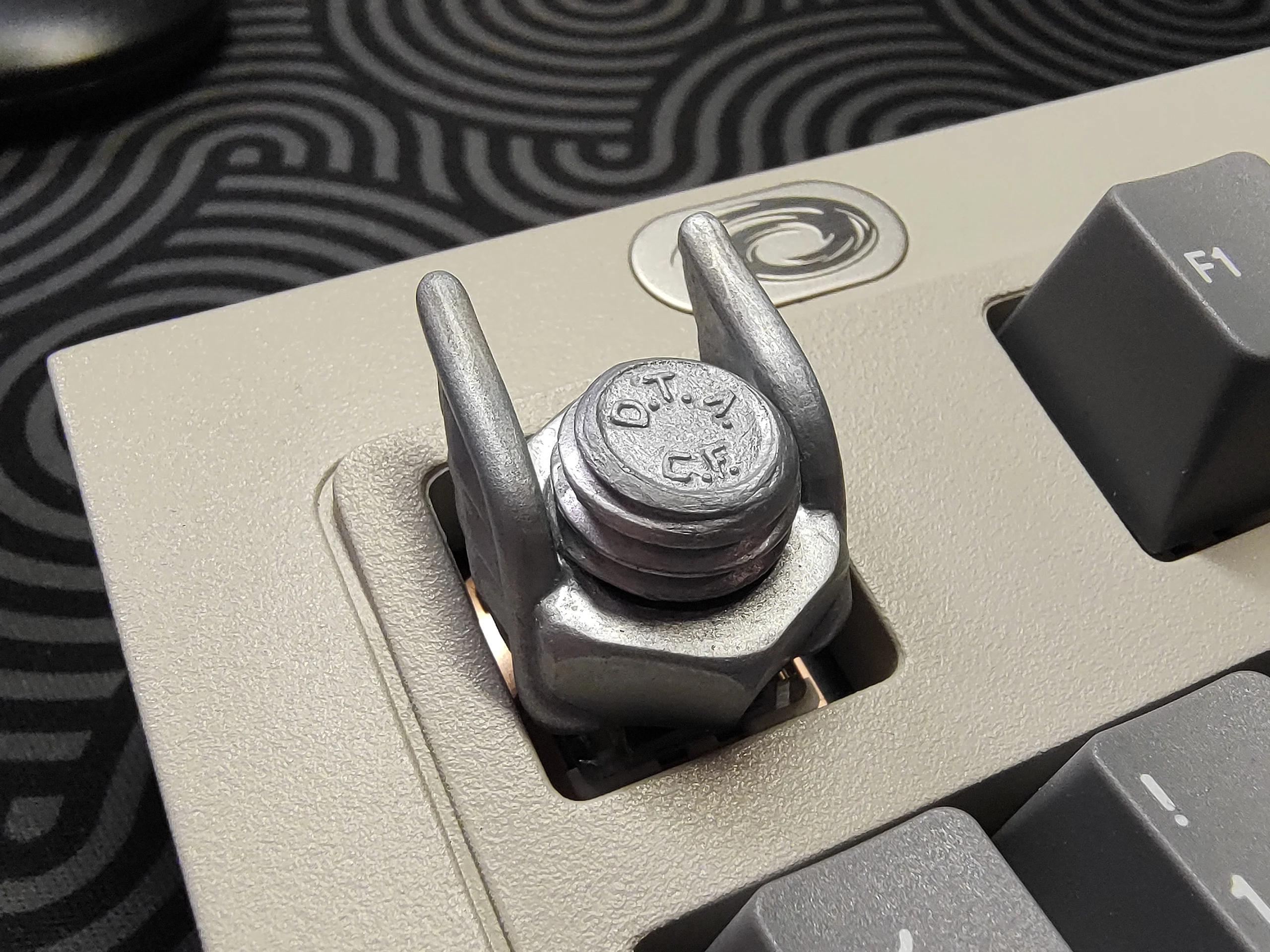
I recently won this Wingnut Trophkey on Keyboard Institution (KBI) for notable community contributions! Being an IBM fan, I had to ‘try’ it on this 122-key Model F Converged Keyboard. Since the keycap is MX mount, it’s actually just sitting in the F122’s barrel (lol), so I’ve also included two photos of it on my Vortex SSK as well.
For context, these were commissioned over a decade ago for Deskthority Awards (DTA) and made by clickclack of Clack Factory, eventually falling into the hands of @LightningXI. Thanks to LightningXI for making this possible, and to everyone who voted for me and said kind words in their nominations!
21 Likes
Grats Shark, your really deserve it man! Your work cataloging info on all things keyboard made by IBM has been a godsend for me & many others!
4 Likes
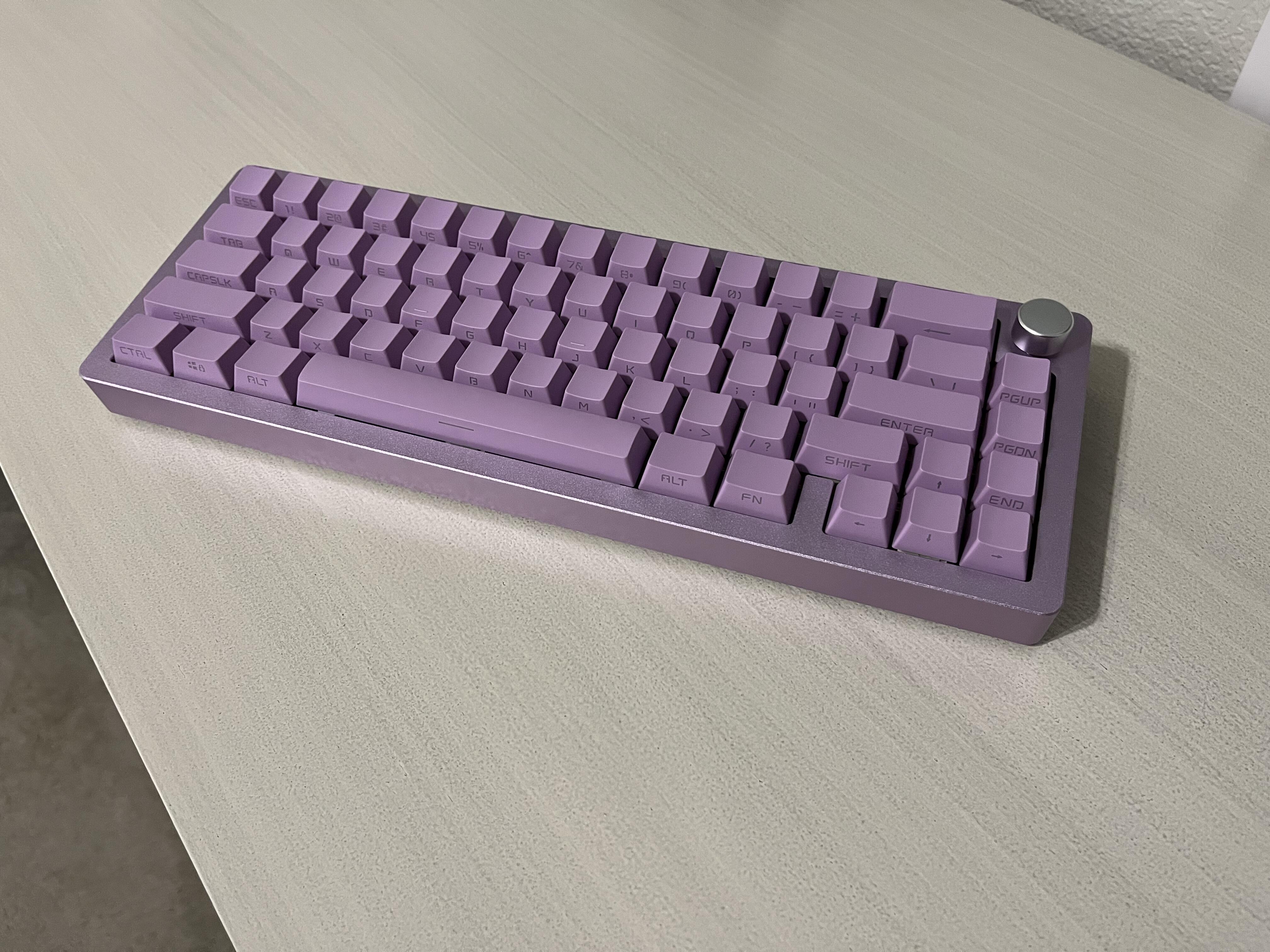
Received the Epomaker Tide65 today. It’s nice, but I have to say I’m pretty glad I paid what I did for it. The lavender/purple anodizing is done very well, I have to say, and the general appearance is definitely something that cost more than thirty bucks. Decent heft too, though I’m considering ditching the battery and sticking more steel wheel weights in there, as with my Tofu. That does bring us to the first chuckle moment. While the board is solid aluminum, the vast expanse of branded shiny metal on the bottom is not a weight; rather, it’s a polished sliver of sheet metal stuck on with adhesive. Also, it appears that the charging light for the battery is the Fn key’s LED, and that it is not changeable in VIA. Speaking of VIA, it wouldn’t appear in the Linux desktop app until I downloaded the json, likely confirming that they’re not following the QMK license. Cheap Chinese-designed wireless board almost implies that these days though, doesn’t it?
Stock switches are something called Epomaker Lemon, a light linear. They seem nice enough and rather smooth, but I don’t like light linears. I’ll figure out something else to put in there, though maybe just spring swapping them will be enough. I do have some Box Pale Blue lying around, which is tempting, but I have no idea how that would sound. The board has a gasket mount, FR4 (I think) plate, plate foam, and case foam, and while it doesn’t sound hollow like an unmodded Tofu, the stock switches and keycaps (some just-past-Redragon front-shine Cherry… things) combine to make it very loud and very high pitched. “Clacky” I believe is the word for it. I have an MT3 Dusk TKL set (which I also got for thirty bucks, LOL), and I think that will go fairly well with the case and should change the sound in what can only be a good way.
Typing is firm, and despite being gasket mount, it’s a tiny bit softer-feeling than my Tofu that has only the barest of force-breaks. I don’t mind that, though, and it’s the least of the board’s issues. The final interesting thing going on here is the VIA json and the PCB. When I loaded the file, it came up with a “split space” layout, and I was confused, but put it onto single-spacebar. That’s when I looked, and like a flashback to the old days when a cheap Chinese gamer board might be (Outemu) hot-swap and not market it, the PCB for this thing supports 2.25/1.25/2.75 split space. The (regular) hotswap sockets are even there. I need to test them with a jumper wire or something, but I’m betting they’re fine. The plate, however, does NOT support the split space, and with plate-mount stabs that’s going to be an issue, but not insurmountable. I have a few ideas piling up, so I don’t know when, but eventually this little goober of a board is going to have a DIY plate with split space.
Honestly, that little discovery may have saved a return, because while I find a board like this interesting, in a lot of ways it doesn’t sound or feel any better than the junkboards I make for myself, though the psychology of that preference could be pretty complex, LOL.
4 Likes
Holy moly your pictures are amazing also nice Danbo figurine
3 Likes
And how can I ignore your awesome pictures as well my eyes are very happy today ty
2 Likes
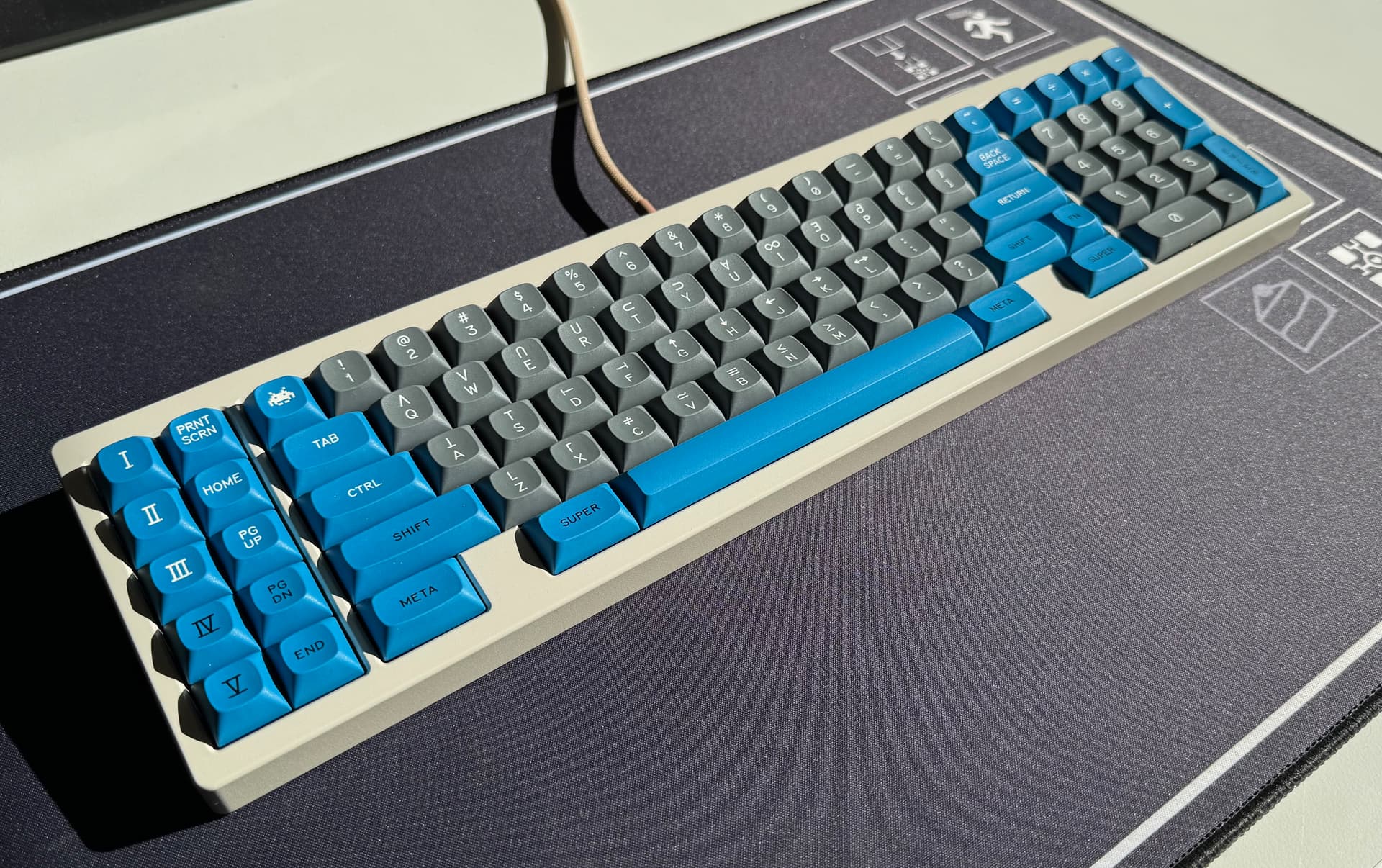
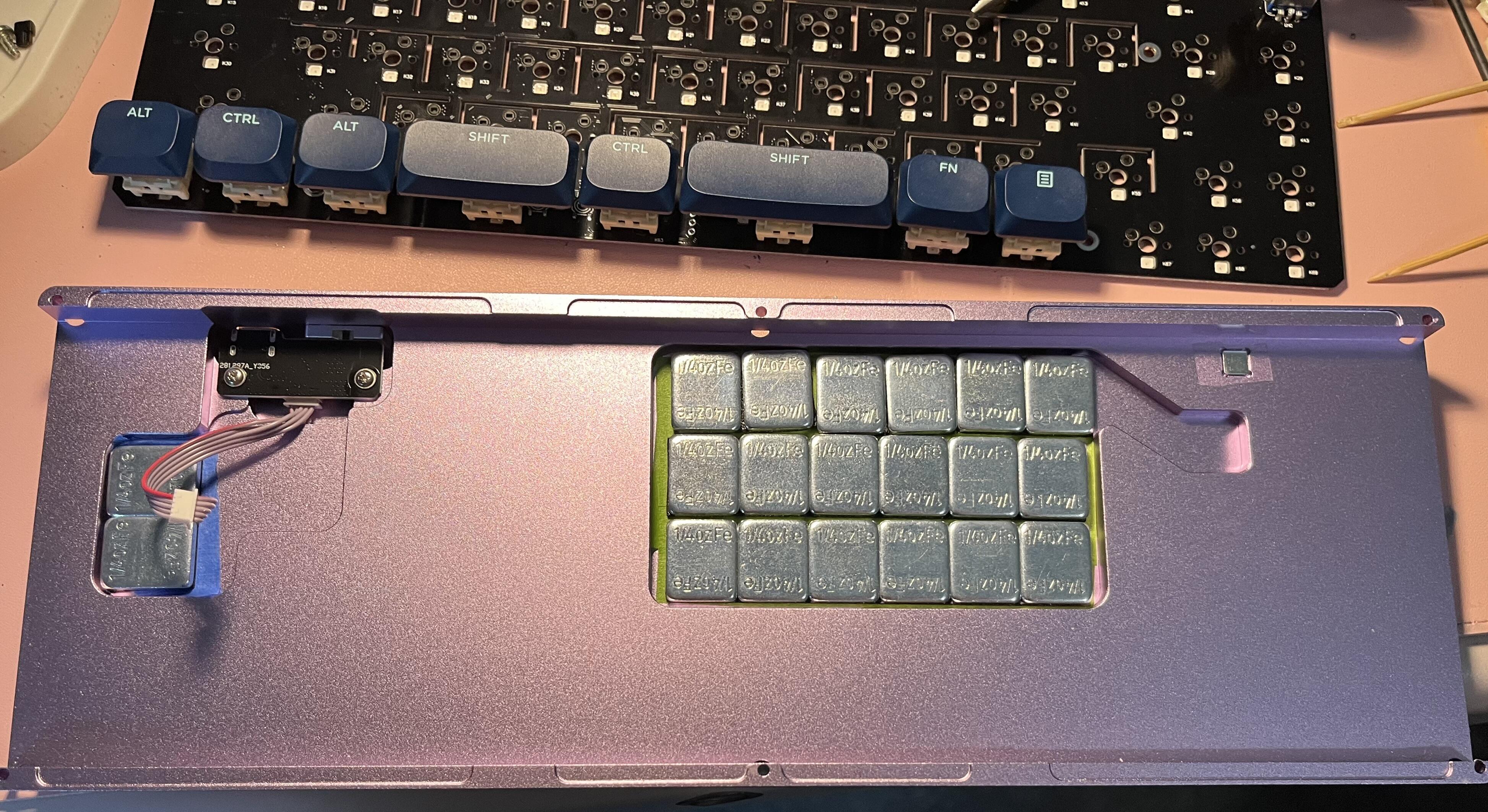
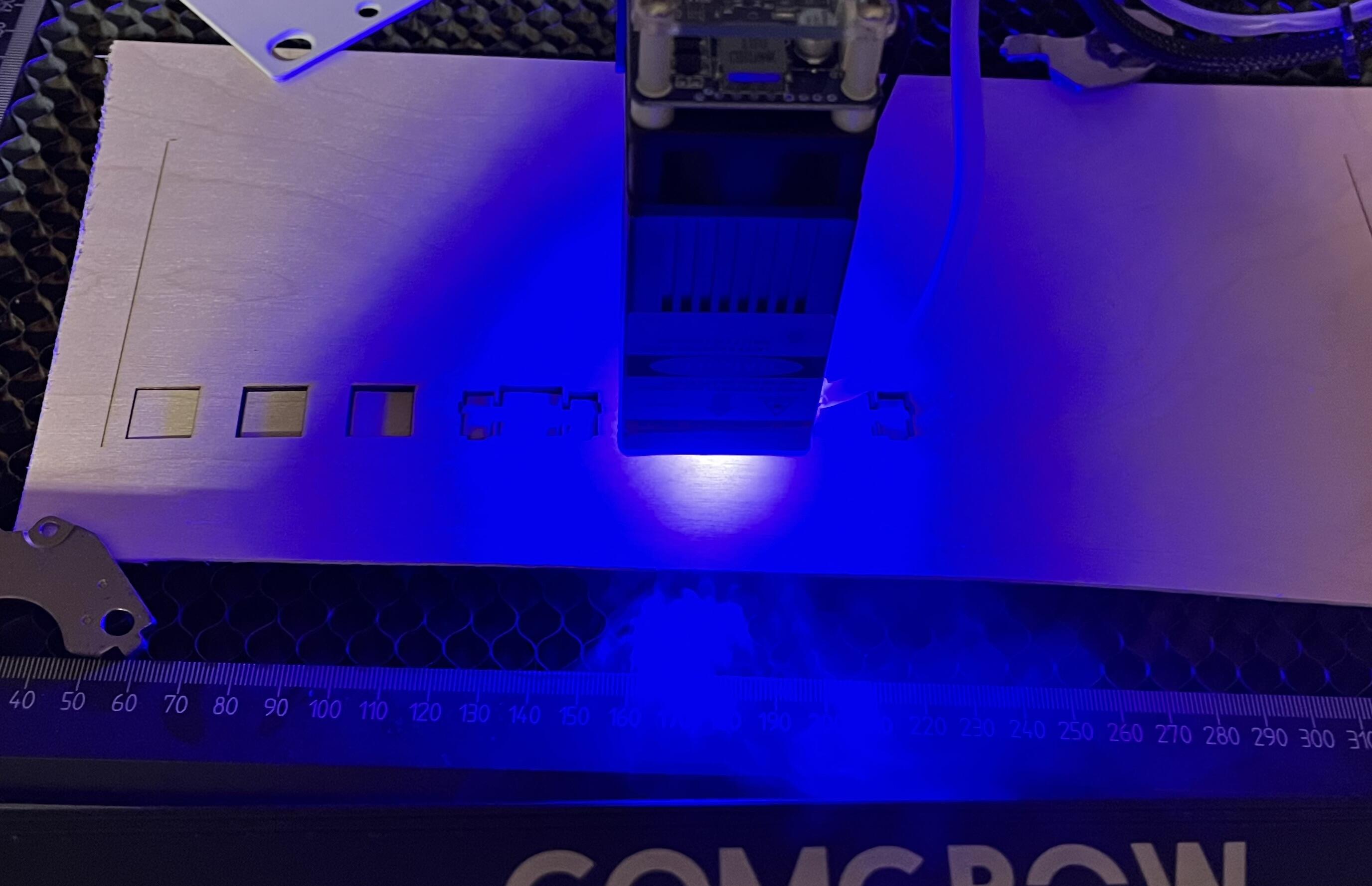
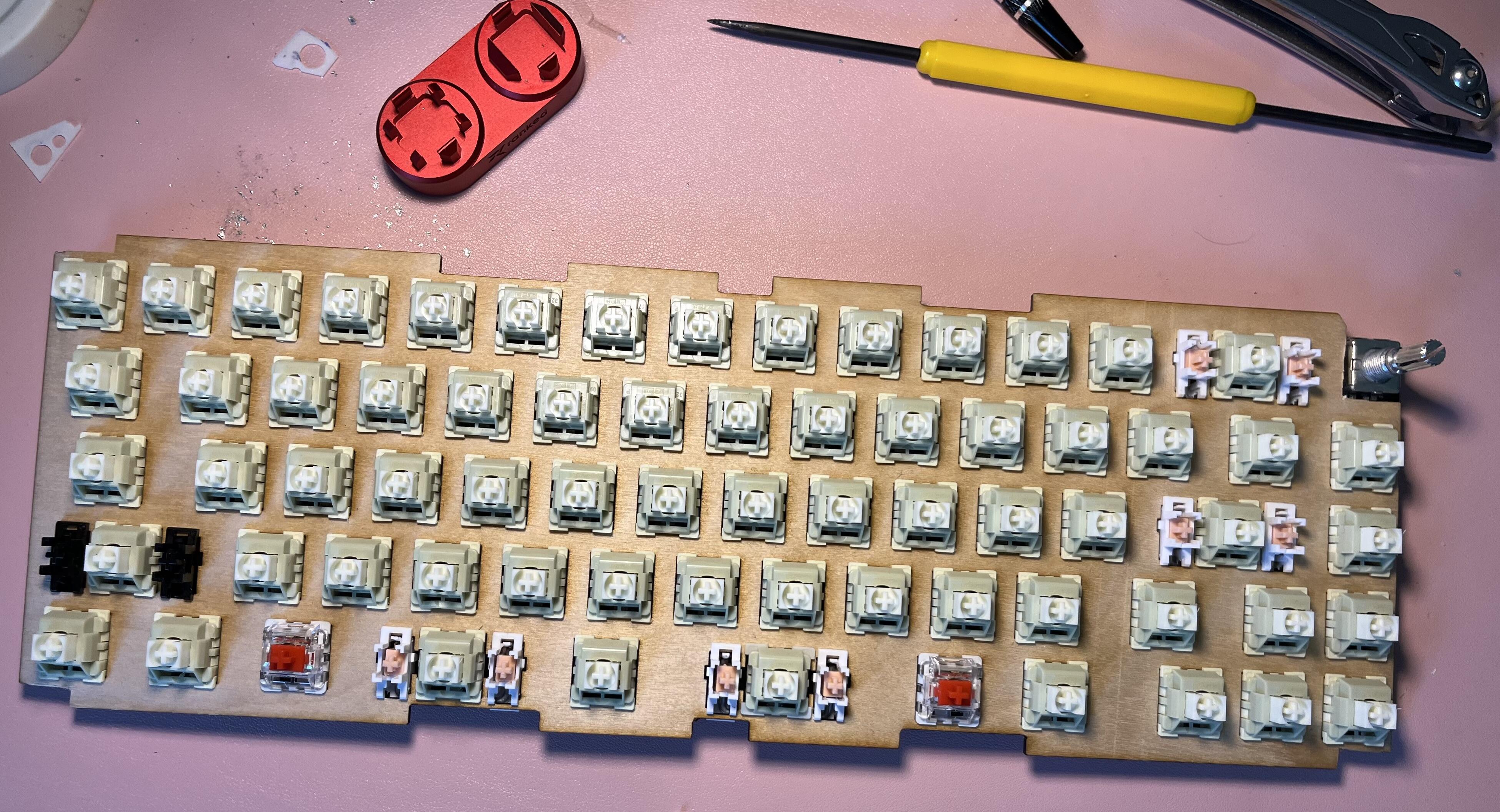
Decided that I needed a win after borking my Simplified Alps, so I decided “to hell with it, let’s get that Tide65 in better shape.” As mentioned elsewhere, the PCB supports split space, but the plate doesn’t. Therefore, we need a new plate. I would tweak a couple of dimensions if I were remaking it, but with adhesive jewelry backers as a gasket, it’s close enough, and if anything typing feel is slightly better than the stock plate. I did remove the plate foam, largely so I could see what I was doing with the somewhat fragile plywood plate, but I put the case foam back in.
I did not put the battery back in, and in fact went to some pains to pry it out of the case. A wireless board is useful to have around, but I only need one. Otherwise, probably best to reduce my chances of spicy pillow. Anyway, an 5 extra ounces (142g) of metal, net ~80g over the battery, is a fair trade. I also disliked that the knob it came with was short and smooth, but the guitar dome knobs I got didn’t quite fit, so I (touch and go a little) desoldered the old encoder and put in one that I had around. The new one rides just a little high, but (1) I have somewhat brutal but effective means of fixing that later, and (2) “too low” was part of my initial complaint, and this fixes that issue.
Switches all got a spring-swap to 80g, but I needed two extras with the split space (as well as another stab and a 2u wire), so a couple of Royal Kludge branded reds got the same spring and faint hint of lube to match the Epomakers. To me, they feel pretty much the same. Keycaps are XVX WOB in Cherry, in large part because they had proper spacebars, LOL. Overall sound profile is similar to what it was, the cheap ABS Cherry are definitely still on the higher pitch side, but it’s not nearly as loud as it was stock, and it’s just generally a better board for me now.
For BOM:
- Board: $29 on sale
- Caps: $15, like 8 months ago
- Springs: $6 or $7 with the Amazon tax
- Plate: 1/12 of a $26 order for sheets 1/16" birch ply
- Encoder: Don’t recall, but not much.
- Stab parts: lying around.
- Weights: 1/10 or so of an $18 order. I got plans for these guys.
- Knob: 1/4 of an $8 order
- Opener: I went fancy and paid $8, LOL. OOOOOH big spender.

7 Likes
Looks great man! Awesome board with awesome caps, love it! I also love how they went with the true colorway for space cadet in the base with having to order the extra “True Cadet” child kit like you we had to with the CYL runs.
1 Like
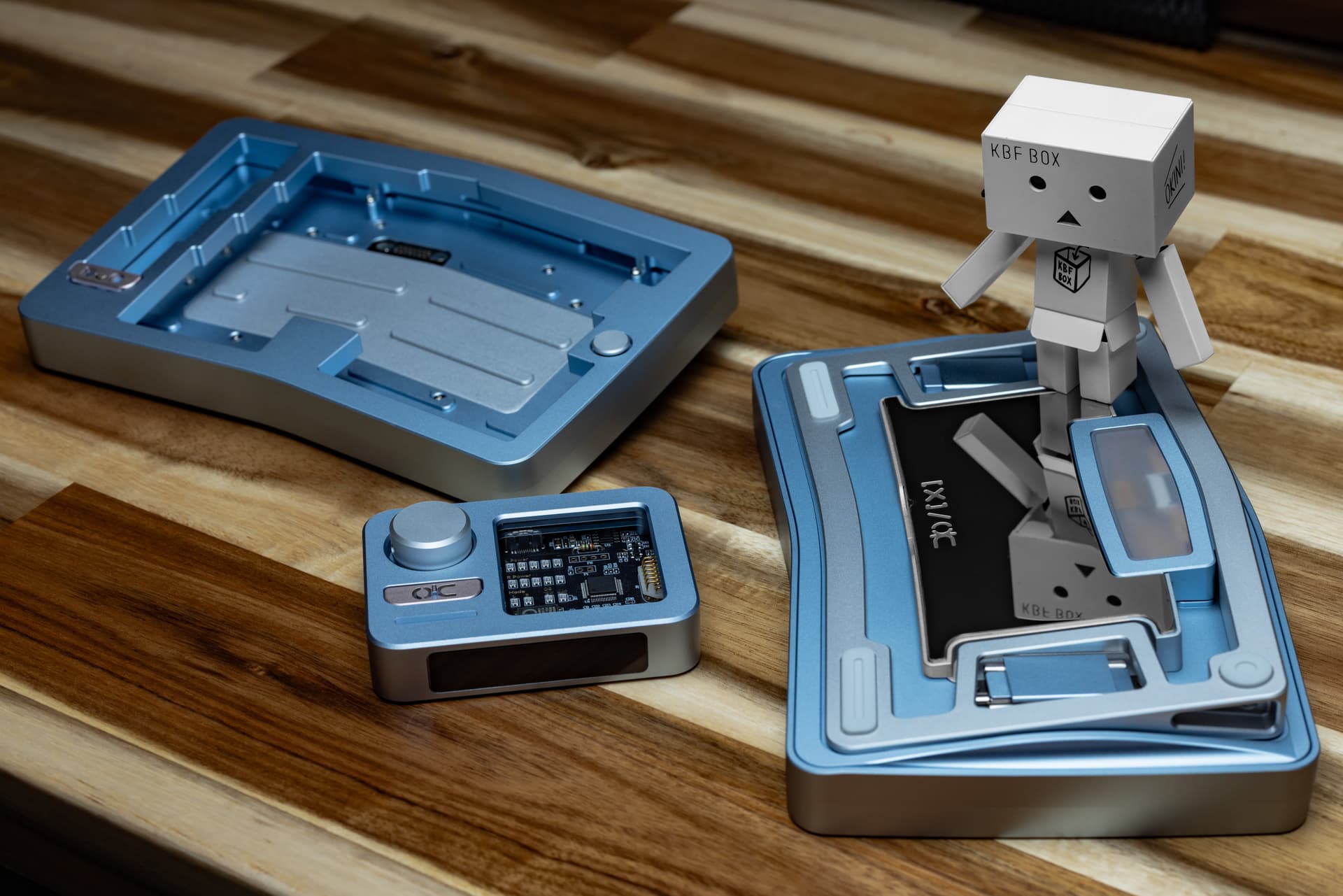
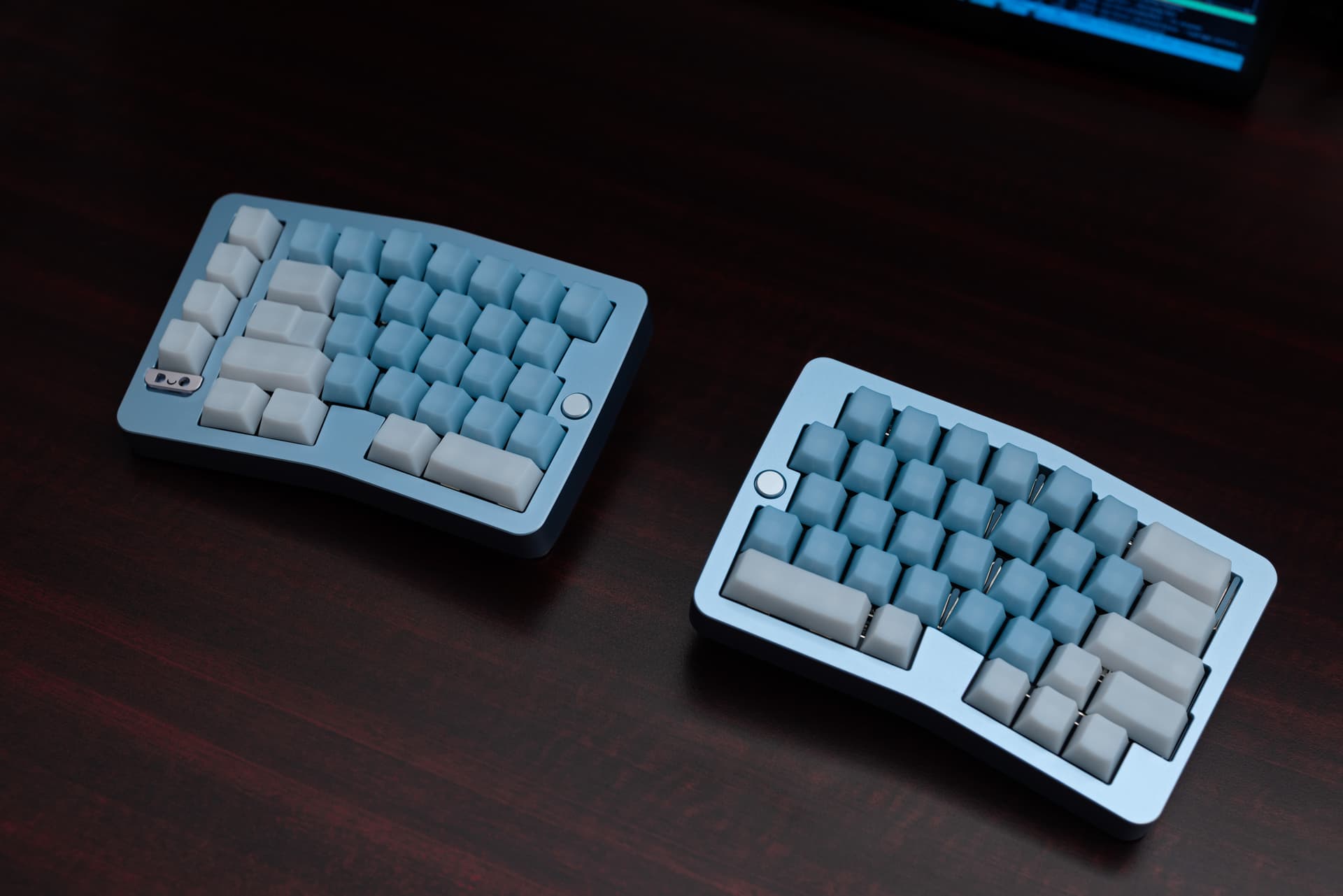
Qwertykeys QK Alice Duo
Anodized Ice Blue
Plate: FR4
Stabs: Stock QK Stabs included w/ the Duo
Keycaps: POM Jelly Ramune & White
Switches: Hand lubed Gateron Oil Kings
So nice, I bought it twice. (One for home, one for office)
This time around I picked an FR4 plate. It pairs really well with the dense POM keycaps. They key cap set itself did not come with the 2.25u and 2.75u caps, but they included them at no extra charge when I inquired.
10 Likes
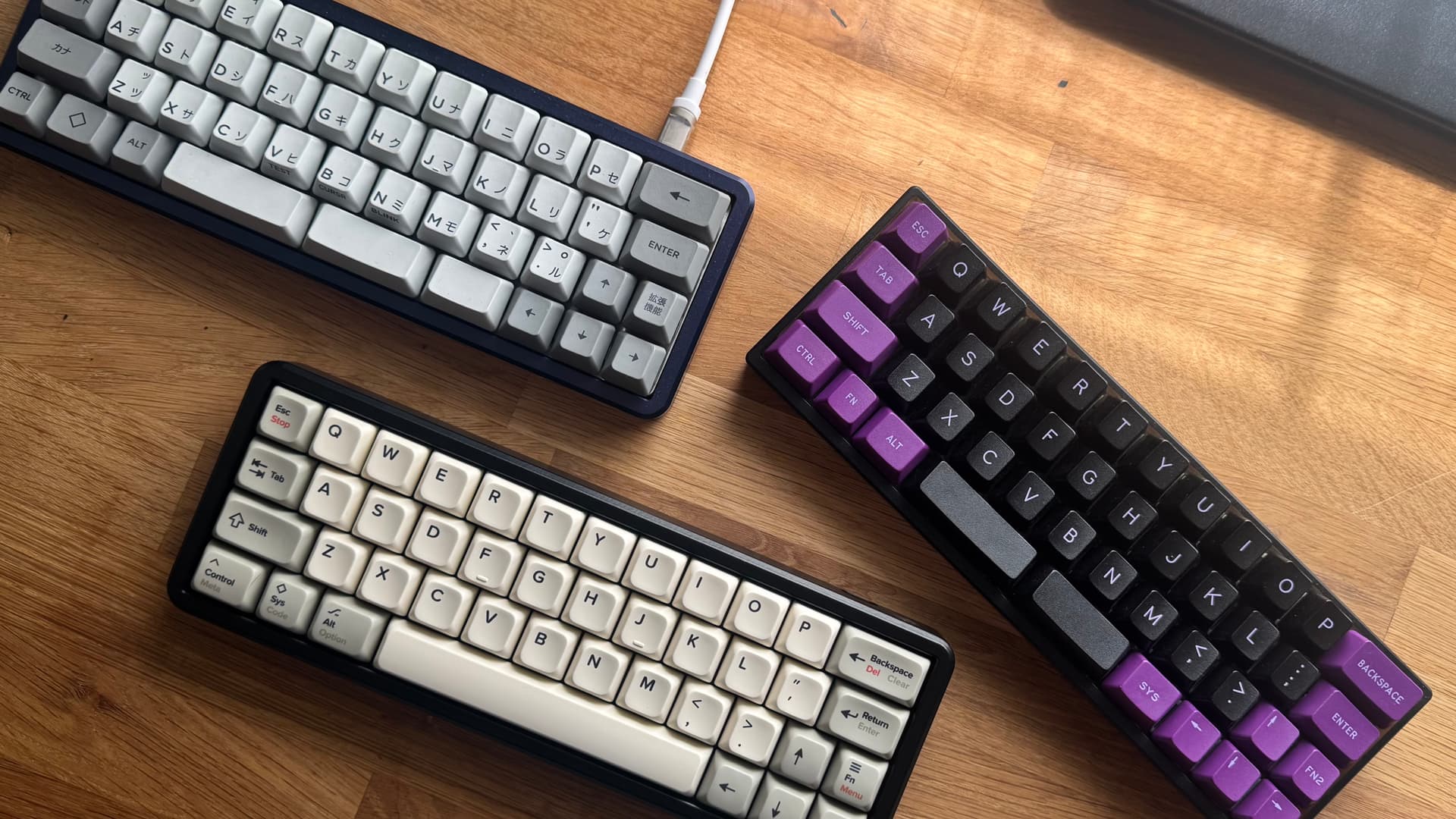
I finally built a board with PBS keycaps.
I targeted a very low typing height so I used a zero angle MFR (Minvan compatible) case and Tecsee low profile MX switches.
The typing height is super low and comfortable.
I guess I am not consistent in what I like, because I also love the DCS Pingmaster build built on Blue Alps, which has a much higher typing height.
13 Likes