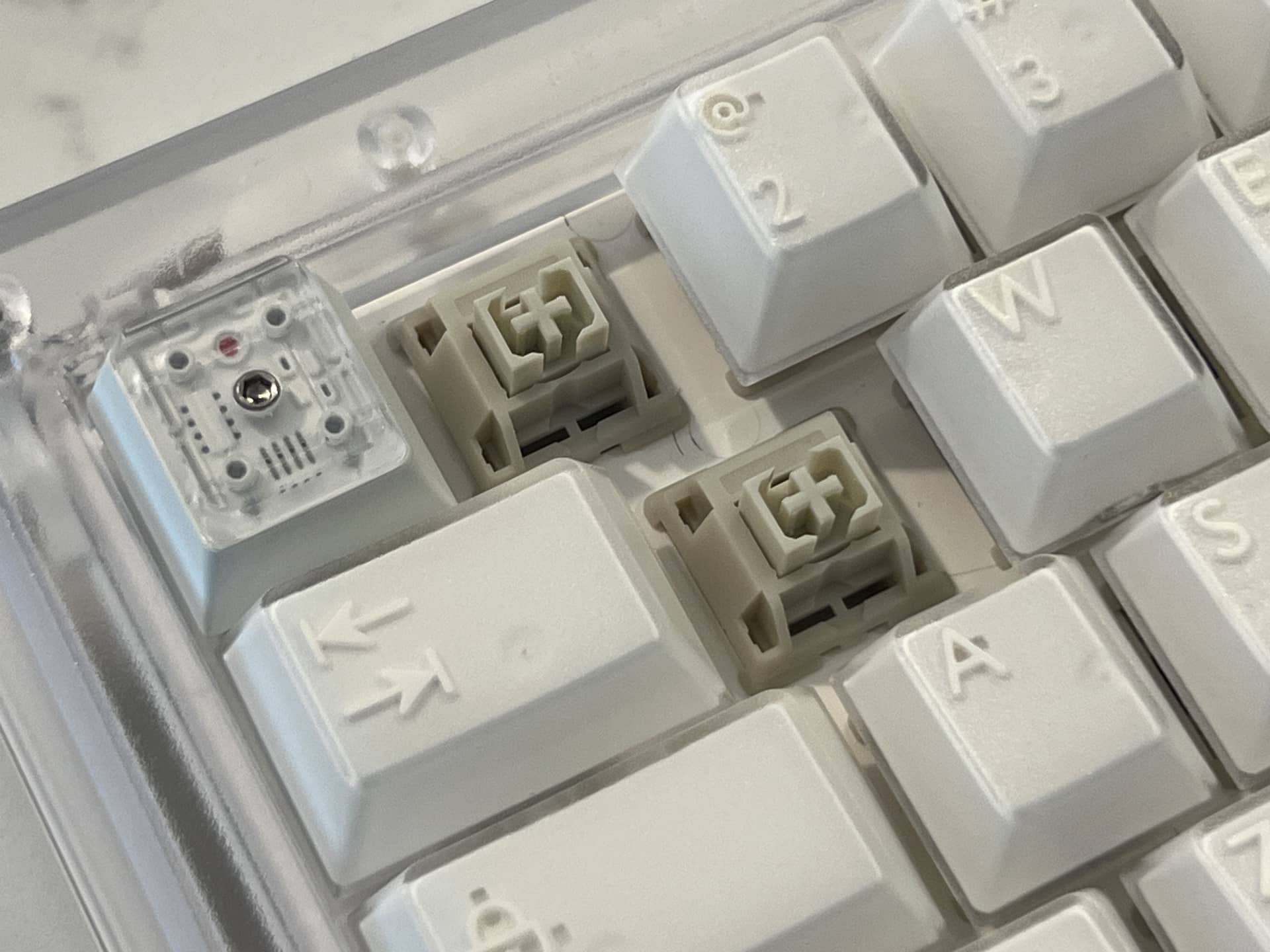
That’s a really interesting find. “Silent clicky” always sounded like marketing trying to invent a new switch category, but it’s funny that the accidental hybrid gets closer to the name than the actual Lanes do.
I wonder if there’s a tiny geometry difference around where the click mechanism bottoms out or rebounds in the Navy Blue lower housing — something that wouldn’t be obvious visually but still lets a little of that snap through. Could be worth checking with a loupe or just sacrificing one bottom housing to poke around, because a semi-silent clicky is genuinely a neat niche.
I killed off my vm running windows a few months ago. It was around for ONLY one purpose. Fusion 360. I have decided to finally bite the bullet and switch to FreeCAD.
Thinking I may finally start the process of trying to reverse engineer the Kinesis Advantage 2 keywell plates to have printable replacements readily available. What could go wrong taking this on while learning FreeCAD.
I tried with FreeCAD, but every little thing that isn’t “sketch, extrude, chamfer” is still a baroque pain in the butt. To be fair, “sketch, extrude, chamfer” used to be a similar pain, but it’s a better flow now. I’m still going over to Windows for Alibre Design, and I reckon I will for a while.
OnShape is nice, very nice for in-browser, but I hate their approach to their free tier, and the subscription tier jumps straight from free to semi-pro. Solidworks has their insanely cheap maker subscription, and its licensing is closer to Fusion’s free tier, where you can make a few bucks (but only a few) before they drop the hammer on you. Their XDesign web app is not terrible.
Yeah, every time I tried it in the past, I was back in Fusion 360 within an hour. I think I just finally hit my threshold where the pain of really deeply learning FreeCAD is less than my hatred of keeping around a Windows VM with GPU passthrough.
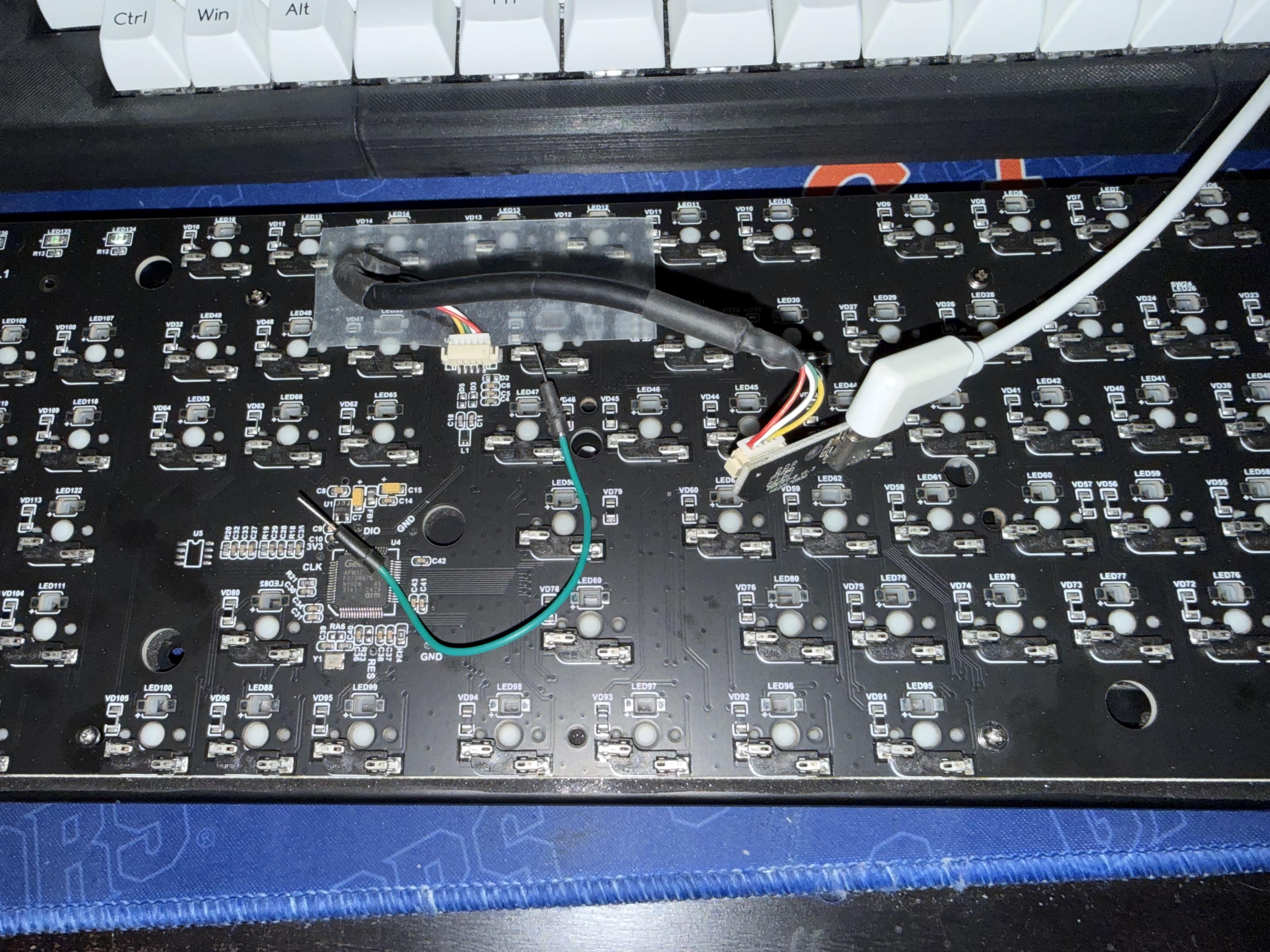
Durgod K310 from Nellis Auctions (10 bucks after fees and taxes). Seems like someone had played with the keycap puller, brought some switches along for the ride, and then panicked when they bent some pins trying to re-insert. One hotswap socket looks a little blobby like they re-worked it at the factory, but straightening the switch pins reveals no issues.
I’m continuing my personal journey through the history of the hobby with this one. While the board originally came out 2018-ish, I believe, this PCB is a 2022 revision using a Geehy APM32 MCU. Fortunately, it’s binary compatible with the STM32 that these originally came with, and someone quietly added a line to the rules.mk to account for them (you go, open source!). I did have to boot up Windows and QMK Toolbox because I’m too dumb to figure out what Linux needed to flash it, but it’s now running a QMK build from the online configurator. The hardest part was practicing with the Dupont wire (and before that, a flimsier cat6 strand) to short the two tiny SMD components while I plugged the USB cord back into the daughterboard, but I eventually got it. I added a QK_Boot to the keymap to ensure I won’t have to do that again, as I’m not 100% sure the bootmagic flag would have been retained by the configurator, though it probably was.
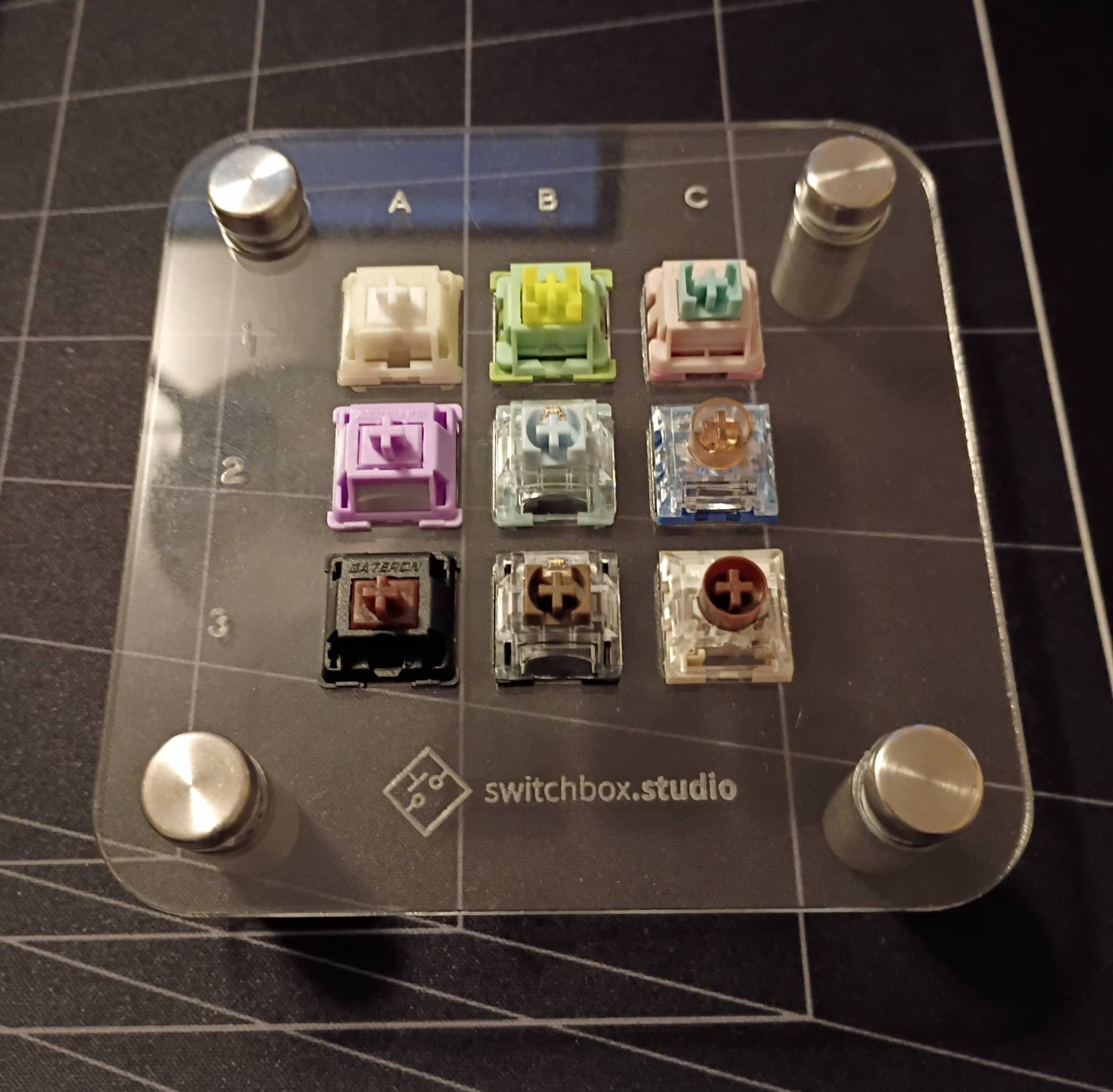
I think this will be a perfect place to use my Rama clone caps, but I do need to figure out what switches I’ll use, because Reds still don’t do it for me, and I’m not feeling a full on spring-swap right now, at least not on a full-size. I want to do that before I reassemble, because as mid-range plastic pre-builts are wont to do, it’s all tabs, and I don’t trust the thin layer of case-felt to support the sockets properly.
TIL! This weird CPU has been keeping me from doing my own firmware on a few boards b/c I was assuming it required different settings from the STM32 stuff.
Now, with the huge caveat that I am nothing near an embedded systems or electrical engineer, it seems like it might not be a huge deal. I found this old forum post suggesting that at least one variant is binary compatible, and following the flashing guide folded into the QMK source (eventually) worked fine. The only direct reference to the APM32 I found was, as I said, in the K310’s rules.mk file, which makes it seem like there’s some minor differences to work around.
Longer story:
I haven’t enjoyed by Bauer Lite x-ray board very much since I built it because of the x-ray switches. I have soldered roller linear switches in 3 boards, and I have 2 hotswap boards with roller v2 switches. I love them.
But the x-ray version are a different beast. The spring is a different length and lighter. But the main problem is that a) they are very scratchy and b) the stems fit keycaps very loosely. A few of the PBTFans xray keycaps will pop off while typing without some teflon tape. It’s not a great experience.
The other day I picked up a 70 pack of used rollers for 20 bucks on mechmarket. I had planned to spring swap them for a slightly heavier 55g 22mm spring. The plan was to put them in my bauer lite. Spring swap was nice, but the black switches did change the look of the build. So I started looking for a switch I had laying around that wouldn’t mess with the overall look.
The Pastel Sand switches fit well with the theme. They aren’t perfect (they’re a bit wiggly and I always use a stem trimmer on Haimu switches out of an abundance of caution), but they’re much better than the roller linears I had in the board previously. I especially enjoy the snappy spring and full 4mm travel.
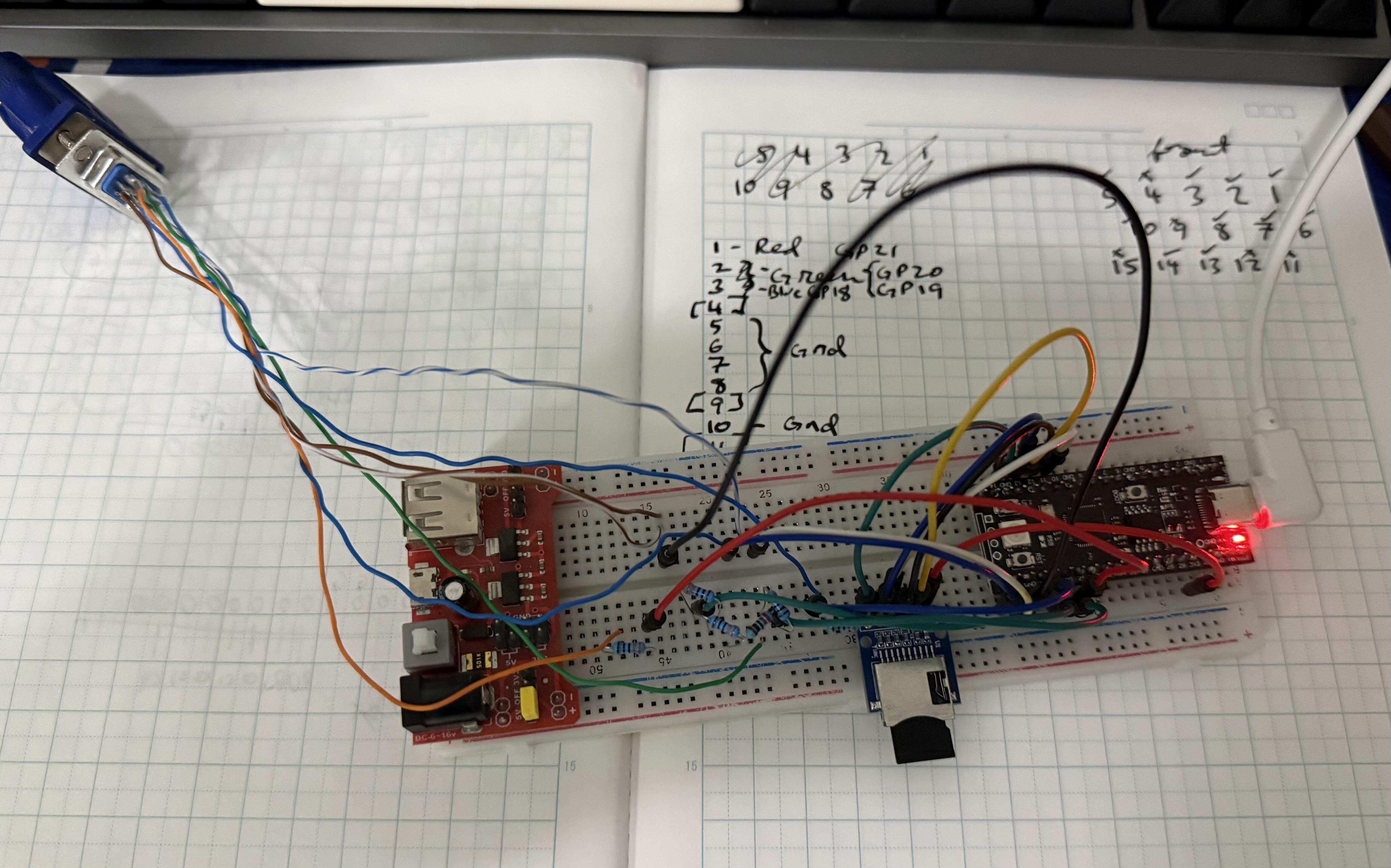
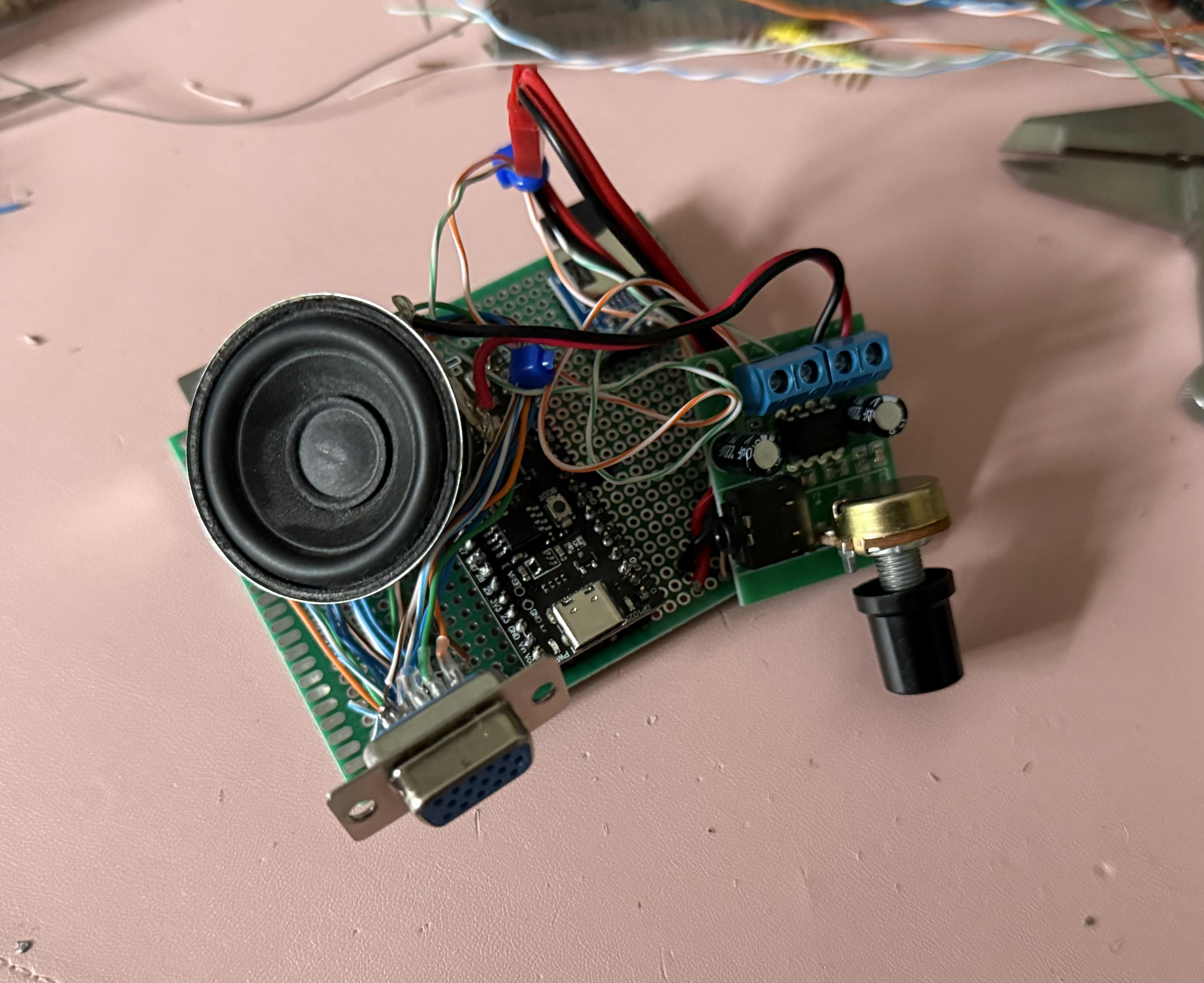
Here’s something that’s only keyboard adjacent, but it will eventually be used with one of my PS/2 boards. This breadboard buddy is most of a PicoMiteVGA, a “boots to BASIC” machine built around an RP2040 microcontroller. This one has microSD and VGA video out, and will eventually have a PS/2 port for a keyboard, meaning it’s a complete retro-ish computer. Once I’ve got it fully working, I’ll migrate it from the breadboard to proto-board.
And we have moved on from breadboard to protoboard, which is honestly probably where I’ll leave this project, assuming it continues to function. Funny that it will be a complete “PC” running on the exact same devboard I use to power keyboards. I sort of YOLO’d the circuitry in a couple of places. I’m trusting “it’ll probably be fine for a while” online advice for the PS/2 wiring (if you’re curious, I’m just using a diode to protect the “clock” output pin, and accepting that GPIO data input pin is more 5v-resistant than the datasheet states). Also, the exact resistance of the VGA color correction circuitry is as, my late father used to say, “close enough for goverment work,” which is to say it skews a touch green but I didn’t have to buy any new resistors or potentiometers. I leaned in and changed the default text console to be green on black anyway. Similarly, I didn’t bother with a low-pass filter for the audio, instead using spare parts including an old bluetooth speaker’s 40mm driver and an ancient-tech LM386 amplifier module. It makes beeps, which is all I needed.
Keyboard-wise, I’ve run into a self-inflicted limitation that I completely overlooked. It turns out that except for one oddball board with an overly finicky plug, I only currently have a single PS/2 keyboard in good working order. Everything else is either torn down or has been semi-permanently converted with an internal Soarer’s. Fortunately, the one remaining board is a GE Medical Unicomp, so it’s buckling springs with cool colors and in good repair.
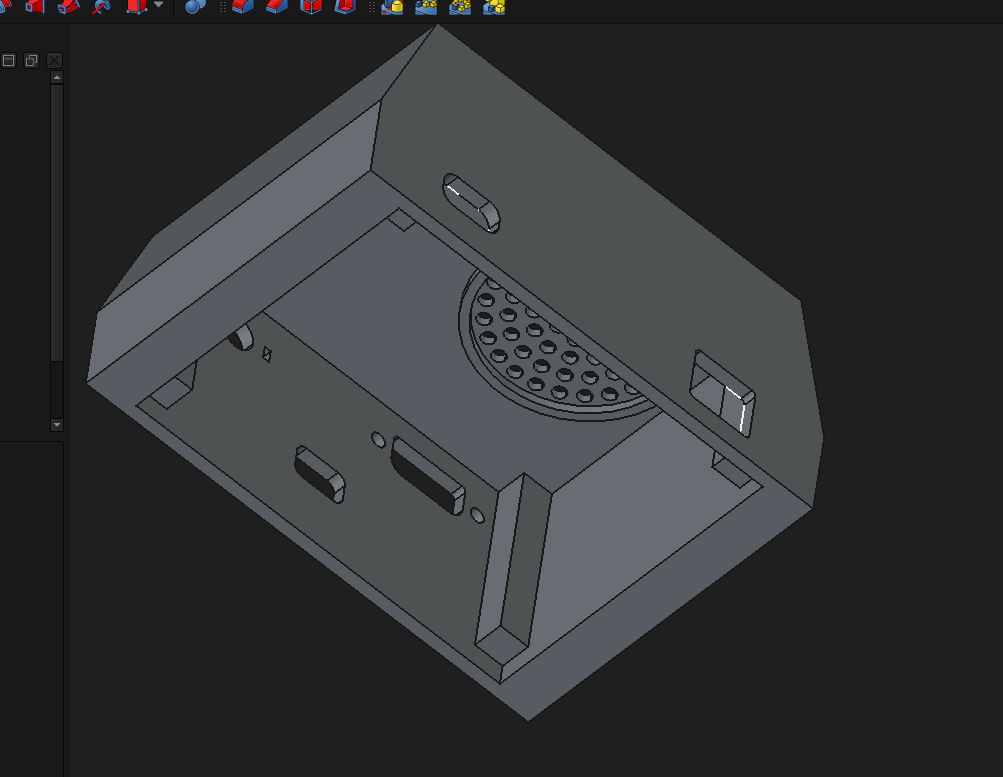
I designed a quick 3D printed case for it all, but I’m really only 50/50 that version 1 will fit everything properly. On the plus side, simple as it is, this was the most complicated design I’ve managed to do on FreeCAD in Linux without rage-quitting and rebooting to Windows. One of the great things about having a decently equipped workbench is that you can lie to yourself and pretend that a project like this only cost the $10 out-of-pocket for the SD card readers and VGA ports.
Do you find yourself liking FreeCAD any more now that you are tackling something more complex?
I’m still familiarizing with it via the MangoJelly tutorials. My hatred for it is turning into actual enjoyment of it now that I’m taking the time to learn its quirks.